
Think of a boiler service as an annual MOT for the very heart of your home. It’s a comprehensive health check that’s all about making sure your heating system is running safely, efficiently, and reliably. You wouldn't dream of skipping your car's MOT, and the same logic applies here—it's about preventing a sudden breakdown right in the middle of a cold snap.
This guide will walk you through exactly what happens during a professional boiler service. We’ll look at the specific checks a qualified engineer performs, why each one is so important, and how this small yearly investment can genuinely save you money on your energy bills.
Your Essential Guide to a Boiler Service
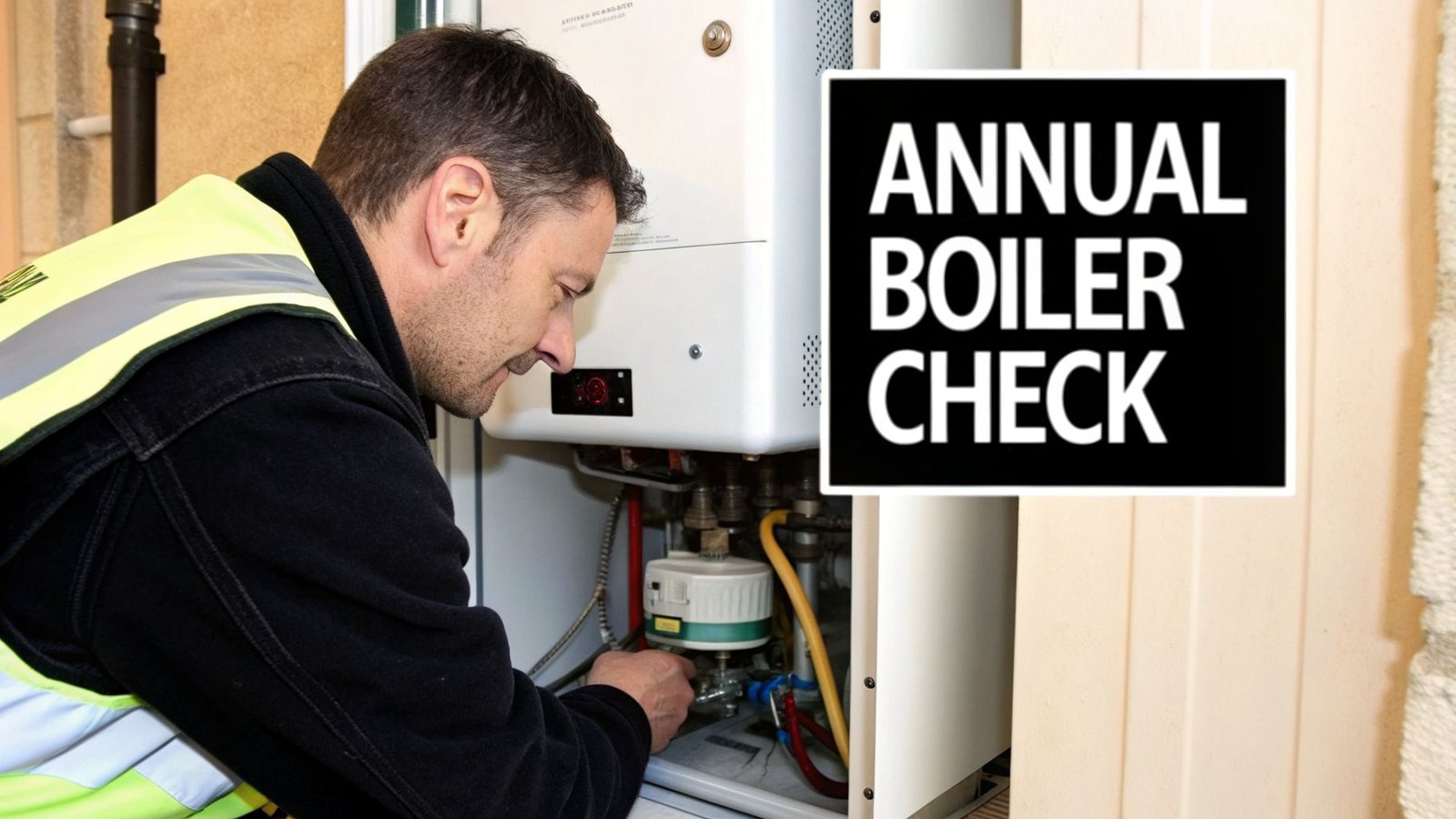
When an engineer arrives to service your boiler, their work really boils down to three core priorities. Understanding these helps you see the real value in what they're doing, rather than it just being a box-ticking exercise.
What an Engineer Focuses On During a Service
Your Family's Safety: This is always, without question, the number one priority. The engineer will carry out critical checks for gas leaks and ensure the boiler's flue and ventilation are completely clear. A blocked flue can be incredibly dangerous, leading to a build-up of carbon monoxide, so this inspection is non-negotiable.
Peak Efficiency: A boiler that's clogged up with dust and deposits has to work much harder to heat your home, which means it burns more fuel. During a service, the engineer will clean key components and use a flue gas analyser to test the combustion. This ensures your boiler is burning fuel correctly, squeezing every last drop of heat out of it and keeping your energy bills as low as possible.
Spotting Trouble Early: The engineer will give all the main internal parts a thorough visual inspection, looking for signs of wear, corrosion, or minor leaks. It’s all about preventative maintenance—catching a small, inexpensive issue before it has the chance to snowball into a major system failure and a hefty repair bill. This proactive approach is what helps your boiler last for years to come.
A proper service is so much more than just a quick look-over; it’s about giving you complete peace of mind. Knowing a Gas Safe registered professional has thoroughly vetted your system means you can relax, confident that your family will be safe and warm.
Ultimately, getting your boiler serviced annually is one of the smartest, most responsible things you can do as a homeowner. It protects your property, safeguards your family, and keeps your running costs down.
Here's what an engineer actually does during that annual boiler service you hear so much about. It's far more than a quick glance; it’s a thorough, methodical process that a Gas Safe registered expert follows to ensure your boiler is safe, efficient, and not on the verge of a breakdown.
We can think of the whole job in three main phases. It always starts with a careful look-over, then we get inside for a deep clean and inspection, and we finish by running a series of crucial tests to make sure everything's spot on.
Let's break down exactly what that looks like.
First Up: The Visual Health Check
Before a single tool is lifted, the first job is a full visual MOT of your boiler and its immediate surroundings. This is all about spotting the early warning signs that could signal a deeper issue.
Your engineer will start with the boiler casing itself, looking for any obvious damage, cracks, or corrosion. They're also hunting for tell-tale signs of trouble, like water stains from a leak or black sooty marks, which often point to a problem with how the boiler is burning fuel.
Next, their focus shifts to the flue – that's the big pipe that gets all the nasty exhaust fumes safely outside. They'll check it’s properly secured, in good condition, and has a clear, unobstructed path. A faulty flue is a serious safety risk, so this check is vital.
Finally, they’ll inspect the ventilation. Your boiler needs a good supply of air to work correctly and safely. The engineer makes sure any air bricks or vents are completely clear of clutter, furniture, or anything else that might be starving the boiler of the oxygen it needs.
Getting Under the Bonnet: The Internal Clean and Inspection
With the visual checks done, it’s time to power down the boiler and take the cover off to see what’s going on inside. This is where the real nitty-gritty work happens. The aim is to clean out all the gunk that builds up over a year and to get a close look at the core working parts.
During a service, your engineer will focus on several key components:
- The Main Burner: This is where the magic happens and gas is ignited. We give it a good clean to ensure the flame it produces is sharp and efficient.
- The Heat Exchanger: This is the heart of your boiler, transferring heat from the flame into the water for your heating and hot taps. It can get clogged with soot and deposits, which makes the boiler work much harder (and use more gas!). A proper clean here can genuinely impact your energy bills.
- The Fan: This little motor is essential for pushing the exhaust gases out through the flue. We check it spins freely and isn't blocked.
- Ignition Probes & Flame Sensor: These are critical safety parts that light the boiler and confirm a flame is present. They get cleaned and checked to make sure they’re positioned perfectly.
Boiler Service Checklist At a Glance
To give you a clearer picture, this table summarises the main jobs an engineer will carry out during a typical service.
| Check Category | Key Actions Performed by the Engineer |
|---|---|
| Visual Inspection | Check boiler casing for damage, leaks, or sooting. Inspect the flue for secure fitting and blockages. Ensure ventilation is clear and unobstructed. |
| Internal Components | Clean the main burner, heat exchanger, and fan assembly. Inspect and clean ignition probes and flame-sensing device. Check all internal seals and gaskets. |
| Gas & Pressure | Test the gas pressure to ensure it meets manufacturer's specifications. Check the boiler fires up correctly and safely. |
| Safety & Flue Tests | Use a flue gas analyser to measure CO/CO2 ratio. Test all safety devices, such as the pressure relief valve. |
| Final Checks | Reassemble the boiler casing. Check thermostats and controls are working correctly. Issue a service record for your documentation. |
These checks ensure every critical aspect of your boiler's function is scrutinised, leaving nothing to chance.
An easy way to think about it is like a full tune-up for your car's engine. Cleaning these core parts helps your boiler "breathe" again, allowing it to generate heat efficiently and run smoothly without straining itself.
The exact checks can differ slightly based on the boiler you have. If you’re not sure what kind you've got, our guide on what type of boiler do I have can help you get to grips with its specific needs.
The Final Sign-Off: Firing Up and Safety Tests
With everything cleaned and put back together, the final and most critical stage is to fire the boiler up and run a series of tests. This is where the engineer uses specialised equipment to confirm it’s operating not just efficiently, but above all, safely.
First, they’ll carry out a gas pressure check to ensure the boiler is getting the right fuel supply – not too much and not too little. Then comes the most important safety test of all: they'll use a flue gas analyser. This handheld device is inserted into the flue to measure the combustion gases, specifically checking the levels of poisonous carbon monoxide. This is a non-negotiable test that confirms your boiler is burning cleanly.
All the built-in safety devices are also tested to make sure they would kick in during an emergency. To finish, the engineer will double-check that your room thermostat and timer are communicating properly with the boiler, giving you full control.
This annual check-up is proven to slash the risk of a breakdown. Back in 2019, for example, London had the UK's highest boiler breakdown rate at 6.08%, a stark reminder of the strain our heating systems are under. A proper annual service is your best defence against becoming a statistic, catching those small problems before they become a cold-shower-and-big-bill emergency.
Why A Gas Safe Check Isn't Just A Box-Ticking Exercise
It’s easy to think of a boiler service as just another bit of annual maintenance, like cleaning the gutters. But let's be clear: its most critical job is protecting you and your family. Above all else, a professional service is a safety inspection designed to prevent the silent and invisible dangers of a faulty gas appliance.
The biggest threat we’re talking about is carbon monoxide (CO). This is a poisonous gas with no smell, taste, or colour, and it’s produced when fuel, like the gas in your boiler, doesn’t burn properly. A tiny fault, a blocked flue, or even poor ventilation can cause CO to leak into your home, often with tragic results. An engineer’s checks are your first and best line of defence.
The Gas Safe Register: Your Guarantee of Competence
Here in the UK, the law is refreshingly simple: no one can legally work on a gas appliance unless they are on the Gas Safe Register. This isn't just bureaucratic red tape; it’s a vital safety law. Think of a Gas Safe ID card as a license that proves an engineer is genuinely qualified, competent, and up-to-date with the latest safety standards.
When an engineer arrives, always ask to see their Gas Safe ID card. It’s their proof that they’ve undergone rigorous training and are continually assessed to work safely with gas. Never, ever let anyone touch your boiler without seeing this card first.
This compulsory registration means the person in your home knows exactly what they’re doing. They have the right tools and, more importantly, the knowledge to spot potential dangers and fix them before they become a real risk to your family.
This simple flowchart gives you a bird's-eye view of the three main stages an engineer will go through.
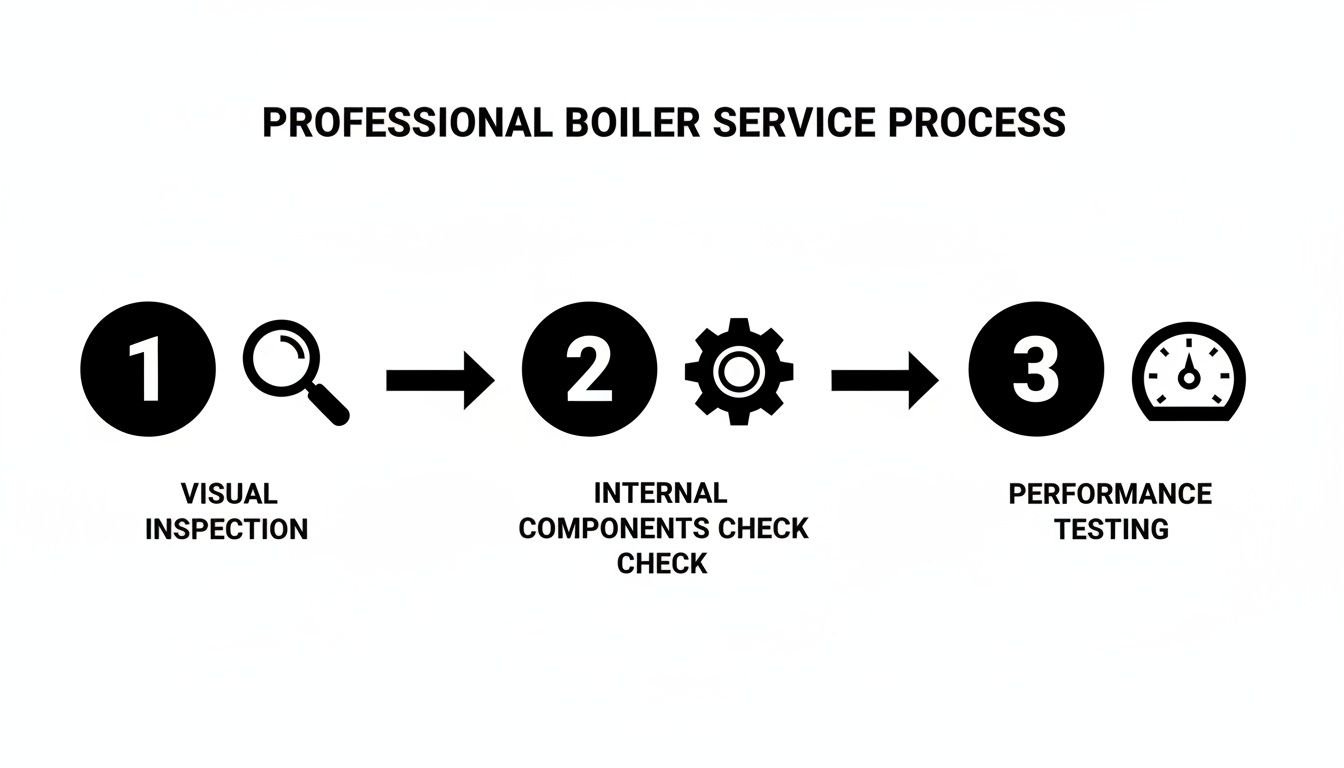
As you can see, every step is a deliberate check to confirm your boiler is running not just efficiently, but safely.
The Unsung Heroes: Key Safety Parts We Check
During the service, the engineer focuses on specific components that act like your boiler’s built-in bodyguards. Knowing what they do really underscores how important this check is.
- Pressure Relief Valve (PRV): This is your boiler’s emergency release valve. If the internal pressure climbs to a dangerous level, the PRV automatically opens to let out water, preventing the system from rupturing. It’s a simple part that averts a potential disaster.
- Thermocouple or Flame Supervision Device: A crucial cut-off switch. Its job is to watch the pilot light or flame. If the flame ever goes out unexpectedly, this device instantly shuts off the gas supply. Without it, your home could fill with unburnt gas.
These parts work away in the background, but a service is the only way to be sure they’re ready to spring into action when needed. Skipping a service is a gamble with safety that no one should be willing to take.
For a more detailed look at the risks, we've put together a guide on the tell-tale signs of carbon monoxide from a boiler and how you can stay protected. Ultimately, the peace of mind that comes from a certified Gas Safe inspection is priceless.
How a Service Boosts Efficiency and Cuts Your Bills
While the safety aspect is absolutely vital, an annual boiler service is also one of the smartest things you can do to lower your energy bills. A good service is all about tuning your boiler so it wrings every last drop of heat out of the gas it burns.
Think of it this way: a dirty, un-serviced boiler is like trying to run through thick mud. It has to work incredibly hard, burning far more fuel than necessary, just to do its job. An engineer's job is to clear that path and get it running freely again.
Cleaning the Core Components
The most immediate money-saver is a thorough clean. When an engineer gets inside and properly cleans the main heat exchanger and the burner, they're scraping away a layer of soot and grime that's been acting as an unwanted coat of insulation.
With that gunk gone, heat can transfer from the flame to your water much more efficiently. Your boiler hits its target temperature faster and without having to burn as much gas. A clean boiler is an efficient boiler, and that's kinder on your wallet every single month.
Fine-Tuning the Engine
An engineer also makes a series of precise adjustments to stop fuel from being wasted. A key part of this is testing and setting the gas pressure. This ensures your boiler is getting the exact amount of fuel it needs to burn cleanly and effectively—too much and you're just throwing gas away; too little and the system struggles.
An engineer's flue gas analysis is the ultimate efficiency MOT. It’s a bit like an emissions test for a car, but for your heating system. It’s the only way to be certain the boiler is burning its fuel completely and turning as much gas as possible into usable heat for your home.
These checks are crucial. The boiler insurance market saw claims hit a staggering £519.3 million back in 2023, which shows just how frequently things go wrong when systems aren't looked after. A proper service, like those carried out by Urbanic Services Ltd, is designed to catch these problems early, from cleaning internal parts to checking combustion ratios. You can get a sense of the scale of the issue from Uswitch's detailed statistics on UK boilers.
Tackling the Hidden Problems
A service also gets to grips with problems you simply can't see. Over years of operation, the water inside your pipes and radiators can become thick with rust and other debris, known as sludge. This dark, gritty water makes it much harder for the pump to do its job.
Your engineer will take a look at the system water. If they spot the tell-tale signs of sludge, they can recommend a fix, like fitting a magnetic system filter or performing a chemical flush. Getting rid of this "bad blood" in your heating system ensures the heat your boiler works so hard to create actually reaches your rooms. By tackling all these areas, a service can improve efficiency by up to 10%—a figure you’ll definitely notice on your bills.
What Isn't Included in a Standard Boiler Service?
It’s just as important to know what a boiler service doesn't cover as what it does. Getting this straight from the start avoids any confusion later on. The main thing to grasp is that an annual service is a health check, not a repair call-out.
I often tell my customers to think of it like their car’s MOT. The test itself spots any problems, but the price you pay for the MOT doesn't cover the cost of fixing them. It’s the exact same principle with your boiler. If the engineer finds a failing part during the service, the cost of the new component and the time needed to fit it will be extra.
Common Jobs That Fall Outside a Service
A service is incredibly thorough, but the engineer's focus is squarely on the boiler appliance itself. This means work on the wider central heating system usually isn't included.
Here are a few common examples of what you can't expect:
- A System Powerflush: If you've got radiators that are cold at the bottom, it's likely due to a build-up of sludge. The fix is a powerflush, which is a much bigger and separate job that involves deep-cleaning the entire system.
- Fixing Radiators: A service won't cover things like fixing a leaky radiator, replacing a broken valve, or moving a radiator to a new spot.
- External Pipework: Any problems with the gas pipes leading to your property or major plumbing jobs on the heating circuit are separate tasks.
At its heart, a service is all about preventative maintenance and safety checks on the boiler itself. It’s designed to catch developing problems early, not to provide free, unlimited repairs for your whole heating system.
This is a really key distinction. If you’re a homeowner looking for complete peace of mind that covers repairs and breakdowns too, then a more comprehensive boiler cover plan is a much better fit. These plans bundle the annual service with the cost of future repairs for a predictable monthly fee.
That's precisely the gap that comprehensive care plans, like those from Urbanic Services Ltd, are built to fill. They give you the assurance that if a fault is found during your service—or if your boiler suddenly gives up the ghost—the repair costs are already taken care of.
Answers to Your Top Boiler Service Questions
It’s only natural to have a few questions before you book a boiler service, especially if it’s your first time. To put your mind at ease, here are the answers to some of the queries we hear most often from homeowners.
How Long Does a Boiler Service Take?
For a standard, modern boiler, a proper service should take around 45 to 60 minutes. That’s usually the sweet spot for an engineer to be thorough without taking up your whole morning.
Of course, some things can stretch this out. If you have a much older boiler, if it’s tucked away in a really awkward spot, or if the engineer spots something that needs a closer look, it might take a bit longer. A word of warning, though: be very wary of any 'service' that's over and done in 20 minutes. A safe and comprehensive check simply can't be done that fast.
Is an Annual Service a Legal Requirement?
This is a really important one, as the answer depends on who you are. For landlords, the answer is a clear yes. An annual gas safety check, which includes the boiler, is a legal responsibility.
For homeowners, it’s a different story. While not legally mandatory, it's something we can't recommend strongly enough. For one, most boiler warranties are only valid if you have a full service history. Skipping it is a huge gamble on your boiler's health and your wallet.
Think of it this way: while not illegal for a homeowner to skip, it’s a significant gamble with your safety, your wallet, and your boiler's lifespan.
What Paperwork Should I Receive Afterwards?
Once the engineer has finished their work, they should always leave you with a record of what's been done. This is usually called a boiler service certificate or a service report.
This document is your proof of service. It will list all the checks performed, detail the engineer's findings, and note any advice or recommendations they might have. It's crucial to keep this somewhere safe, as you’ll need it for any future warranty claims. And if you're ever faced with a boiler that's stopped cooperating, our guide on what to do when you have no hot water in the house might be a useful next read.