
It’s a chilling thought: a danger that can fill your London home without you ever seeing, smelling, or tasting it. That's the stark reality of boiler carbon monoxide (CO), a poisonous gas that's created when fuel, like the natural gas powering your boiler, doesn't burn properly. Your boiler is the heart of a comfortable home, but if it's faulty, it can become a genuine, silent threat.
The Silent Threat in Your Home
This guide is here to cut through the confusion and give you the confidence to protect your family. We'll cover the real-world signs of a problem and the simple, practical steps you can take to keep your home safe. Let's turn that understandable worry into informed action.
Carbon monoxide has earned its nickname, the "silent killer," for a very good reason. It’s a by-product of incomplete combustion, which can happen with any fuel—natural gas, oil, wood, or charcoal. A healthy, well-maintained boiler will burn its fuel completely, producing harmless carbon dioxide and water vapour that are safely vented outside. The problem starts when that process is disrupted, and poisonous carbon monoxide is produced instead.
Because you cannot see, smell, or taste it, the only way to be certain of its presence is with a functional CO alarm. This is why having one installed is not just a recommendation—it's a critical layer of home safety.
The risk isn't the same year-round. It spikes dramatically during the colder months. In England, a staggering 68% of carbon monoxide-related deaths occur in autumn and winter. As we seal up our homes to keep the heat in, we reduce ventilation right at the time when our heating systems are working their hardest. This creates a perfect storm for a dangerous build-up of CO.
Understanding the True Risk
It's all too easy to get complacent about the appliances we rely on every day. We trust our boilers to just work, delivering hot water and warmth on demand. The statistics, however, are a sobering reminder of what can happen when that trust is misplaced or regular maintenance is forgotten.
Every year in England and Wales, around 20 people die from unintentional carbon monoxide poisoning. Many more are left with long-term health problems. The truly insidious nature of CO poisoning is that its early symptoms—headaches, dizziness, nausea—are easily mistaken for the flu, leading to tragic delays in getting help.
Here are the key things to remember about the risk from your boiler:
- Any fuel-burning appliance is a potential source. This isn't just about boilers; it includes gas fires, log burners, and even gas hobs.
- Poor maintenance is the main culprit. A boiler that hasn't had its annual service is far more likely to develop a fault that leads to CO production.
- Blocked flues or vents are critical failures. The flue is your boiler's exhaust pipe. If it's blocked, those dangerous gases have nowhere to go but back into your home.
- New boilers aren't automatically immune. While modern boilers have excellent safety features, an incorrect installation or a blocked flue can create a life-threatening situation just the same.
The good news is that managing this risk is straightforward when you know what to do. This guide will give you the clarity you need to ensure your home remains a safe, comfortable sanctuary. By turning awareness into a few proactive habits, you can protect everyone under your roof.
How a Boiler Can Become a CO Hazard
A modern boiler is the quiet, reliable heart of a warm home. But how does this trusted appliance turn into a source of carbon monoxide? It all comes down to the fire inside and one simple thing: a lack of air.
A healthy boiler works a lot like the crisp blue flame on your gas hob. When it has plenty of oxygen, it burns its fuel completely and efficiently. The only things it produces are harmless carbon dioxide and water vapour, which are safely piped outside your home through the flue. It’s a clean, controlled, and safe process.
The danger starts when the boiler is starved of air. Without enough oxygen, the fuel can’t burn properly. This is called incomplete combustion, and it’s the root of all carbon monoxide problems.
When Good Combustion Goes Bad
Instead of that clean blue flame, a boiler struggling with incomplete combustion will often have a lazy, flickering yellow or orange flame. This is a massive red flag. It’s like trying to have a bonfire in a sealed room—without enough air, you get a lot of smoke and dangerous fumes instead of clean heat. For a boiler, that "smoke" contains invisible, odourless carbon monoxide.
So, what actually goes wrong to cause this? It usually boils down to a few common culprits.
- A Blocked Flue or Chimney: Think of the flue as your boiler's exhaust pipe. If it gets blocked by leaves, debris, or even a bird's nest, those toxic gases have nowhere to go but back into your room.
- Poor Ventilation: Boilers need to breathe. If the air vents or grilles that supply fresh air get covered up or blocked, the boiler can quickly run out of the oxygen it needs to operate safely.
- A Dodgy Installation: If your boiler wasn't installed and checked by a qualified Gas Safe registered engineer, it might have been set up incorrectly from day one, creating a hidden risk.
- Skipped Servicing: Over a year of use, parts like the burner can get clogged with soot. Without an annual service to clean and inspect everything, the boiler's performance drops and the risk of producing CO skyrockets.
These aren't just minor faults; they are serious system failures that can have devastating consequences.
Why Boiler Safety is a Top Priority
Because boilers are in nearly every home, they are one of the most common sources of CO poisoning. In fact, central heating systems are a leading cause of carbon monoxide-related deaths in UK homes. Data tracked by the charity CO-Gas Safety shows that central heating was responsible for a staggering 26% of all recorded deaths from accidental CO poisoning between 1995 and 2023. You can read more about these findings in the CO-Gas Safety data report.
Of course, the same risks apply to other fuel-burning appliances. It’s vital to have them all checked regularly, which is why we also provide expert advice on gas fire servicing and repairs.
A boiler doesn't suddenly become dangerous overnight. It's almost always the result of a developing fault, a blockage, or neglect. An annual service by a Gas Safe engineer is designed to catch these exact problems before they can lead to a carbon monoxide leak.
By understanding what goes wrong, you can take the right steps to prevent it. Making sure your boiler is properly installed, has clear ventilation, and gets its annual check-up are the most powerful things you can do to stop boiler carbon monoxide at its source.
Spotting the Warning Signs of a CO Leak
Knowing how to spot a carbon monoxide leak early is the single most important thing you can do to prevent a tragedy. The real danger is that its symptoms are masters of disguise, looking an awful lot like a common cold or the flu. That’s why you need to know exactly what to look for—both in how you feel and in how your boiler is behaving.
The first signs of CO poisoning are frustratingly vague: headaches, feeling sick, dizziness, and general weakness. It's easy to brush them off. But there's one giveaway that should set alarm bells ringing immediately.
Think about this: if everyone in the house, including your pets, suddenly feels unwell at the same time, and those symptoms seem to magically disappear when you go outside, you have to suspect carbon monoxide. That’s the classic sign that separates a CO leak from a simple bug doing the rounds.
It's not just about how you feel, though. Your boiler itself will often give you physical clues that something is dangerously wrong. These are clear signs of incomplete combustion, which is exactly what creates carbon monoxide.
Physical Clues From Your Boiler
Take a good look at your boiler. A healthy, well-maintained appliance should run cleanly. If it's struggling to burn its fuel correctly, it will start leaving evidence behind. Don't ignore these tell-tale signs:
- Sooty Stains: Black or sooty marks on or around the boiler are a dead giveaway. This is unburnt carbon literally being deposited on your walls.
- A Lazy, Yellow Flame: Your boiler's pilot light, or the main flame you can see, should be crisp and blue. If it’s floppy, flickering, and mostly yellow or orange, it’s starving for oxygen and producing CO.
- Excess Condensation: A little bit of moisture is normal on a cold day, but if you notice a sudden increase in condensation on the windows, particularly in the boiler's room, it could mean the flue isn't venting the exhaust gases properly.
The flowchart below gives you a quick way to check if your boiler is showing any of these hazard signs.
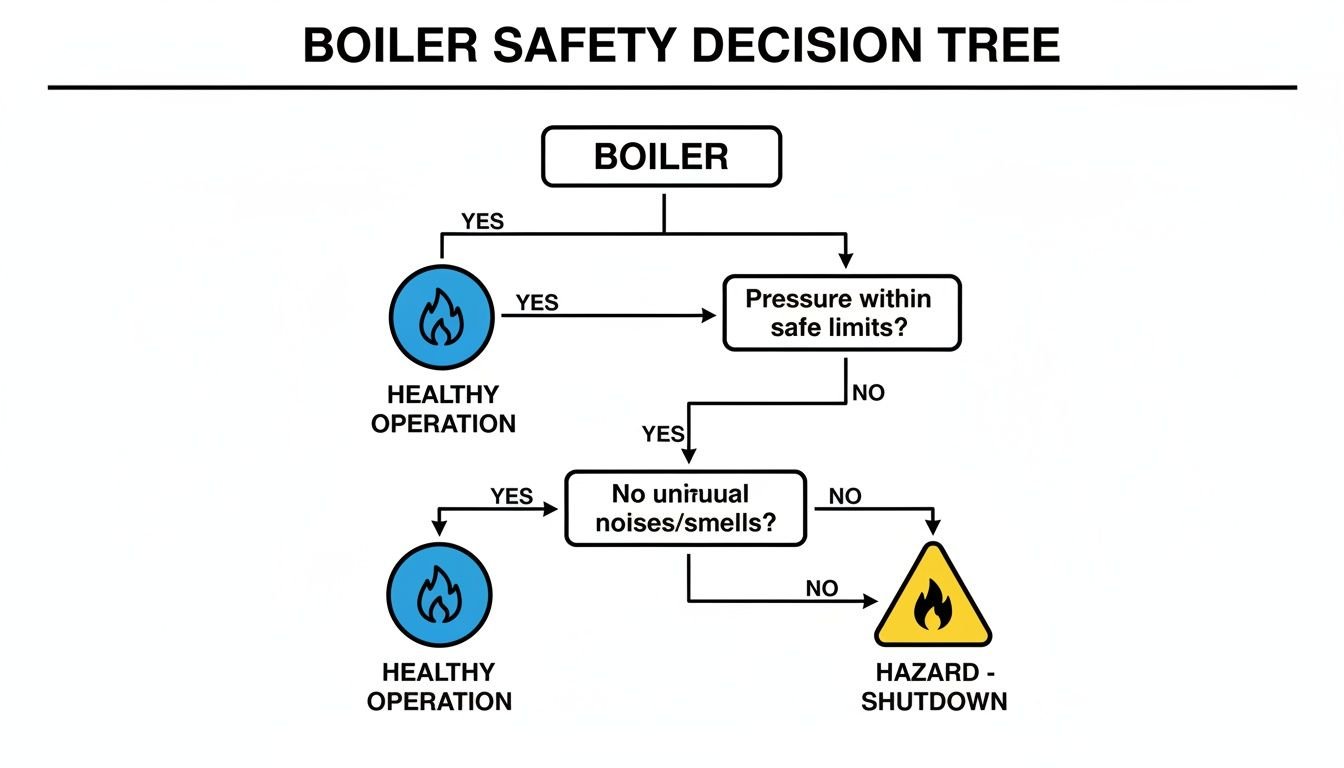
As you can see, the flame colour is your most immediate clue. A steady blue flame means all is well. A yellow flame is a warning sign that demands immediate action.
Is It Carbon Monoxide Poisoning or the Flu?
Trying to figure out if you have the flu or are being exposed to CO can be tough when you're feeling awful. This table breaks down the key differences to help you make a quick and safe decision.
| Symptom | Carbon Monoxide Poisoning | Common Flu |
|---|---|---|
| Symptom | Carbon Monoxide Poisoning | Common Flu |
| Fever | You won't have a temperature. | A high temperature is very common. |
| Others Feeling Ill | Everyone in the home feels sick at once. | The illness might spread over days. |
| Symptoms & Location | You feel better when you leave the house. | Symptoms are constant, no matter where you are. |
| Pets | Pets may also seem sick or very tired. | Pets are usually not affected. |
| Onset | Symptoms can come on very quickly. | Symptoms tend to develop over a day or two. |
Knowing these differences isn't just trivia; it's a life-saving skill. The risk is very real. According to the Office for National Statistics, carbon monoxide poisoning led to between 116 and 197 deaths each year in the UK from 2010 to 2020, with most of these tragedies happening in people's homes. You can read the official data yourself on the Office for National Statistics website.
Ultimately, you have to trust your instincts. If you feel unwell and something just doesn't add up—especially if you've seen any of the boiler warning signs—always, always err on the side of caution. Get everyone out into the fresh air and call for help.
Your First Line of Defence Is a CO Alarm
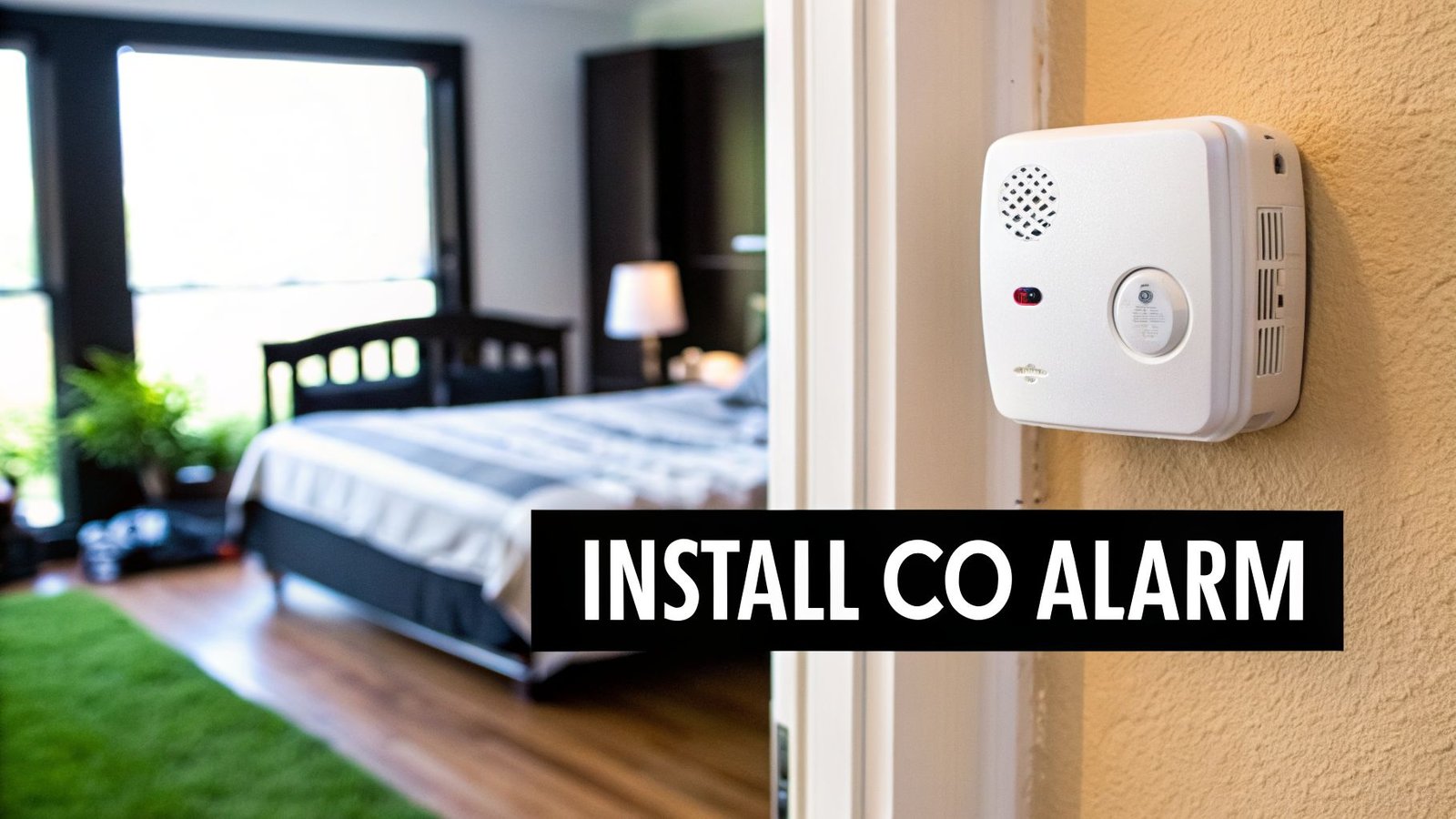
Even if you know what to look for in a faulty boiler, you can't rely on your senses to detect carbon monoxide. The gas is invisible, odourless, and tasteless. That’s precisely why a CO alarm isn't just a good idea—it’s your essential, always-on safeguard.
Think of it as an electronic nose, working around the clock to sniff out the one threat you can't. This small device is the single most important tool you have to protect your family from boiler carbon monoxide.
It's a common and incredibly dangerous myth that a smoke alarm will also detect carbon monoxide. They don't. Smoke alarms and CO alarms are built for completely different jobs, and you absolutely need both for your home to be truly safe.
How Carbon Monoxide Alarms Work
While a smoke alarm uses light or ionisation to spot physical particles in the air, a CO alarm works on a chemical level. Inside is a specialised electrochemical sensor.
When carbon monoxide gas wafts into the unit, it kicks off a chemical reaction on the sensor’s surface, generating a small electrical current. Once that current hits a predetermined level—meaning CO has been present at a dangerous concentration for a certain time—it triggers an ear-splitting alarm designed to wake you from the deepest sleep. It’s a beautifully simple, life-saving bit of technology.
The need for them is more urgent than ever. The UK has seen a worrying increase in CO-related incidents, with call-outs for fire and rescue services more than doubling. In one recent year, suspected carbon monoxide poisonings shot up to 7,703 from 3,876 in 2020, a sharp reminder of the growing risk. You can read more about this trend in the UK Fire and Rescue Service data summary.
Choosing and Placing Your CO Alarm
Not all alarms are made equal. When you're buying one, you must check the packaging for two critical marks of quality to ensure it’s a device you can trust.
- BS EN 50291: This is the British and European safety standard. It’s your guarantee that the alarm has undergone rigorous testing for accuracy and reliability.
- Kitemark: The famous BSI Kitemark is an extra layer of assurance, showing that the manufacturer’s products are regularly batch-tested to maintain high quality.
Once you’ve got a certified alarm, putting it in the right place is just as important. For it to work properly, follow these simple placement rules:
- Install one in every room with a fuel-burning appliance. That means the room with your gas boiler is a must, but also any rooms with gas fires, log burners, or similar appliances.
- Fit one near sleeping areas. An alarm in the hallway or on the landing outside bedrooms ensures the sound will carry and wake everyone up.
- Place it at head height. Carbon monoxide doesn't just rise like smoke; it mixes with the air. Because of this, alarms should be fixed to a wall at about head height—not on the ceiling. Keep it at least a metre away from the boiler to prevent false alarms from tiny, normal fluctuations.
In England, this is more than just expert advice. Landlords are legally required to fit a carbon monoxide alarm in any living space that has a fixed combustion appliance, such as a boiler. This legal requirement highlights just how vital these alarms are for modern home safety.
The Best Defence is a Good Offence: Annual Boiler Servicing
A carbon monoxide alarm is absolutely essential – it’s your final warning if things go wrong. But the real goal is to make sure it never has to go off in the first place. That’s where prevention comes in, and the single most powerful tool you have is an annual boiler service from a Gas Safe registered engineer.
This isn’t just another household chore to tick off a list. Think of it as the MOT for your home's heating system. Over a year of firing up day and night, small issues can begin to creep in. Seals can wear, airways can get partially blocked, and burners can get clogged with soot. On their own, they might seem minor, but these are the very problems that can lead to incomplete combustion and the production of silent, deadly boiler carbon monoxide.
An annual service is your peace of mind in a certificate. It’s the proof that a qualified professional has given your boiler a clean bill of health, ensuring it’s running not just efficiently, but most importantly, safely for the year ahead.
This is a deep dive into the health of your boiler, designed specifically to spot and fix the root causes of CO leaks before they ever become a threat.
What a Gas Safe Engineer Actually Does During a Service
When an engineer arrives, they're not just giving the boiler a quick wipe-down. They have a strict, detailed checklist to work through to guarantee your safety. It’s a systematic process from start to finish.
Here’s a breakdown of what a proper service must include:
- A Full Visual Check: First, they'll inspect the boiler itself. Is it fitted securely? Is there any visible damage or corrosion to the casing? They're looking at the big picture to ensure the initial installation is still sound.
- Flue and Ventilation Inspection: This is a non-negotiable safety step. The engineer will meticulously check the flue (the boiler’s exhaust pipe) to ensure it’s clear of blockages and securely attached, venting all those fumes safely outside. They'll also make sure any air vents are clear, as a boiler starved of oxygen is a primary cause of CO production.
- Checking the Internals: The boiler cover comes off for this part. The engineer will examine all the critical working parts – the burner, the main heat exchanger, the injectors, and the seals – looking for any wear and tear or soot build-up that could cause problems.
- Testing All Safety Devices: Boilers have built-in fail-safes that shut the system down if it overheats or if the flame fails. The engineer will deliberately test these devices to make sure they'll work instantly in an emergency.
- Gas Pressure and Combustion Analysis: Finally, they'll check the boiler is operating at the correct gas pressure. Then, using a flue gas analyser, they will measure the exact mix of gases in the exhaust fumes. This test provides hard data that the fuel is burning cleanly and efficiently, with no dangerous levels of carbon monoxide being produced.
This thorough, step-by-step process means any potential fault, whether it's a loose connection or a dirty burner, is found and fixed right there and then.
More Than Just a Safety Check
While preventing a CO leak is the top priority, a regular service pays for itself in other ways, too. A well-maintained boiler is an efficient boiler. By cleaning the components and ensuring everything is calibrated perfectly, the engineer makes sure your boiler isn't working harder than it needs to, which translates directly into lower energy bills.
It also massively extends the lifespan of your boiler. Catching a small, inexpensive part that’s beginning to fail is much better than waiting for it to break completely and take other components with it. That annual check-up is a small price to pay to avoid the huge cost and stress of a total boiler breakdown on the coldest day of the year.
To see exactly what's involved in this vital maintenance, you can learn more about professional boiler servicing and how it keeps your home safe and warm.
What to Do in a Carbon Monoxide Emergency
That piercing shriek from your carbon monoxide alarm is a sound you can't ignore. If it goes off, or if you have any reason to suspect a leak, the single most important thing is to act fast and stay calm. Knowing exactly what to do in that moment can genuinely save lives.
Think of it as a fire drill for an invisible threat. Your only goal is to get everyone out and get the experts in. Here's your step-by-step plan.
Your Emergency Action Plan
If you think you have a carbon monoxide leak, follow these steps immediately and in this exact order. Don't second-guess yourself—just act.
- Turn It All Off: Go straight to your boiler, gas fire, and cooker and switch them off. Don't waste time trying to figure out which appliance is the culprit. Just shut everything down.
- Get the Air Moving: Open all the windows and doors you can, as wide as they'll go. You need to get fresh air flowing through your home immediately to help disperse any CO that has built up.
- Everybody Out: Get yourself, your family, and any pets out of the house right away. Move into the fresh air. Forget about grabbing coats or phones—people's safety comes first.
- Make the Call: Once you're safely outside, call the National Gas Emergency Service on their free, 24-hour helpline: 0800 111 999. If anyone is showing symptoms like headaches, dizziness, or nausea, call 999 for an ambulance and make sure you tell them you suspect carbon monoxide poisoning.
Stay outside. Do not go back into your property for any reason until the emergency services have investigated and given you the all-clear. Stepping back into a house with a CO leak can be fatal.
Finally, none of your gas appliances should be used again until a registered Gas Safe engineer has checked them over and confirmed they are safe. If you need a professional out quickly, our guide to boiler repair services can walk you through what's involved in an emergency call-out.
Your Boiler Carbon Monoxide Questions Answered
It's completely normal to have a few lingering questions, even after getting to grips with the basics of boiler safety. We get asked these all the time by homeowners and landlords across London, so let's tackle some of the most common ones head-on.
Can a Brand New Boiler Produce Carbon Monoxide?
Yes, it absolutely can. It’s a common misconception that a modern, efficient boiler is immune to producing carbon monoxide, but any fuel-burning appliance has the potential. The danger rarely lies with a fault in the new boiler itself.
The real risk comes from incorrect installation. If the flue (the pipe that carries exhaust gases outside) is badly fitted or gets blocked, or if there isn't enough ventilation, even a top-of-the-range boiler can spill deadly CO into your home. This is precisely why only a Gas Safe registered engineer is legally allowed to install one. Your new boiler still needs an annual service and a reliable CO alarm, no matter how new it is.
How Often Should I Replace My Carbon Monoxide Alarm?
Every CO alarm has an expiry date. The sensor inside that detects the gas simply wears out over time. Most alarms will need replacing every 5 to 10 years, but it's vital you check the manufacturer's specific guidance for your model.
Look for a "replace by" date printed on the alarm itself. When you install a new one, make a note of this date in your phone or calendar. Many modern alarms also have a specific end-of-life chirp—a different sound from the main alarm—to let you know its time is up.
What Are a Landlord's Legal Duties for Boiler Safety in London?
For landlords in the UK, the legal duties around gas safety are strict and non-negotiable. Failing to comply not only puts tenants in serious danger but also comes with severe legal penalties.
The key responsibilities are crystal clear:
- Annual Gas Safety Check: Every gas appliance, flue, and pipe supplied by the landlord must be inspected annually by a Gas Safe registered engineer.
- Provide a Certificate: Tenants must be given a copy of the Gas Safety Certificate. For existing tenants, this is within 28 days of the check; for new tenants, it's at the very start of their tenancy.
- Install CO Alarms: Since October 2022, regulations in England mandate that landlords must fit at least one carbon monoxide alarm in any room with a fixed combustion appliance, like a gas boiler or a fireplace.
These aren't just recommendations; they are legal requirements designed to save lives.
For guaranteed peace of mind and professional care for your heating system, trust the experts. Urbanic Services Ltd offers Gas Safe certified boiler servicing, repairs, and care plans across London. Book your service online today at https://urbanicservice.co.uk.