
That strange chill you feel in the living room, even when the heating is on full blast? It's probably not just a draught. If you're dealing with radiators that won't get hot or weird noises from your pipes, your heating system is likely telling you it needs a good clean.
Getting rid of the gunk that builds up inside is one of the best ways to get your heating running efficiently again, keeping your home warm and your energy bills from creeping up.
Is Your Central Heating System Crying Out for Help?
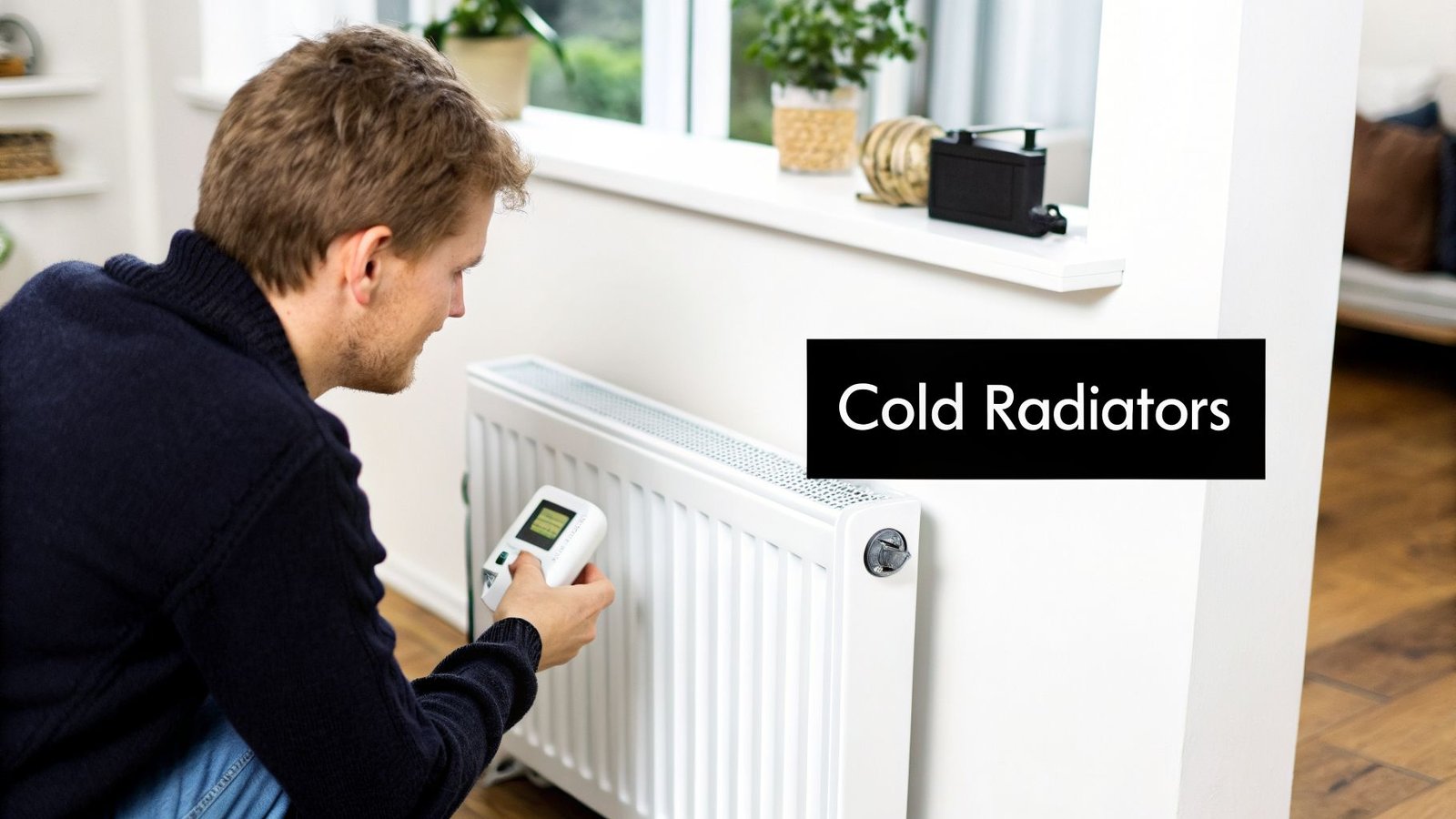
It’s tempting to ignore the small signs, especially when your heating is still mostly doing its job. But those little annoyances are often the first warnings of a bigger problem brewing inside your pipes and radiators.
Over the years, the water circulating in your closed-loop system causes the inside of your pipework and radiators to corrode. This creates a thick, black, metallic sludge—a nasty mix of rust and other bits of debris. This gunk doesn't just vanish; it gets pushed around your system, eventually settling and causing blockages. It can clog up narrow pipework, choke your radiators, and even wreck the delicate components inside your boiler.
The Telltale Signs of a Dirty System
Think of this sludge as cholesterol for your heating system. It slowly clogs the arteries of your pipework, restricting the flow of hot water and forcing your boiler to work much harder just to keep you warm. This isn't just a theory; you'll see and hear the evidence around your home.
Here are a few classic symptoms we see all the time:
- Cold spots on radiators, particularly at the bottom. This is the number one sign that sludge has settled and is blocking hot water from filling the radiator.
- Radiators that stay completely cold, even when the pipes going into them are hot.
- Odd noises coming from the boiler or pipes—things like gurgling, banging, or a 'kettling' sound.
- Your house simply takes ages to heat up.
- You get a bit of a shock when you see your energy bills, because they seem far too high for your usage.
To help you connect the dots, we've put together this quick-reference table. It lines up the symptoms you might be noticing with what's likely causing them and the best way to sort it out.
Diagnosing Your Heating System Problems
| Symptom | Likely Cause | Recommended Action |
|---|---|---|
| Radiators cold at the bottom | Sludge build-up blocking water flow | System flush (DIY or professional) |
| Radiators cold at the top | Trapped air | Bleed the radiators |
| Kettling/banging boiler noises | Limescale on the heat exchanger or sludge | Professional chemical flush or powerflush |
| Noisy pipes (gurgling/rushing) | Air in the system or incorrect pump speed | Bleed radiators; check pump settings |
| System slow to heat up | General inefficiency from sludge/scale | Full system clean and inhibitor top-up |
| Dirty water when bleeding radiators | Corrosion and sludge in the system | A full system clean is needed |
This table is a great starting point, but remember that a proper diagnosis from a qualified engineer is always the best bet for complex issues.
Why You Can't Afford to Ignore It
These problems are more than just a nuisance; they hit you right in the wallet. Sludge and scale can slash a radiator's heat output by as much as 25-40%. Research on UK homes suggests this inefficiency can lead to an overspend of around £150 each winter. For homes in London and other hard-water areas, where limescale is a constant battle, a professional clean is often the only way to get things running properly again.
Ignoring the warning signs just lets the problem fester, putting your boiler under immense strain. An overworked boiler is far more likely to break down, and its lifespan will almost certainly be cut short. What might have been a straightforward cleaning job can quickly become a very expensive boiler replacement.
By dealing with sludge build-up early, you’re not just warming up a few cold radiators. You're making a smart investment in your property, protecting your boiler, and ensuring you have reliable heating when you need it most.
On top of that, nearly all boiler manufacturers' warranties are only valid if the system is correctly cleaned at installation and properly maintained. If you skip this, you could void your warranty, leaving you to foot the bill for any future repairs. Understanding what a modern boiler system involves shows why keeping it clean is so vital for all its complex parts.
Ultimately, cleaning your central heating system isn't just a repair—it's essential maintenance that brings comfort, efficiency, and real peace of mind.
Essential Checks Before You Start Any Work
Right, before you touch a single valve or reach for a spanner, we need to talk. Taking a few minutes to run through some basic checks isn't just good practice; it's your best defence against turning a simple job into a weekend-ruining disaster. Think of it as mapping out your route before you start the journey.
First things first, you absolutely have to know what kind of heating system you're dealing with. The process for cleaning and, more importantly, for getting everything running again, changes completely depending on whether you have a combi, a system boiler, or an older conventional setup with tanks in the loft.
Getting this wrong is a fast track to headaches and potential damage. If you're even slightly unsure, it’s well worth reading our guide on how to identify what type of boiler you have. Honestly, it’s the most important first step.
Safety Shutdown and Power Isolation
With your system type confirmed, the next job is to shut it down safely. This is more than just turning down the thermostat – you need to make the entire system dead and safe to work on.
- Turn Off the Boiler: Go to the boiler itself and use its main controls to switch it off completely. Don't forget to turn off any separate programmers or smart thermostats as well.
- Isolate the Power: Look for a fused switch on the wall near your boiler. Flick it to the 'Off' position. This cuts the electricity to the unit, and this is a critical safety step you cannot skip.
- Wait for it to Cool: Never, ever start draining a hot heating system. The water inside can be dangerously hot. Give it at least a few hours to cool down completely.
Remember, a cool system is a safe system. Being impatient at this stage is a classic DIY mistake that can lead to some nasty burns. Just let it cool down properly.
Locating Key System Components
While the system is cooling, use the time to do a bit of detective work. Go on a quick tour of your home and physically locate the key parts of your heating system. It’s far better to find them now than to be frantically searching later with a bucket of black sludge in your hand.
You're on the hunt for:
- The Pressure Gauge: This is usually a small dial on the front of the boiler itself. It’s your best friend when it comes to repressurising the system later on.
- The Filling Loop: Look for a silver, flexible hose (it might be detached and stored nearby) under the boiler. This is how you'll let fresh water back into the system to get the pressure right.
- Radiator Valves: Every radiator has two. You'll see a thermostatic radiator valve (TRV) for adjusting the room temperature, and on the other end, a lockshield valve, which is usually covered by a plastic cap.
- Drain-Off Valve: Find the lowest point of your system. This is often a small, brass valve on a ground-floor radiator or on the pipework itself, sometimes even outside. It's how you'll get the old water out.
Finally, get your toolkit ready. A few old towels or dust sheets are a must, along with a sturdy bucket, a radiator bleed key, and a couple of adjustable spanners. Having everything within arm's reach before you start makes the whole process run much more smoothly.
Practical DIY Cleaning Techniques for Homeowners
When your heating system feels a bit tired and sluggish, you don’t always have to reach for the phone to call an engineer. If you’re a confident DIYer, there are a few hands-on jobs you can tackle yourself that will genuinely get your heating back on track.
These techniques are your first line of defence, hitting the most common problems head-on: trapped air causing cold spots, stubborn sludge blockages in a single radiator, and preventing future corrosion before it even starts.
But before you even think about touching a valve, a quick safety check is non-negotiable. It’s simple, but it’s the foundation for getting the job done safely.
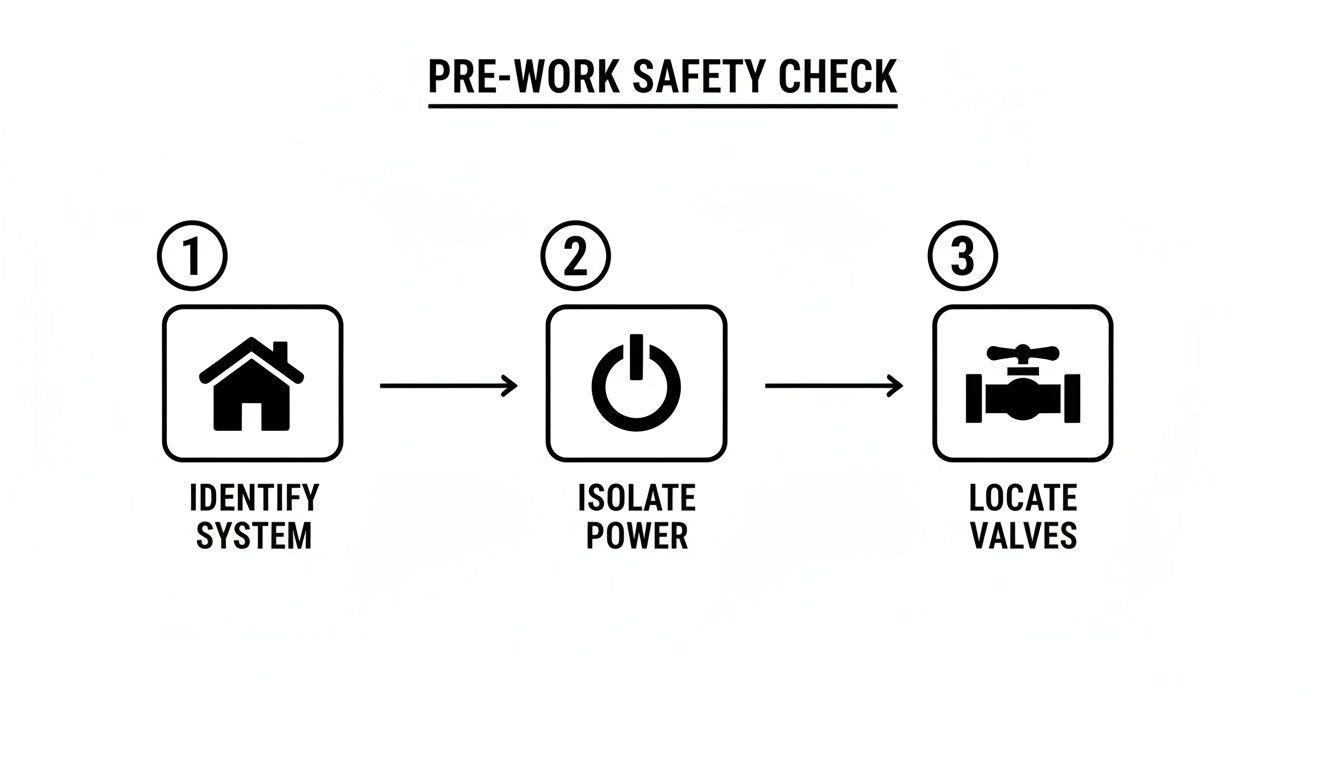
Seriously, don't skip this. Knowing your system, killing the power, and finding your main valves will save you a world of trouble.
Bleeding Your Radiators to Release Trapped Air
Are your radiators hot at the bottom but stone-cold at the top? That’s the classic sign of trapped air. Air gets stuck at the highest point, forming a bubble that stops hot water from filling the radiator completely.
Thankfully, bleeding them is one of the easiest fixes in the book. You just need a radiator bleed key from any DIY shop and an old cloth to catch any drips. Make sure the heating is off and the radiators have cooled down first.
- Start with the radiator furthest from your boiler (often downstairs) and methodically work your way back towards it.
- Hold your cloth under the little bleed valve, which you’ll find at a top corner of the radiator.
- Pop the key onto the square bit in the middle of the valve and give it a slow anti-clockwise turn – a quarter or half-turn is usually plenty.
- You’ll hear a distinct hissing sound. That’s the air escaping. Just wait patiently until the hissing stops and a little dribble of water comes out.
- As soon as you see water, quickly turn the key clockwise to tighten the valve back up, being careful not to overtighten it.
Once you’ve done this for every radiator, you’ll need to have a look at your boiler’s pressure gauge. All that released air will have caused the system pressure to drop. You'll need to top it up using the filling loop until it’s back in the green zone, which is typically around 1.5 bar.
How to Flush a Single Stubborn Radiator
Sometimes, you’ve bled every radiator and one still refuses to play ball, staying cold at the bottom. This points to a build-up of heavy sludge that bleeding just won’t shift. You can often solve this by giving that one radiator a good flush-out, without draining the whole system.
First, you’ll need to isolate the problem radiator. Turn the big plastic thermostatic valve (TRV) to the ‘0’ setting. On the other side is the lockshield valve; pull off the plastic cap and use a spanner to turn the valve spindle fully clockwise. The key here is to count exactly how many turns it takes, as you’ll need this later!
Now for the messy bit. Lay down old towels and a shallow tray under the valve connections. Using a set of spanners, carefully loosen the large nuts that connect the valves to the radiator. Black, mucky water will start to seep out. Once it’s just a trickle, you can undo the nuts completely. This is a two-person job – get a friend to help you lift the heavy radiator off its brackets and carry it outside.
This is where the magic happens. Lay the radiator down and stick a garden hose into one of the valve openings. Blast water through it until it runs out of the other end. You'll probably be shocked by the sheer amount of black gunk that comes out. Keep going until the water runs completely clear.
Once it’s clean, bring it back in, reconnect it, and (this is crucial) open the lockshield valve by the exact same number of turns you used to close it. Open the TRV fully, then bleed the radiator to get rid of any new air. Finally, check and top up your boiler pressure again.
The Power of Prevention: Dosing with Inhibitor
Honestly, the most important thing you can do for your heating system is to dose it with a chemical inhibitor. This stuff is liquid gold, working silently to stop the internal corrosion that creates sludge in the first place.
Think of inhibitor as a bodyguard for your pipework. It coats all the metal surfaces inside your system, preventing the water from reacting with the metal and causing rust. In fact, most boiler manufacturers will void your warranty if they find the system hasn't been treated with inhibitor, so it’s essential for protecting your investment.
Adding it to a modern sealed system is simpler than you might think. A heated towel rail is often the perfect place to do it.
- Pick your spot: A bathroom towel rail is usually the highest and most accessible point.
- Make some room: With the system off and cool, let a bit of water out of the towel rail’s bleed valve. This creates space for the inhibitor.
- Get it in there: Most inhibitor bottles come with a handy adapter that screws right onto the bleed valve, letting you squeeze the contents directly into the radiator.
- Circulate and finish: Close the bleed valve, re-pressurise the system at the boiler, and then switch the heating on for at least an hour. This will make sure the inhibitor gets pumped through every pipe and radiator.
This one simple task is preventative maintenance at its best. It can add years to the life of your boiler and save you a fortune in future repairs. A small job with a huge payoff.
When It’s Time to Call in the Professionals
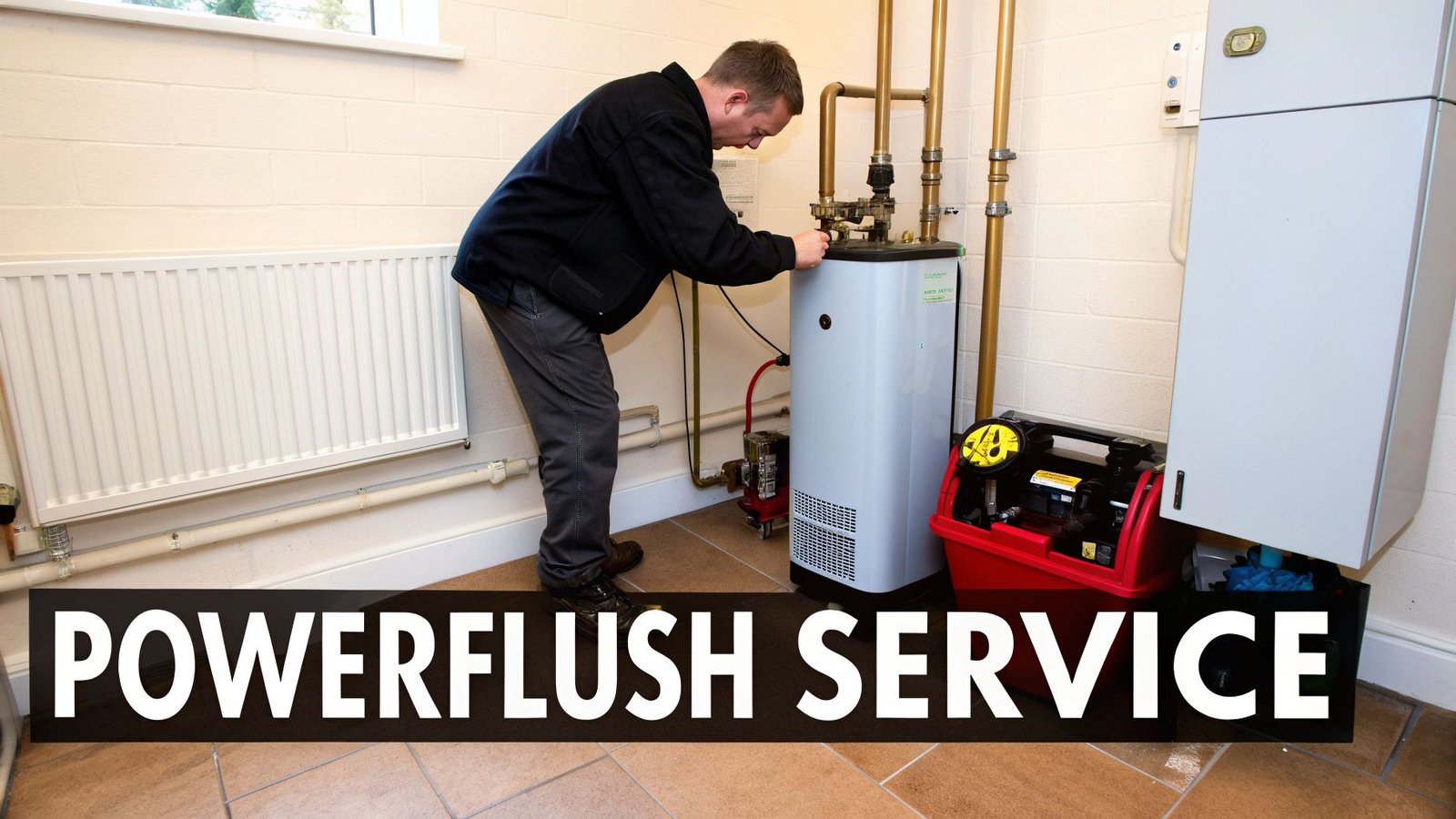
While bleeding a radiator or flushing a single one can certainly help, these are often just sticking plasters over a much deeper issue. If your system is clogged with years of accumulated sludge, these quick fixes will only provide temporary relief. Knowing when you’ve reached the limits of DIY is the key to protecting your boiler and keeping your home warm.
If you've tried the basics but the cold spots return or the problems are spread across the house, it’s a big red flag. This tells you the issue isn't isolated; it's a system-wide blockage that needs more than a simple bleed. At this point, only a professional deep clean is going to sort it out for good.
Powerflushing: The Ultimate Deep Clean
When an engineer talks about a deep clean, they usually mean a powerflush. This is a serious bit of kit and a world away from a DIY flush. It’s a specialised process designed to aggressively scour the gunk from the inside of your entire heating system. A Gas Safe engineer will connect a high-velocity pumping unit to your system, often in place of your central heating pump or one of your radiators.
The machine then forces water and powerful cleaning chemicals through your pipework at a rate your boiler's pump could never achieve. The sheer force dislodges years of compacted sludge, rust, and limescale. The engineer will reverse the flow multiple times to really stir up the debris, which is then captured by powerful magnets on the machine before being safely flushed away.
You should be thinking seriously about a powerflush if you notice these signs:
- Several radiators have cold patches at the bottom, or some don't heat up at all.
- The boiler has become really noisy, making loud banging or "kettling" sounds.
- You get thick, black sludge out when you bleed any of the radiators.
- The house takes ages to warm up, and your energy bills are creeping up for no obvious reason.
- Your boiler keeps cutting out, which can be a sign of a blocked heat exchanger.
A 2023 study from the Heating Manufacturer's Association found powerflushing can remove up to 95% of debris. This restores your heating's performance and can prevent up to 80% of common boiler breakdowns. In fact, London councils in boroughs like Greenwich and Lewisham report that sludged-up systems are behind 15% of all emergency heating call-outs in winter. The evidence is clear—you can dive deeper into the data in this Ofgem report on heating upgrades.
The Gentler Alternative: A Chemical Flush
For some homes, a full-bore powerflush can be a bit too much. If you have an older system with delicate pipework or fragile soldered joints, the high-pressure flow could pose a risk. In these cases, a chemical flush is a much safer, yet still very effective, professional option.
Here, an engineer drains your system and refills it with water and a strong, sludge-dissolving chemical. This solution is then circulated around the system for several hours—or sometimes even a couple of days in severe cases—using the boiler's own pump.
The chemicals get to work breaking down the sludge and scale. Once the gunk is dissolved, the entire system is drained and flushed through with fresh water again and again until it runs completely clear. Finally, it’s refilled with clean water and a dose of protective inhibitor liquid.
The Smartest Upgrade After Your Clean: A Magnetic Filter
After you've invested in a professional clean, the last thing you want is for that sludge to start building up again. This is why any good engineer will insist on fitting a magnetic system filter.
A magnetic filter is a non-negotiable addition after a powerflush or chemical flush. Think of it as providing ongoing insurance for your boiler and central heating system, catching corrosive sludge before it can cause any damage.
This clever device is fitted onto your pipework, usually on the return pipe just before the boiler. As water circulates, a powerful internal magnet grabs all the metallic debris (that black sludge) before it can get into your boiler's delicate and expensive components. It acts as a permanent trap, and your engineer can quickly clean it out during your annual boiler service. It’s a small investment that delivers huge long-term protection, extending your boiler's life and keeping your system running efficiently.
To ensure your boiler stays in peak condition year-round, take a look at our guide on the importance of annual boiler servicing.
Understanding the Costs and Long-Term Value
When your heating system is playing up, it’s easy to baulk at the potential cost of a professional clean. But trust me, seeing it as just another expense is a mistake. It’s better to think of it as a smart investment in your home’s comfort, efficiency, and overall health.
Let's talk numbers. The price for a professional clean isn't set in stone, and any good engineer will tell you the final quote depends on what they find when they get to your property.
Breaking Down the Price of a Professional Clean
So, what actually goes into the cost? An engineer will need to assess your home to give you an accurate price, but it generally boils down to a few key things.
Here’s what you can expect to influence the final bill:
- The Size of Your System: This is the big one. A two-bedroom flat with six radiators is a much quicker job than a five-bedroom house with fifteen. More radiators simply mean more work.
- How Bad the Problem Is: If your system just needs a routine tidy-up, you’ll be looking at the lower end of the scale. But if it’s choked with years of thick, stubborn sludge, the engineer will have to work a lot harder and longer to get it clear.
- The Type of Service: A standard chemical flush is a solid choice for most systems. A powerflush, on the other hand, uses more powerful equipment and is a far more intensive process, so it naturally costs more.
To give you a rough idea, we've put together some ballpark figures for what you might expect to pay in the London area. These are just estimates for 2026, but they should help you budget.
Cost vs Benefit of Professional Heating System Cleaning
The table below breaks down the typical costs for professional services and what you can expect in return. It’s not just about the upfront price, but the long-term savings and performance gains.
| Service | Estimated London Cost (2026) | Annual Energy Saving Potential | Key Benefit |
|---|---|---|---|
| Chemical Flush | £450 – £700 | 6-10% | A fantastic all-round clean, perfect for systems with moderate sludge or older, more delicate pipework. |
| Powerflush | £650 – £950+ | 10-15% | The ultimate deep clean. It can restore even the most heavily blocked systems to almost new condition. |
| Magnetic Filter Installation | £200 – £350 | 1-2% (ongoing) | This is your insurance policy. It protects your boiler after the clean, capturing sludge before it can cause problems again. |
As you can see, the initial outlay is significant, but the real story is how quickly that investment starts paying for itself.
The Return on Your Investment
Paying for a professional clean isn’t money lost; it's money spent to save a whole lot more later on. The payback comes from three key areas: lower energy bills, avoiding expensive repairs, and making your boiler last longer.
A clean system is an efficient one. Radiators heat up faster and hotter, meaning your boiler doesn't have to work as hard. A powerflush can boost your heating efficiency by up to 15%, which you’ll see reflected in your gas bills every winter. For an average home, those savings really add up.
Think of it this way: continuing to run a dirty, inefficient system is like throwing money away every single day. A professional clean stops that wastage and puts that money back in your pocket.
What's more, sludge is the number one enemy of your boiler's internal parts, like the pump and heat exchanger. An emergency call-out for a broken-down boiler in the middle of winter can easily set you back hundreds of pounds. A system flush is preventative maintenance that helps you sidestep those stressful and costly breakdowns.
And the biggest saving of all? Not having to replace your boiler years before you should have to. A new boiler is a huge expense. By protecting yours from the corrosive gunk that builds up over time, you can extend its life by several years, pushing a £3,000+ replacement cost far into the future.
A Few Common Questions About System Cleaning
Even after walking through the steps, you might still have a couple of things on your mind. That’s completely normal. When it’s your home’s heating on the line, you want to be certain. Here are the answers to some of the most common questions we hear from homeowners.
Will a Powerflush Damage My Old Pipes?
This is probably the number one worry we come across, especially in older homes. The short answer is no, not if it's done correctly. A professional powerflush uses high-velocity water, but it's actually a low-pressure process. It's designed to scour away sludge, not blast your pipes apart.
The real issue isn't the powerflush itself, but the state of the pipework beforehand. If a pipe is already paper-thin with corrosion and just waiting for an excuse to spring a leak, the flow of water can expose that weak spot. Any good Gas Safe engineer will inspect your system first. If they have any doubts, they’ll suggest a gentler, but still effective, chemical flush instead.
It's simple: a powerflush doesn't cause leaks, it finds them. A professional will always spot the risks first and choose the right method for your home's unique system.
How Often Does a Heating System Need a Good Clean?
There isn't one strict rule for every system, as it really depends on its age and condition. But, based on years of experience, here's a reliable guide:
- When you get a new boiler: This isn't just a recommendation; it's a must. Nearly all boiler manufacturers will void the warranty if the system wasn't properly cleaned before their appliance was installed.
- Roughly every 5-6 years: Think of this as preventative medicine for your heating. A flush at this interval keeps everything running efficiently and stops sludge from building up into a major headache.
- The moment you notice symptoms: If radiators are staying cold, the system is making a racket, or it's taking ages to warm up, your system is telling you it needs a clean. Don't wait.
Of course, if your system has a magnetic filter and the right level of inhibitor, you can often go much longer between deep cleans.
Are Chemical Inhibitors Really That Important?
Yes, without a doubt. For the small cost of a bottle, an inhibitor is the single best thing you can do to protect your entire central heating system. It's a tiny investment that prevents thousands of pounds worth of damage.
An inhibitor works by coating the inside of your pipes and radiators with a protective layer. This stops the chemical reaction between the water and the metal parts that creates all that nasty black sludge (magnetite). Without it, your system is literally eating itself from the inside out. For a £20-£30 bottle, you’re protecting a boiler that costs thousands, keeping your radiators efficient, and your energy bills down. It’s a no-brainer.
If your heating system is showing any of these tell-tale signs, don't put it off until it breaks down completely. The Gas Safe registered engineers at Urbanic Services Ltd can quickly find the root of the problem and advise on the right solution, whether it's a simple dose of chemicals or a full powerflush. Get a fast, transparent quote online and bring the warmth and efficiency back to your home.