
So, what is a boiler system, really? We all know it's the box that gives us heating and hot water, but it's much more than that. Think of it as the real heart of your home, tirelessly working behind the scenes to keep you warm and comfortable, especially during those chilly London winters.
Understanding Your Home's Heating Heart
A boiler is the engine of your entire central heating system. It’s easy to take for granted, but without it, your home would be a very different place.
Let's use an analogy. If your home's pipework is its circulatory system, the boiler is the heart, pumping hot water around the body. When you turn up the thermostat or run a hot tap, you're essentially telling the heart to get to work. It fires up, burning fuel (usually natural gas for most of us in London) to super-heat water inside a clever device called a heat exchanger. A pump then sends this hot water on a journey through the pipes to your radiators, which give off that wonderful warmth into your rooms. The same process delivers hot water straight to your taps.
Why Your Boiler Choice Matters
Getting the right boiler isn't just a technical decision; it has a huge impact on your daily comfort and, crucially, your energy bills. This is especially true in London, where every penny on your gas bill counts. There are three main types, and each one is designed for a different kind of home.
- Combi Boilers: These are fantastic all-in-one units. They heat water directly from the mains, giving you instant hot water and heating without needing a separate storage tank. Perfect for flats and smaller houses where space is at a premium.
- System Boilers: Need to run a couple of showers at once? A system boiler is probably for you. It works with a hot water cylinder to keep a ready supply of hot water, making it a great choice for larger family homes with a higher demand.
- Regular Boilers: You'll often find these in older properties. Also known as 'conventional' boilers, they use both a hot water cylinder and a cold water storage tank (usually in the loft). They're big and a bit old-fashioned, but they can be a solid option if your home already has the right pipework.
An efficient, modern boiler is one of the smartest investments you can make in your property. It does more than just lower your carbon footprint; it can genuinely slash your annual energy bills by hundreds of pounds. Swapping an old, G-rated boiler for a new A-rated model means jumping from around 60% efficiency to over 90%. That’s a massive difference you’ll feel in your wallet.
How a Modern Boiler Actually Works
Ever wondered what really happens inside that white box on the wall when you turn up the thermostat? It's not magic, but a clever sequence of events designed to turn fuel into warmth, efficiently and safely. It all starts with a simple signal.
The moment your room temperature dips below your chosen setting, the thermostat sends a little electrical nudge to the boiler. This is the command to get to work. In response, a valve opens, letting a controlled amount of gas into a sealed combustion chamber. An ignition system then either creates a spark or heats an element, which safely lights the gas.
The Heart of the System: Heat Exchanger and Circulation
This is where the real work begins. The controlled flame produces incredibly hot gases, which are channelled through a key component called the primary heat exchanger. Think of it as a maze of copper pipes with water flowing through them. As the hot gases pass over these pipes, they transfer their heat to the water inside, raising its temperature very quickly.
Once the water is hot enough, a small but powerful pump kicks into action. This pump pushes the heated water out of the boiler and through the network of pipes leading to your radiators and taps. As the water flows through the radiators, it gives off its heat, warming your room. Having done its job, the now-cooler water flows back to the boiler to start the cycle all over again.
The chart below gives a great visual summary of how your boiler creates a warm, comfortable, and cost-effective home.
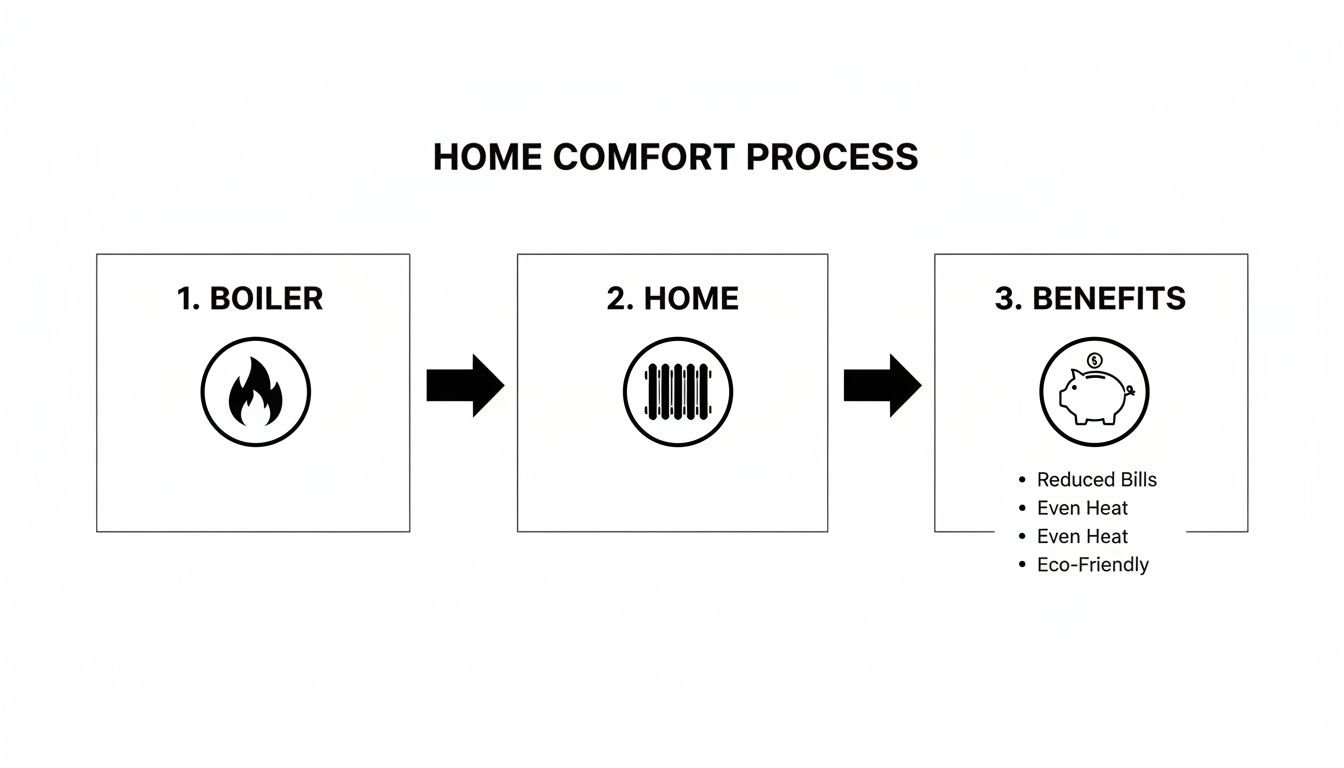
This process shows the direct link between an efficient boiler and the real-world benefits you feel – lower bills and consistent warmth throughout your home.
The Secret to Modern Boiler Efficiency
So, what makes a new A-rated boiler so much better than an old one? It all comes down to its ability to recycle heat. Older boilers were incredibly wasteful; they would simply vent all the hot exhaust gases straight out through the flue, losing a huge amount of energy in the process.
Think of it like wringing out a very wet towel. A modern condensing boiler is designed to squeeze every last drop of heat from the fuel it burns.
It does this using a second heat exchanger. This clever addition captures extra heat from the waste gases that would otherwise escape. As these gases cool down, the water vapour they contain condenses back into liquid water, releasing energy known as latent heat.
This captured heat isn't wasted. It’s used to pre-warm the cold water returning to the boiler from your radiators. This means the main burner doesn’t have to fire up as intensely to get the water to the right temperature. It's this two-step process that allows modern boilers to achieve efficiency ratings of over 90%, which translates directly into lower gas bills and a smaller carbon footprint for your London property.
Choosing the Right Boiler for Your London Home
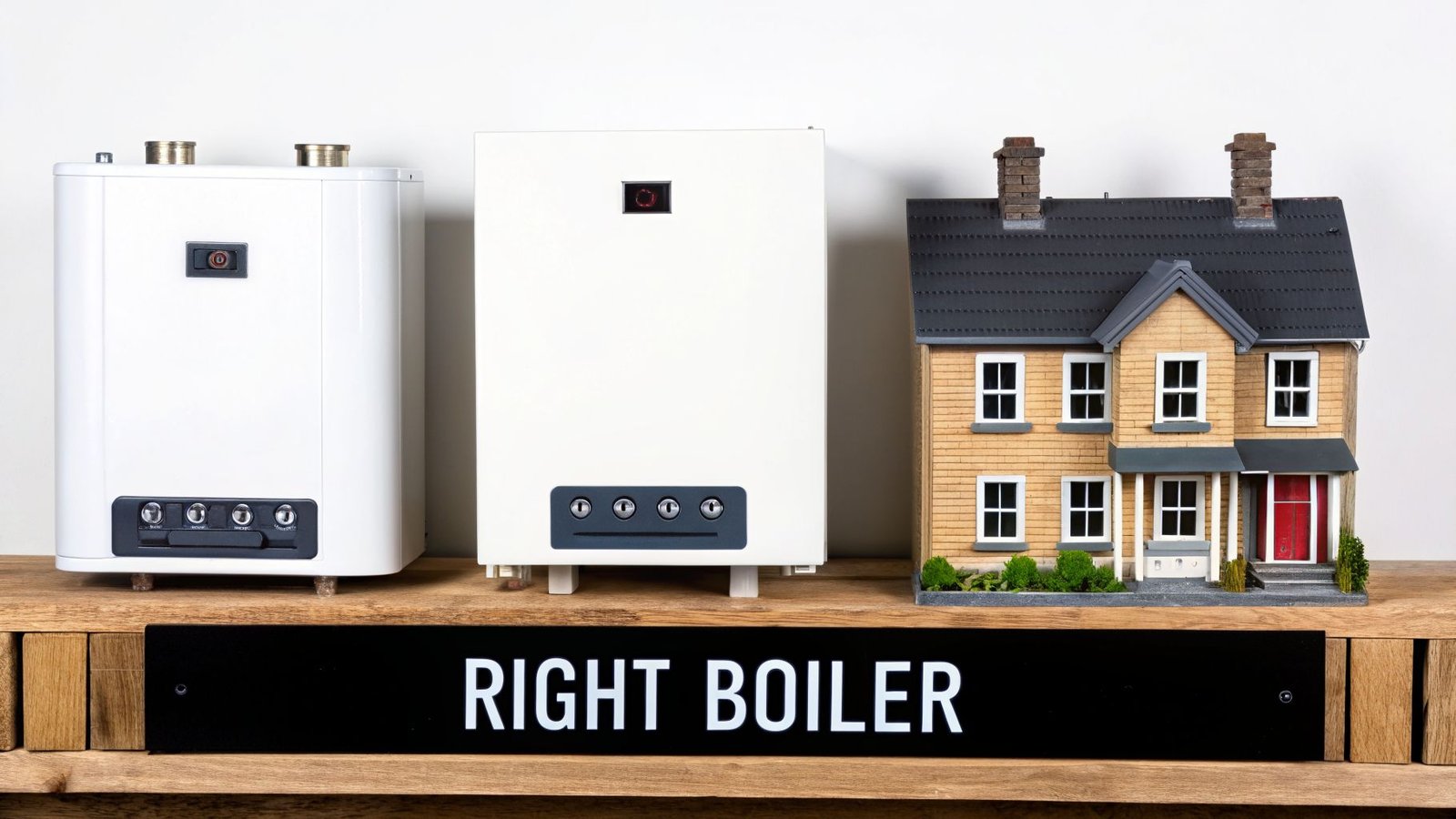
Picking a new boiler isn’t just about swapping one white box for another. It’s a decision that hinges entirely on your home, your family’s daily routine, and of course, your budget. For Londoners, where every square foot of space is precious and energy bills are a constant concern, getting this choice right is crucial.
The first step is getting to know the main players in the boiler world. You’ve got three main types to consider: combi, system, and regular (often called conventional) boilers. Each one works differently and fits a specific type of home, whether that's a compact flat in Greenwich or a large, rambling family house in Lewisham.
The Combi Boiler: A London Favourite
The combination or combi boiler is the UK's most popular choice, and for very good reason. It’s a wonderfully efficient, all-in-one unit that delivers both your central heating and instant hot water straight from the mains. No tanks, no cylinders—just hot water when you need it.
This design is a game-changer for space. Without a bulky hot water cylinder in an airing cupboard or cold water tanks filling up the loft, you reclaim valuable storage space. For most London properties, that’s a massive win.
- Best For: Flats, apartments, and smaller houses with one or two bathrooms.
- Key Benefit: Hot water on demand and major space savings.
- Consideration: Water pressure can dip if you try to run multiple hot taps at once.
The System Boiler: The Family Powerhouse
If you’re in a larger home with several bathrooms and a constant, high demand for hot water, a system boiler is almost certainly your best bet. Unlike a combi, a system boiler works with a separate hot water cylinder, keeping a large volume of hot water ready to go at a moment's notice.
What does that mean in practice? It means you can have a shower running, someone doing the washing-up, and a bath filling all at the same time, without anyone getting a blast of cold water. While it does need space for the cylinder, it offers the robust performance that a busy household needs. Plus, many components are built right into the boiler, making the installation cleaner and quicker than a traditional regular boiler system.
For a growing family, the ability to meet high hot water demand simultaneously is non-negotiable. A system boiler provides that peace of mind, ensuring there are no arguments over who gets the first shower in the morning.
The Regular Boiler: The Traditional Option
The regular boiler, also known as a conventional boiler, is the original workhorse. This setup requires both a hot water storage cylinder and separate feed and expansion tanks, which you’ll usually find tucked away in the loft. It’s a system commonly found in older, larger properties that haven't seen a heating upgrade in a while.
Modern versions are still produced, but they’re typically only installed as a direct replacement where all the necessary pipework and tanks are already in place. Switching from a regular boiler to a more modern combi or system can be a bigger job, but the long-term efficiency gains often make it a worthwhile investment. If you're weighing up your options, you can learn more about what's involved by exploring our guide to new boiler installation.
Boiler Type Comparison for London Properties
To help you visualise the best fit for your home, here’s a quick side-by-side comparison of the three main boiler types.
| Boiler Type | Best For | Hot Water | Space Required | Pros | Cons |
|---|---|---|---|---|---|
| Combi | Small to medium homes (1-2 bathrooms) | Instant, on-demand | Minimal (one compact unit) | Space-saving, highly efficient, no need for tanks. | Water pressure can drop if multiple taps are used; not ideal for large homes. |
| System | Medium to large homes (2+ bathrooms) | Stored in a cylinder for high-volume use | Moderate (boiler + hot water cylinder) | Can supply multiple hot water outlets at once; relatively easy to install. | Requires space for a cylinder; hot water can run out and needs time to reheat. |
| Regular | Large, older homes with existing systems | Stored in a cylinder, fed by a loft tank | High (boiler, cylinder, and loft tanks) | Ideal for homes with low mains pressure; can supply multiple taps. | Takes up a lot of space; less efficient; more complex installation. |
Ultimately, the right boiler is the one that seamlessly meets your daily demands without wasting energy or space. Thinking about how many bathrooms you have and how many people are using hot water at peak times will quickly point you in the right direction.
Boiler Efficiency: What It Really Means for Your Running Costs
It’s easy to get lost in the technical specs when choosing a boiler, but let’s be honest—what really matters to most of us is what it’s going to cost to run. In a city like London, where every penny on your energy bill counts, understanding boiler efficiency isn’t just a technical detail; it’s the key to keeping your home warm without breaking the bank.You'll often see modern boilers described as 'A-rated'. This isn't just marketing fluff. It means that for every £1 you spend on gas, 90p or more is turned directly into heat for your home. Only 10p or less is lost through the flue. It’s a world away from the old, inefficient models many of us are still living with.
The Real Cost of an Old Boiler
If you've got an older, non-condensing boiler, it's likely only 60-70% efficient. That’s a sobering thought. It means for every pound you spend on heating, 30p to 40p is literally going up in smoke, wasted straight out of the flue pipe. Over the course of a cold winter, that wasted money really starts to add up.
For the average London home, switching from an old G-rated relic to a modern A-rated boiler can slash your heating bills. We’re not talking about saving a few quid here and there; this is a serious return on investment that pays you back month after month.
A modern condensing boiler can reach an incredible 94% efficiency. When you compare that to an old system chugging along at 65%, you can see why upgrading has become such a compelling financial decision for so many homeowners.
In fact, making the switch can lead to annual savings of between £350 and £400. A combi boiler hitting 93% efficiency could save you £320–£400, while a system boiler at 92% can still cut bills by £300 to £380. For landlords and property managers across London, these figures are crucial for managing portfolio costs. We've explored these numbers in more detail over at LLJ Heating's energy savings analysis.
Go a Step Further with Smart Controls
Fitting an efficient boiler is the single biggest move you can make, but the story doesn't end there. To really get the most out of your system, you need to pair it with modern heating controls. This is where smart thermostats come into their own.
These clever bits of kit learn your daily routines and adjust the heating automatically, so you’re never burning gas when you don’t need to be. They put you in complete control.
- Heat on demand: You can turn your heating up or down from your phone, whether you're heading home from work or just don't want to get off the sofa.
- Room-by-room control: By adding smart thermostatic radiator valves (TRVs), you can create different heat "zones." Why heat the spare bedroom to the same temperature as the living room?
- Automatic adjustments: Many systems use geofencing to detect when your phone (and you) leaves the house, turning the heating down to save money. It then fires back up as you get close to home.
When you combine an A-rated boiler with smart controls, you’re not just generating heat efficiently—you're using it intelligently. It's the ultimate combination for squeezing every last bit of value from your energy bills.
Essential Maintenance and When to Call a Professional
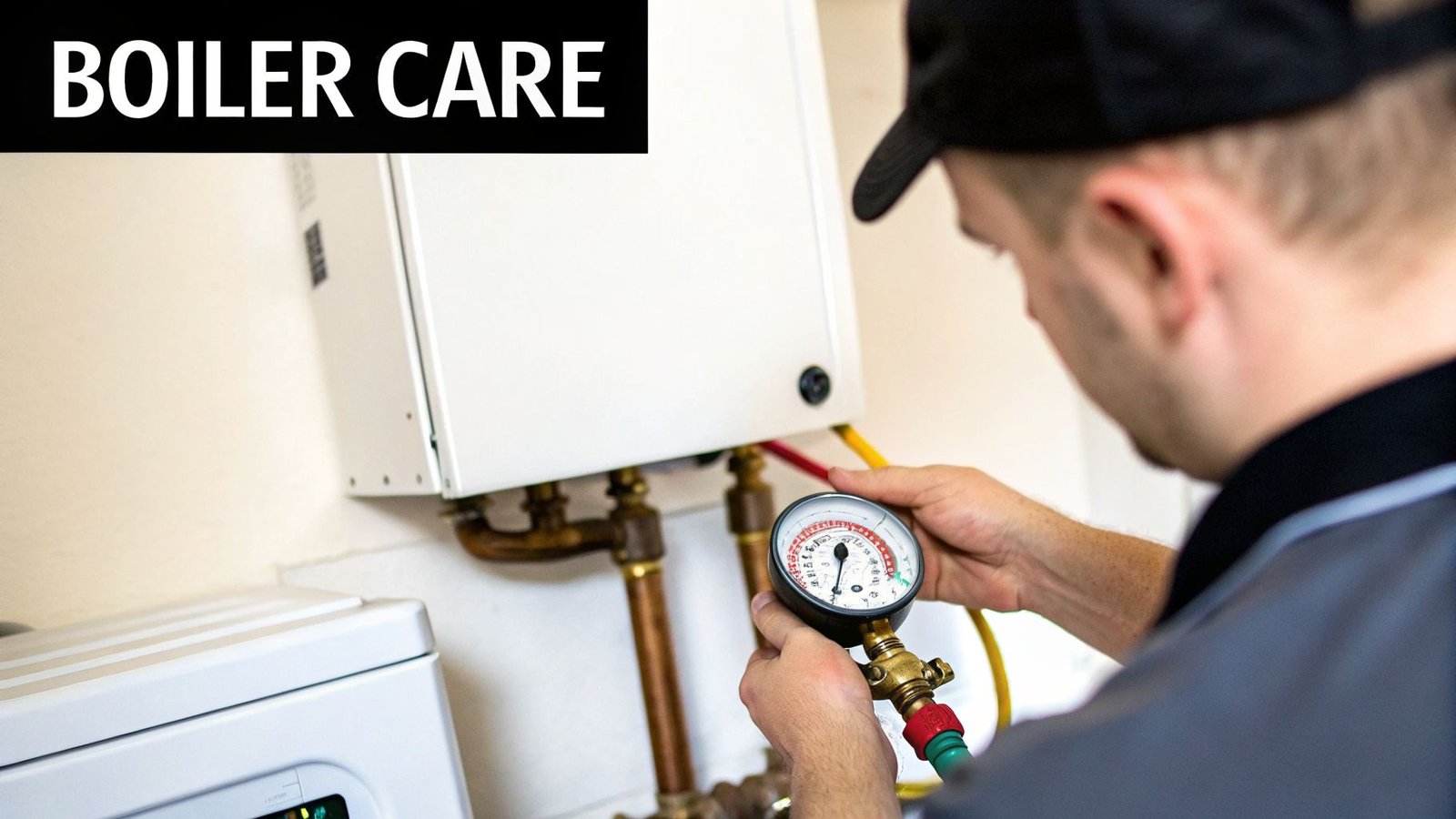
Think of your boiler like the engine in your car. You wouldn't skip its annual MOT, and your boiler deserves the same proactive care. A well-looked-after system isn't just about avoiding a cold shower; it’s about safety, efficiency, and peace of mind.
An annual service from a Gas Safe registered engineer is non-negotiable. For almost every boiler out there, it’s a strict condition for keeping your manufacturer's warranty valid. More importantly, this yearly check-up allows an expert to spot small problems before they spiral into costly, mid-winter breakdowns.
It’s no surprise that boiler failures are a major source of stress for homeowners. In fact, one report revealed that a staggering 87% of homeowners are worried about an unexpected breakdown. This anxiety has fuelled demand for reliable servicing, and you can explore insights from Global Market Insights to see how this trend is shaping the market.
Simple Checks You Can Do Yourself
While any work involving gas is strictly for the professionals, there are a few simple checks you can safely carry out yourself. These small tasks can often get your heating back on without needing an engineer.
- Check the Pressure: Take a look at the pressure gauge on your boiler's front panel. You're looking for the needle to be in the green zone, which is typically around 1-1.5 bar. If it drops into the red, the system might shut down.
- Repressurise the System: If the pressure is low, you can top it up using the filling loop (a small, flexible hose usually located underneath the boiler). Your user manual will have a step-by-step guide for your specific model.
- Check Your Thermostat: It sounds basic, but you'd be surprised how often this is the culprit. Is it on? Is the temperature set high enough for the heating to kick in?
- Listen for Strange Noises: Gurgling, whistling, or banging sounds are your boiler's way of telling you something isn't right. While some humming is normal, loud and persistent noises often signal trapped air or limescale build-up. We have a full guide on what to do when your boiler is making a loud banging noise.
Crucially, you must draw a clear line between simple DIY fixes and a genuine emergency. Your safety is always the top priority.
Knowing when to step back is vital. If you smell gas (a sulphurous, eggy odour), see a yellow, sooty flame instead of a crisp blue one, or spot water leaking directly from the unit, don't try to fix it. Turn the system off at the mains and call a Gas Safe engineer immediately.
The Future of UK Home Heating
The way we heat our homes across the UK is about to go through its biggest change in a generation. For years, the gas boiler has been the trusty, undisputed heart of most central heating systems, but that’s all set to change as the country moves towards a greener, low-carbon future.
This isn't just about environmental policy; it’s a practical shift that will affect every homeowner. The government has set a target to phase out the installation of new gas boilers in homes from 2035. Now, that doesn't mean your current boiler will be ripped out, but it’s a clear signal that it's time to start thinking about what comes next.
The Rise of Low-Carbon Alternatives
So, if the gas boiler is on its way out, what’s taking its place? The front-runner is the air source heat pump. The easiest way to think of it is like a fridge working in reverse. Instead of pushing heat out, it pulls warmth from the air outside—even on a chilly day—and uses it to heat the water for your radiators and taps.
These systems are remarkably efficient and dramatically cut down on carbon emissions, which is why they’re at the centre of the UK’s plans for future-proofing our homes. While the initial setup cost has understandably put some people off, government grants are now making them a much more realistic option for homeowners, including those of us here in London.
One of the most helpful grants available is the Boiler Upgrade Scheme (BUS). It's a government initiative specifically designed to help households in England and Wales bridge the financial gap when switching to a low-carbon heating system.
How the Boiler Upgrade Scheme Works for You
The scheme is quite straightforward: it provides a grant to reduce the cost of replacing your old fossil fuel boiler with a modern heat pump. Right now, homeowners can get a grant of up to £7,500 towards the cost and installation of an air source heat pump, which makes a huge dent in the upfront investment.
People are definitely taking notice. By January 2026, thousands of these vouchers had already been issued, and many households have already had their new systems fully installed. It shows there’s a real appetite for making the switch, especially when it makes financial sense. Upgrading sooner rather than later means you can start benefiting from lower running costs while taking advantage of the government support.
You can find all the official details and check the latest statistics on the UK government's website. Getting to grips with these changes now is the best way to future-proof your home with confidence.
Frequently Asked Questions About Boiler Systems
It's natural to have questions about your boiler. After all, it’s one of the hardest-working appliances in your home. To help you get to grips with it, we’ve put together answers to some of the most common questions we hear from London homeowners.
How Much Does a New Boiler System Cost in London in 2026?
There's no one-size-fits-all price tag, as the final cost really depends on the type of boiler you need and how complex the job is. That said, for a typical combi boiler installation in London, you can expect the cost to be around £2,800 in 2026.
This figure usually covers everything: the new boiler unit, the labour from a Gas Safe registered engineer, and the final checks to get it all up and running. If you're looking at a system or regular boiler, the price might be higher because of extra parts like hot water cylinders. Always ask for a clear, fixed-price quote so there are no nasty surprises.
How Often Should I Service My Boiler?
This one’s simple: you should have your boiler serviced once every year, without fail. This has to be done by a Gas Safe registered engineer.
An annual service is crucial for keeping your system safe, efficient, and reliable. For most new boilers, it's also a non-negotiable part of keeping your manufacturer’s warranty valid. A service plan can be a great way to make this yearly check-up more affordable and easier to remember.
Think of an annual service as an MOT for your home's heating heart. It's a proactive measure that identifies potential issues early, preventing costly breakdowns and ensuring your system operates at peak performance, saving you money on energy bills.
What Are the Signs I Need a New Boiler?
Your boiler will usually give you a few warning signs that it's on its last legs. Keep an eye out for these tell-tale clues:
- Frequent Breakdowns: Are you on a first-name basis with your heating engineer? If you're constantly calling for repairs, a replacement is often the smarter financial move.
- Rising Energy Bills: An old, inefficient boiler has to work much harder and burn more gas to give you the same amount of heat, pushing your bills up.
- Strange Noises: Any persistent banging, gurgling, or whistling sounds could signal serious internal wear and tear, like a build-up of limescale.
- Yellow Pilot Light: A healthy flame is crisp and blue. If you see a lazy, yellow, or orange flame, it points to a combustion issue that needs immediate professional attention.
- A constant drop in pressure is another classic sign of an ageing system that's struggling to cope. You can learn more by checking our guide on why your boiler might be losing pressure.
As a general rule, if your boiler is over 10-15 years old, investing in a new one is usually the best long-term decision.
Can I Install a Boiler Myself?
Absolutely not. In the UK, it is illegal and incredibly dangerous for anyone who is not on the Gas Safe Register to work on a gas boiler.
This kind of work—whether it's a full installation, a repair, or even a service—must only be done by a qualified Gas Safe engineer. It’s the only way to guarantee your family's safety and ensure the work meets all legal standards.
Is your boiler showing its age or costing you a fortune in repairs? The expert team at Urbanic Services Ltd can provide a transparent, fixed-price quote for a new, A-rated boiler to future-proof your London home. Visit us at https://urbanicservice.co.uk to book your consultation today.