
If you’ve noticed your boiler pressure is dropping, there's a simple explanation: water is getting out of the system somewhere. Your central heating is a sealed circuit, much like the inner tube of a bicycle tyre. For it to work, it needs to stay pressurised. When that pressure falls, it's a sure sign that something’s amiss.
Why Your Boiler Pressure Keeps Dropping
It's a familiar and frustrating sight for many homeowners—the little needle on your boiler’s pressure gauge has dropped into the red zone, often below 1.0 bar.
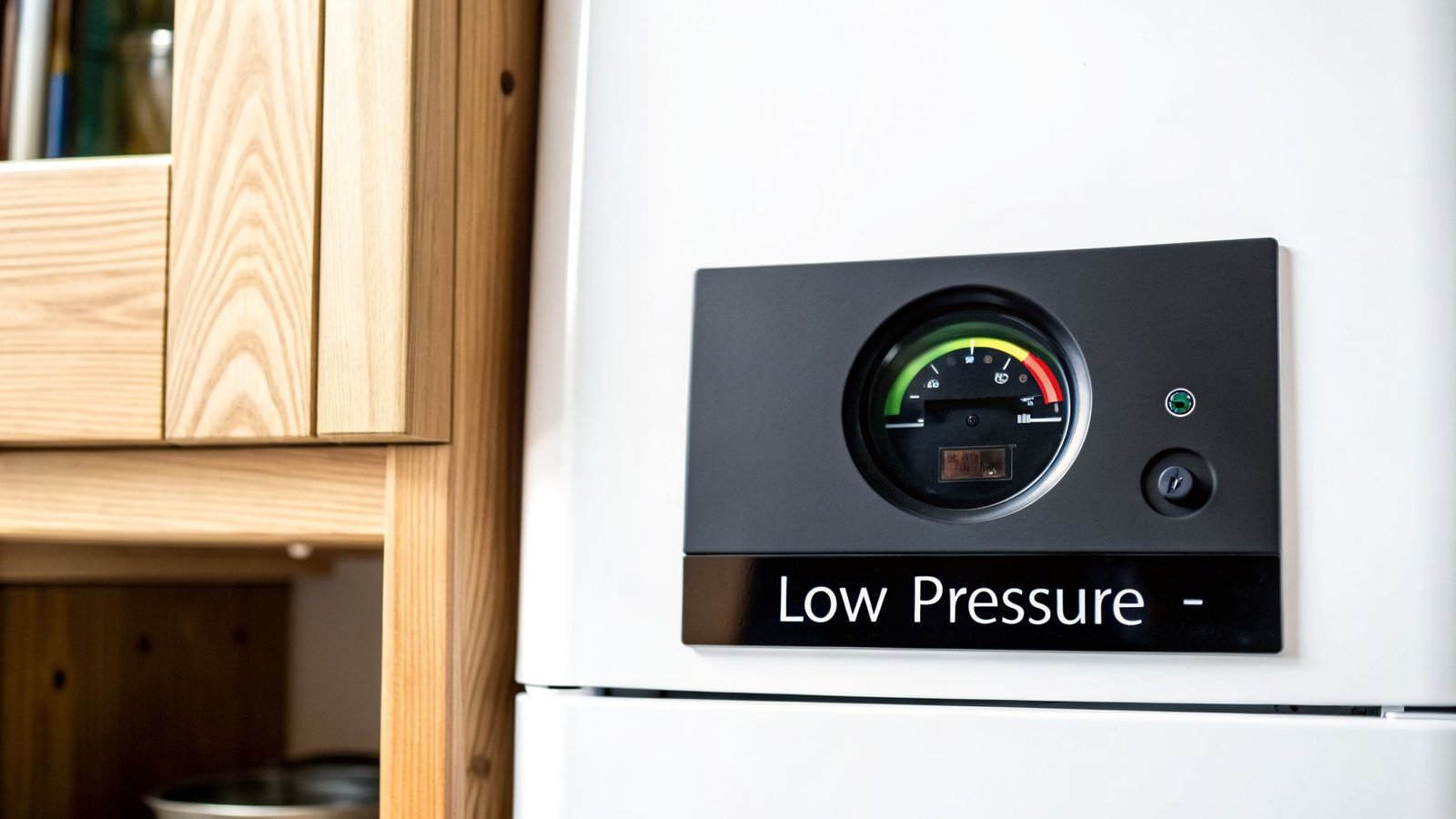
Modern boilers, especially the combi systems that now make up over 80% of new installations in the UK, are designed to operate within a specific pressure range. This is typically between 1.0 and 1.5 bar when the heating is off and cold. If the pressure drops too low, your boiler will often lock out and display an error code. It's a built-in safety feature, but one that leaves you without heating or hot water until it's sorted.
While it can be alarming, don't panic. Let's walk through the most common reasons why this happens.
The Most Common Culprits
Nine times out of ten, the reason for a drop in boiler pressure is a leak somewhere in your central heating system. This is the first thing any heating engineer will look for. These leaks aren't always dramatic puddles; they often start as tiny ‘micro-leaks’ from radiator valves, pipe joints, or even from the boiler itself. For a deep dive into how pressure loss specifically affects combi boilers, it's worth reading insights from industry specialists.
However, a water leak isn't the only possible cause. A few other faulty components can produce the same symptom:
- A Faulty Pressure Relief Valve (PRV): This is a safety valve designed to release excess pressure. If it develops a fault or gets clogged with debris, it can fail to seal properly, causing a constant drip from an external pipe (usually leading outside).
- A Depleted Expansion Vessel: Inside your boiler is a component called an expansion vessel. Think of it as a lung for your heating system, absorbing the expansion of water as it heats up. If this vessel loses its internal air charge, it can't do its job, causing the system pressure to spike when hot and drop dramatically when cold.
- Recently Bled Radiators: Have you bled your radiators recently to get rid of trapped air? Doing so also releases a small amount of water. This is a perfectly normal reason for a slight pressure drop, and it’s easily fixed by simply topping the pressure back up.
To help you quickly figure out what might be going on, here's a simple table to diagnose the issue.
Quick Diagnosis: Boiler Pressure Loss at a Glance
Use this table to quickly identify the likely cause of your boiler's pressure drop, understand the symptoms, and know your next steps.
| Potential Cause | Common Symptom | Action Required |
|---|---|---|
| Water Leak | Constant, slow pressure drop over days/weeks. You may spot damp patches or small drips. | Check all visible pipes and radiators. Call a Gas Safe engineer to trace and fix the leak. |
| Faulty PRV | Pressure drops, and you notice a pipe on an outside wall constantly dripping. | This isn't a DIY job. You'll need a Gas Safe engineer to replace the valve. |
| Expansion Vessel | Pressure gauge swings wildly—high when heating is on, very low when off. | The vessel may need recharging or replacing. Call a Gas Safe engineer. |
| Radiator Bleeding | A small, one-off pressure drop immediately after you've bled your radiators. | This is normal. Simply repressurise your boiler system yourself. |
Knowing the cause is half the battle. If it's not a simple case of repressurising after bleeding a radiator, it's always best to get a professional involved.
Key Takeaway: A boiler losing pressure is a symptom, not the problem itself. The real task is finding the root cause. Figuring out if it’s a simple DIY fix or a job for a professional is the first, most important step to getting your heating back on safely.
Hunting Down Leaks in Your Heating System
Nine times out of ten, if your boiler is losing pressure, you’ve got a water leak somewhere in the system. But don't go looking for a massive puddle on the kitchen floor. The culprit is almost always a ‘micro-leak’—a tiny, sneaky drip from a radiator valve, a pipe joint, or even from pipework hidden away under your floorboards.
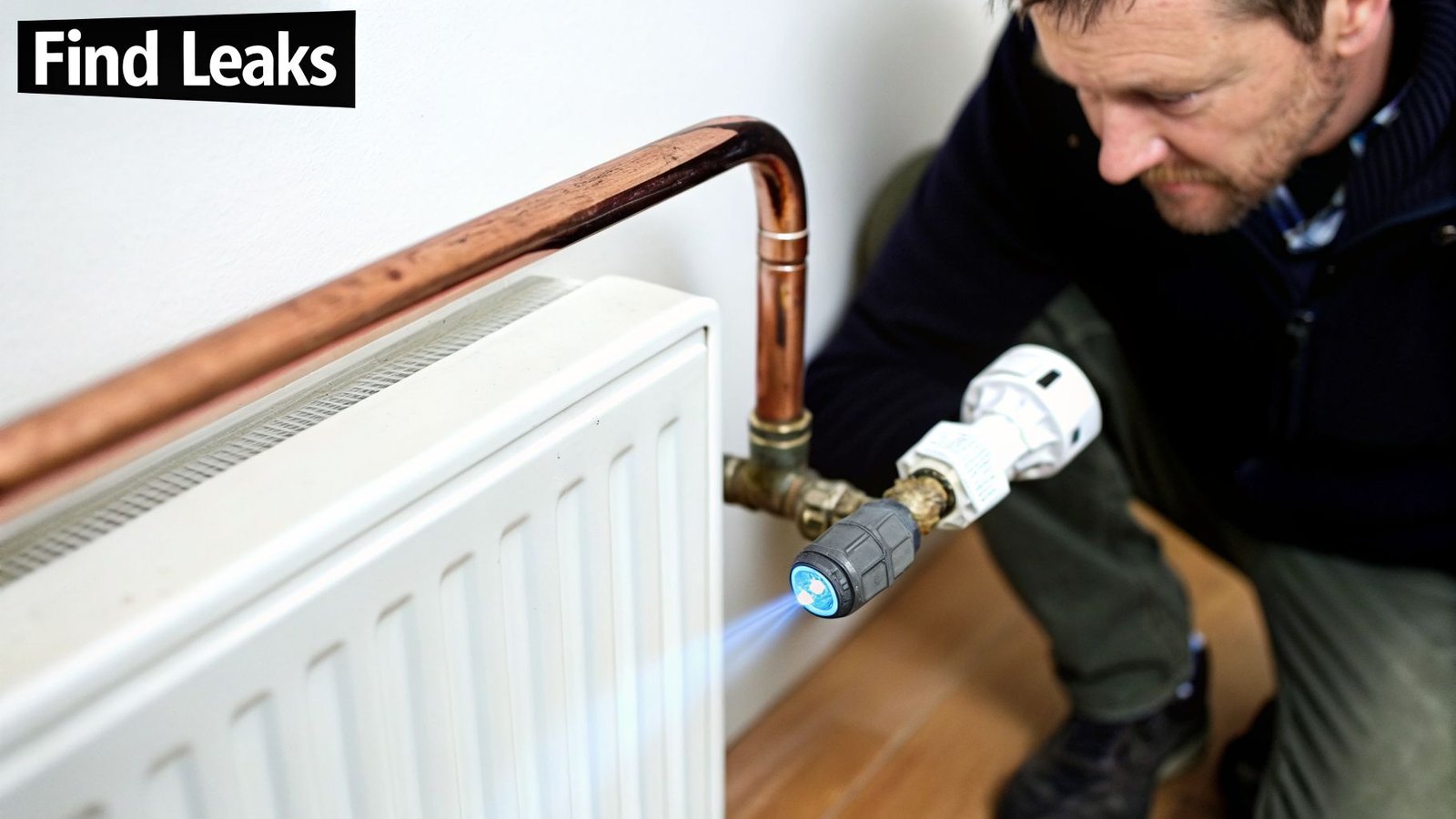
Think of your heating system like a car tyre with a very slow puncture. The pressure doesn’t plummet overnight; it creeps down over days or weeks, meaning you have to keep topping up the boiler. This is a classic sign that water is escaping the sealed system, and your job is to find out from where.
How to Play Detective and Find the Leak
Before you pick up the phone to an engineer, you can do a pretty thorough check yourself. All you’ll need is a good torch and a roll of kitchen paper. Go through your home methodically, inspecting every radiator and every bit of visible pipe.
You’re not just looking for obvious drips. With these tiny leaks, the water often evaporates off the warm pipe before it even has a chance to form a drip and hit the floor. You need to look for the subtle tell-tale signs that a leak has been there for a while.
Keep an eye out for these clues:
- Stains: Look for any discolouration, rust marks, or chalky white deposits on pipes, valves, and the floor directly beneath them.
- Damp Patches: Feel the carpet and check the flooring around your radiators for any unexplained dampness.
- Flaking Paint: A persistent, slow leak will cause paint to bubble or flake away from the surface of radiators and pipes.
- A Musty Smell: If you notice a damp, musty odour in a room that you can’t explain, it could be a sign of a hidden leak under the floor or in a wall.
A great trick is to use that kitchen roll to physically wipe around every single radiator valve and pipe joint, especially the fittings under your boiler. Even a trace amount of moisture will show up on the paper, pointing you straight to the source of your pressure loss.
London's Hard Water Problem: For homeowners in London and the South East, there's another factor at play. The region's notoriously hard water is full of minerals. Every time you repressurise the system, you're introducing more of these minerals, which can speed up internal corrosion. This limescale build-up weakens joints and pipework from the inside out, making leaks far more likely over time.
Where to Focus Your Search
Leaks can spring up anywhere, but years of experience show us they have a few favourite spots. When you’re doing your inspection, pay very close attention to these areas.
Common Leak Hotspots:
- Radiator Valves: The valves at both ends of your radiators are the most frequent offenders.
- Pipe Joints: Anywhere a pipe is joined—to another pipe, a radiator, or your boiler—is a potential weak point.
- Radiator Bleed Points: Double-check the small square nut (the bleed valve) at the top of your radiator.
- Corroded Pipework: Be on the lookout for any obvious signs of rust or a green, crusty build-up on your copper pipes.
If you’ve checked everywhere and still can't find the leak, don’t just ignore the dropping pressure gauge. It’s very likely the leak is hidden somewhere inaccessible, like under the floorboards or inside a wall. Leaving it will eventually lead to serious water damage, a much bigger and more expensive problem to fix than the original leak.
For major, sudden leaks, you might need emergency advice; our guide on what to do if you have a burst pipe covers the crucial first steps. But for a persistent, hidden leak, it’s definitely time to call in a professional engineer.
How Faulty Boiler Parts Cause Pressure Loss
So, you’ve checked for puddles and damp patches and found nothing. While looking for an obvious leak is the right place to start, sometimes the problem is tucked away inside the boiler casing itself. Your boiler is a sophisticated bit of kit, and if one of its key internal parts starts to fail, it can cause the pressure to drop off a cliff.
Think of your heating system as a sealed circuit, like an inner tube in a bicycle tyre. A leak in the pipework is like finding a thorn sticking through the rubber – it's obvious. A fault inside the boiler, however, is more like a slow, sneaky leak from the valve itself.
Let's pull back the curtain on two of the most common internal culprits. Just remember, these are strictly jobs for a Gas Safe registered engineer to tackle.
The Pressure Relief Valve: A Failed Safety Net
Every boiler has a Pressure Relief Valve (PRV). Its one and only job is to act as an emergency release, dumping water outside if the pressure inside the boiler climbs too high (usually above 3 bar). It's a crucial safety feature that protects the entire system from damage.
You’ll see where it connects to the outside – there will be a small copper pipe sticking out of the wall near your boiler. In normal operation, this pipe should be completely dry.
A PRV can start to fail for a couple of reasons:
- A Bit of Grit: Over the years, tiny particles of rust and sludge can build up in your heating system. If a piece gets lodged in the valve, it can't close properly.
- Simple Wear and Tear: Like any mechanical part, the spring or seal inside the valve can just wear out, becoming too weak to hold back the water pressure.
When this happens, the valve weeps. It lets a constant trickle of water escape the system, even when the pressure is at a perfectly normal level. If you spot a persistent drip from this small copper pipe outside, you’ve almost certainly found the source of your pressure loss.
Warning: It might seem tempting to pop a cap on the end of the pipe to stop the drip. Never, ever do this. The PRV is a vital safety device, and blocking it could lead to a catastrophic boiler failure.
The Expansion Vessel: A Punctured Lung
Tucked away inside your boiler is another critical component: the expansion vessel. It’s a small metal tank divided by a rubber diaphragm. One side holds system water, while the other holds a pressurised pocket of air.
Its purpose is to act like a lung for your heating system. Water expands when it gets hot, and the expansion vessel's air cushion absorbs this extra volume, keeping the system's pressure nice and stable.
When an expansion vessel fails, it’s usually because it has lost its air charge – think of it like a tyre getting a puncture. Without that air cushion, the expanding water has nowhere to go.
The classic symptom of this is a wildly swinging pressure gauge.
- When the heating kicks in, the pressure shoots up rapidly, often climbing into the red danger zone. This will likely trigger the PRV to open and dump water outside.
- Then, as the system cools down, the pressure plummets, sometimes dropping all the way to zero.
This cycle of pressure rocketing up and then crashing down is a tell-tale sign of a faulty expansion vessel. Ever noticed your boiler pressure dropping from a healthy 1.5 bar to nothing overnight? This issue affects up to 30% of UK combi boiler households. The problem is often a faulty expansion vessel, which is then made worse by a PRV fault in around 15% of cases logged by UK plumbers. You can read more about how these faulty parts cause pressure loss from heating experts.
Because both the PRV and the expansion vessel are fundamental to your boiler's safe operation, you must leave any repairs or replacements to a qualified Gas Safe engineer.
So, you’ve noticed the pressure gauge on your boiler has dropped. Don’t panic. If you’ve just bled your radiators or suspect a tiny, slow leak, topping up the system pressure is a job you can often handle yourself. It's called repressurising, and it's usually all it takes to get your heating and hot water running again without calling out an engineer.
Before you dive in, a quick word of advice: only go ahead if you feel comfortable and can clearly see the parts you need to work with. Your boiler's manual is your best friend here—it will have diagrams showing you exactly what’s what.
First Things First: Find the Filling Loop
Your first task is to find the filling loop. This is simply the pipe that lets you add water from the mains into your sealed central heating system. They generally come in two flavours:
- External Filling Loop: This is the most common setup. It's a separate, flexible hose with a silver-braided cover and a valve on each end. It’s probably hanging near your boiler or tucked away in a nearby cupboard.
- Internal Filling Loop: Many modern boilers, including models from Worcester Bosch and Vaillant, have a built-in loop. This is usually just a small lever or a special key that opens an internal valve to let the water in.
Once you’ve located the loop and got your head around how the valves work (most have small handles or a slot for a screwdriver), you’re good to go. The aim is to get that pressure needle back into the green zone, which is almost always around 1.5 bar when the heating is cold.
How to Safely Repressurise Your System
Switch the Boiler Off: Make sure the boiler is turned off at the main switch and has had time to cool down completely. Adding water to a hot system can give you a false pressure reading.
Connect the Filling Loop (If External): Screw both ends of the external filling loop onto the connection points, which are usually underneath the boiler. Make sure they’re hand-tight to avoid any drips.
Slowly Open the Valves: Open one valve fully. Then, begin to open the second valve very slowly. You'll hear the sound of water flowing into the system almost immediately.
Keep an Eye on the Gauge: Watch the pressure gauge like a hawk. The needle will start to creep upwards. Let it rise until it hits the manufacturer’s sweet spot—usually 1.5 bar.
Shut the Valves: The moment the gauge hits 1.5 bar, close the valves. It's vital to close them in the reverse order you opened them (so, close the second one you opened first, then the first). This locks the pressure in properly.
Disconnect the Loop (If External): Now you can unscrew the filling loop. Have a cloth or towel handy, as a small amount of water might spill out. Crucially, never leave the filling loop permanently attached to the boiler.
Turn the Boiler Back On: You're all set. Switch the boiler back on. It might go through a quick self-check cycle before it fires up as normal.
Of course, repressurising only helps if the cause is minor. For actual faulty parts, like a dripping valve or a wildy swinging pressure gauge, you're going to need a professional.
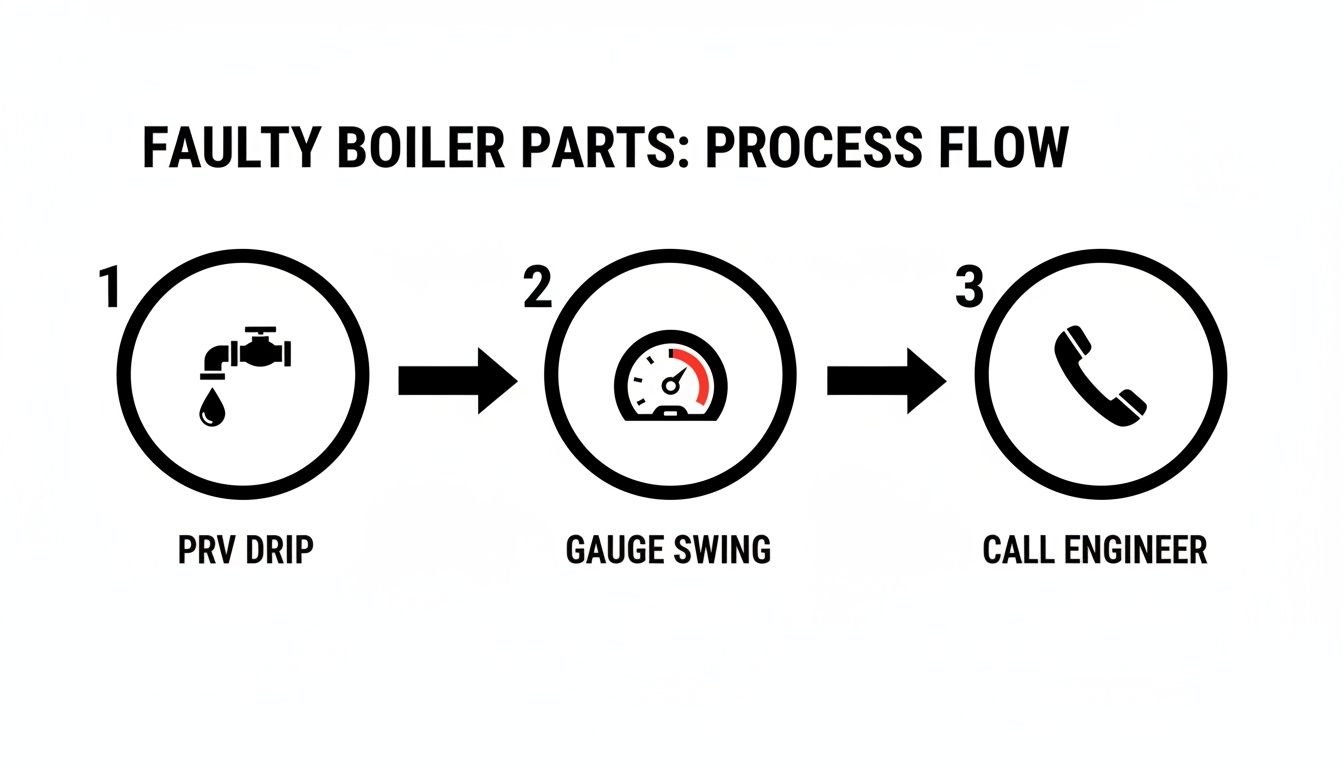
As this simple flowchart shows, these kinds of symptoms are a clear sign that it's time to call in a qualified Gas Safe engineer.
What If I Add Too Much Pressure?
It happens to the best of us, so don’t worry! If you overshoot and the pressure gauge climbs past 2.0 bar, you just need to let a bit of water out of the system. The simplest way to do this is to bleed a little water from the nearest radiator until the gauge on the boiler drops back to that perfect 1.5 bar mark.
Bleeding radiators is a classic winter chore for UK homeowners, but it’s a direct cause of pressure loss in an estimated 25% of reported boiler problems. After you let that trapped air out, the system pressure often falls below 1.0 bar, meaning it needs a quick top-up. Recent 2026 data from Home Energy Guide UK shows just how common this is, highlighting it as a primary reason for low boiler pressure.
Knowing When to Call a Gas Safe Engineer
While repressurising your boiler yourself is a perfectly manageable task, it's vital to understand its limitations. Think of it like putting air in a tyre with a slow puncture—it gets you moving, but it doesn't solve the underlying problem. If you find yourself constantly topping up the system pressure, that’s a clear sign something else is wrong. When it comes to gas appliances, some jobs are strictly for the experts.
So, when do you put the tools down and pick up the phone? Certain symptoms are clear red flags that you need to call a Gas Safe registered engineer right away.
Red Flags: When to Call in the Pros
Ignoring these signs won't make them go away. In fact, it could lead to much bigger problems, costly damage, and even put your home at risk. If you spot any of the following, it's time for an expert opinion.
- You're Repressurising Constantly: Is topping up the boiler becoming a weekly, or even daily, chore? This is the most obvious sign of a persistent leak or a faulty part that simply won't fix itself.
- You Can't Find a Leak: You’ve checked every radiator valve and visible pipe, but there are no drips or damp patches in sight. This is a major concern, as it points to a hidden leak under your floorboards or inside a wall, where it can quietly cause serious structural damage.
- Strange Noises: Is your boiler suddenly making banging, gurgling, or "kettling" sounds? This could be anything from trapped air to a struggling pump or, more seriously, a heat exchanger clogged with limescale.
- Damp Patches on Ceilings: A water stain appearing on a ceiling below a bathroom or bedroom is a classic sign of a slow leak from central heating pipework. It needs to be traced and fixed urgently before the damage gets worse.
A Word of Warning: Constantly topping up your sealed heating system with fresh tap water is a bad idea. Every time you do it, you introduce more oxygen and minerals, which drastically speeds up internal corrosion and creates sludge. This build-up damages components and can significantly shorten your boiler's lifespan.
Why You Must Hire a Gas Safe Engineer
Here in the UK, it’s a legal requirement that anyone who works on a gas appliance must be on the Gas Safe Register. It's not just red tape; it's about your safety.
These engineers are trained to diagnose complex problems accurately, whether it's a failing expansion vessel, a faulty valve, or a tricky hidden leak. They can perform a safe, guaranteed repair and make sure your boiler is running efficiently and, most importantly, without risk. To see the kinds of issues they handle, our page on professional boiler repair in London offers a good overview.
Ultimately, an expert will find the root cause of the pressure loss, giving you a lasting solution instead of a temporary patch-up.
DIY Fix vs. Professional Repair: A Cost and Safety Guide
Before you decide to tackle a boiler issue, it’s crucial to know your limits. This table breaks down common pressure-related problems, clarifying which are safe for a DIY approach and providing a realistic look at what a professional repair might cost in London.
| Issue | Can I Fix It Myself? | Estimated Professional Repair Cost (London) |
|---|---|---|
| Low Pressure (Needs Repressurising) | Yes. This is a standard homeowner task. | £80 – £120 (if you'd rather a pro did it) |
| Leaking Radiator Valve | Yes, if you're confident. Involves tightening nuts or replacing the valve. | £100 – £180 |
| Bleeding Radiators | Yes. A simple DIY job to release trapped air. | £80 – £120 |
| Faulty Pressure Relief Valve (PRV) | No. This is a critical safety component. Always call a Gas Safe engineer. | £120 – £250 |
| Failed Expansion Vessel | No. Requires specialist diagnosis and replacement. Strictly for professionals. | £180 – £350+ |
| Hidden Leak in Pipework | No. Tracing and repairing leaks under floors or in walls is a major job. | £300 – £800+ (depending on complexity) |
This guide highlights that while simple tasks are within reach, anything involving the boiler's internal safety components or hidden pipework demands professional expertise. Paying for a qualified engineer not only guarantees a correct and safe repair but also provides peace of mind.
Preventing Future Boiler Pressure Problems
Dealing with a boiler that keeps losing pressure is a real headache. But honestly, the best fix is to stop the problem from happening in the first place. Moving from frantic, last-minute repairs to simple, proactive care is the key to a reliable and efficient heating system.
It's all about prevention, not just cure.
An annual boiler service isn't just another task to tick off your to-do list; it’s the single most important health check for your boiler. Think of it exactly like getting an MOT for your car – it makes sure everything is running safely and catches small niggles before they turn into a full-blown, expensive emergency.
The Value of Annual Servicing
When a Gas Safe registered engineer services your boiler, they're doing a lot more than just a quick clean. They run a series of vital diagnostic checks designed to spot the exact issues that cause pressure loss.
- Checking the Expansion Vessel: The engineer will test the air pressure inside the expansion vessel. If it’s low, it can't absorb the pressure changes when your heating kicks in, causing those wild swings on the gauge. A quick top-up can prevent a future failure.
- Inspecting the PRV: The pressure relief valve is checked for any tiny leaks or bits of grit that could stop it from sealing properly. This is a classic cause of a slow, almost unnoticeable drop in pressure.
- Spotting Early Corrosion: A trained eye can spot the first signs of internal corrosion or sludge building up in your pipework. Catching this early and recommending a system flush can prevent pinhole leaks from developing down the line.
An annual service is an investment, not an expense. By spotting a weakening expansion vessel or a corroded joint early, you could be saving yourself hundreds of pounds on a future emergency repair and the associated water damage. It’s the smartest way to manage your heating system's health.
Regular maintenance also makes sure your boiler is running as efficiently as possible, which helps keep your energy bills in check—a welcome bonus for any homeowner. You can learn more about what's included in our expert annual boiler servicing and how it protects your home.
Ultimately, consistent professional care is the best way to break the frustrating cycle of a boiler losing pressure, giving you reliable heating and complete peace of mind.
Frequently Asked Questions
Got a few more questions? You're not alone. Here are some quick answers to the common queries we hear from homeowners about their boiler pressure.
Is It Normal for a Boiler to Lose a Little Pressure Over Time?
Yes, a tiny drop in pressure over the course of six months or even a year is perfectly normal for a sealed heating system. Think of it as the system just settling.
However, if you're having to top up the pressure every few weeks, that’s a red flag. Constant repressurising is your boiler’s way of telling you there's a problem, most likely a hidden leak or a faulty part that needs a professional eye.
What Should My Boiler Pressure Be When the Heating Is On?
When you switch the heating on, the water in your pipes and radiators gets hot and expands. This naturally causes the pressure to rise, and you'll see the needle on the gauge climb to around 2.0 bar. This is completely fine.
The key is that it shouldn't shoot up into the red zone (usually above 2.75 bar) and should settle back down to its cold pressure (around 1.5 bar) without dipping below 1.0 bar.
A healthy system is like a steady pulse – a stable pressure when cold, rising moderately when hot. If your gauge is swinging wildly from high to low, it often points to a problem with the expansion vessel.
Can I Use My Heating If the Pressure Is Low?
In short, no. Most modern boilers are designed with a safety feature that prevents them from firing up if the pressure drops too low, which is typically below 0.5 bar.
This isn't the boiler being difficult; it's a crucial safety mechanism to stop it from running dry, which could cause serious, expensive damage. You’ll need to repressurise the system to that sweet spot of 1.5 bar before your heating and hot water will kick back into action.
Prepared with the Outrank tool