
When budgeting for a boiler flush in London, you can expect the cost in 2026 to fall somewhere between £400 for a smaller flat and upwards of £700 for a larger house. The final figure really comes down to the size of your heating system and the specific type of flush needed.
What Is the Real Boiler Flushing Cost in London?
Think of your central heating system like the veins and arteries in your body, with the boiler being the heart. Over the years, rust, limescale, and general grime can build up inside your pipes and radiators. We call this nasty, thick mixture ‘sludge’, and it’s the number one cause of heating problems.
A boiler flush is simply the process of cleaning all that sludge out, getting your system back to full health so it can work efficiently again.
The boiler flushing cost you’ll be quoted will hinge on whether a chemical flush or a full-blown powerflush is the right tool for the job.
- Chemical Flush: This is the gentler option, more like a deep clean. A heating engineer introduces specialised cleaning chemicals into the system, letting them circulate to break down and dissolve the sludge before it’s all drained away. It’s perfect for systems that are regularly maintained or have only moderate build-up.
- Powerflush: This is the heavy-duty solution, basically a pressure wash for your heating system. An engineer connects a high-velocity pumping unit to your pipework to physically force out stubborn, hardened deposits that have been there for years. This is the only real fix for older, heavily clogged systems.
London Powerflush Price Estimates
It’s no secret that labour costs in London are higher, and that’s a big factor in the final quote. When it comes to a proper powerflush, the biggest variable is the number of radiators you have. More radiators mean more time and more work.
This chart gives you a good idea of what London homeowners can expect to pay based on the size of their property.
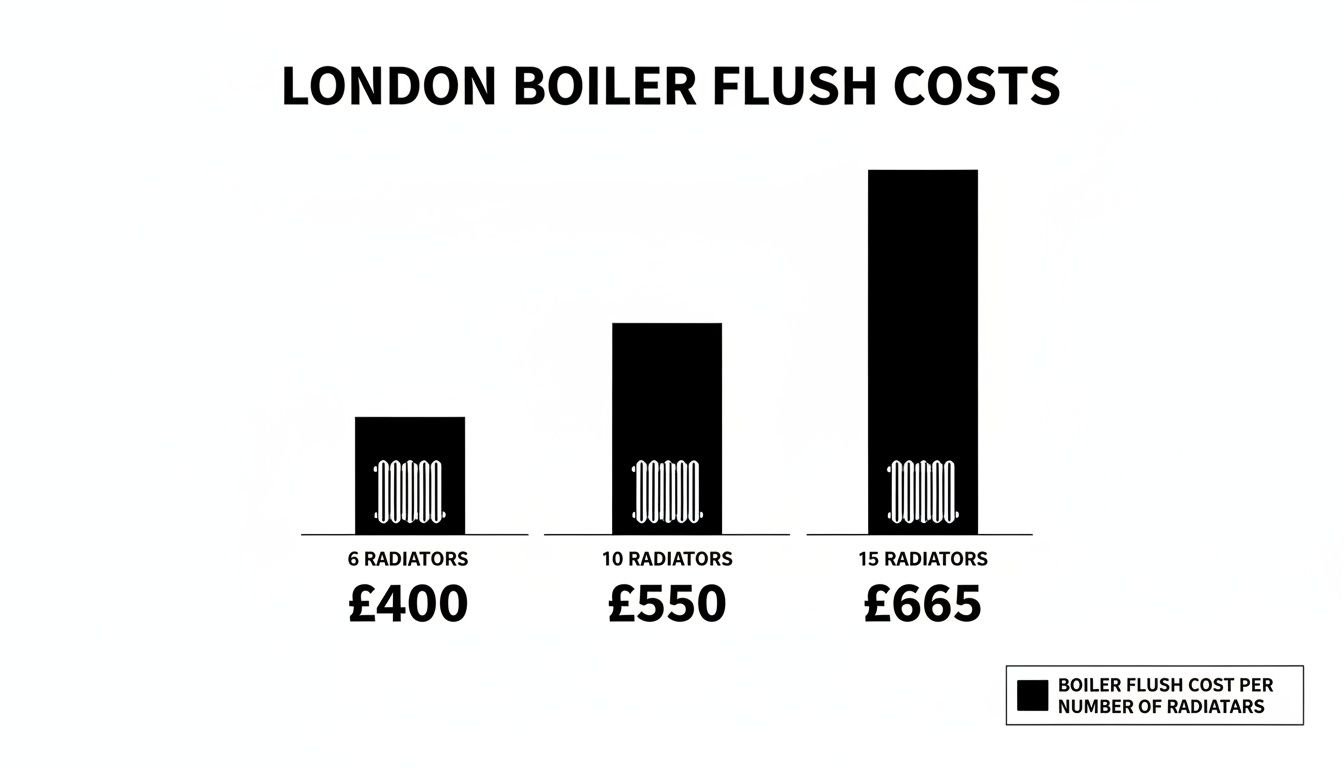
As you can see, the price scales up with your home’s size. A standard 10-radiator house, for example, typically lands around the £550 mark for a full powerflush.
To give you an even clearer picture, here’s a breakdown comparing the estimated costs for both types of flushes across different property sizes in London.
Estimated London Boiler Flushing Costs 2026
| Property Size / Radiator Count | Chemical Flush Cost (Approx.) | Powerflush Cost (Approx.) |
|---|---|---|
| Small Flat (Up to 6 Radiators) | £300 – £400 | £400 – £500 |
| 3-Bed House (Up to 10 Radiators) | £400 – £500 | £550 – £650 |
| 4-Bed House (Up to 15 Radiators) | £500 – £600 | £650 – £800 |
It’s important to remember these are just estimates. The final boiler flushing cost can shift depending on the age and condition of your system, the type of pipework you have (like microbore, which is trickier), and whether the engineer uncovers any other problems during the job.
This is exactly why getting a clear, upfront quote is so important. At Urbanic Services, we provide fixed-price quotes after we’ve had a chance to assess your system. This means the price you see is the price you pay—no nasty surprises or hidden extras. We believe in being transparent, so you have complete peace of mind before we even touch a spanner.
Chemical Flush vs Powerflush: What Is the Difference?
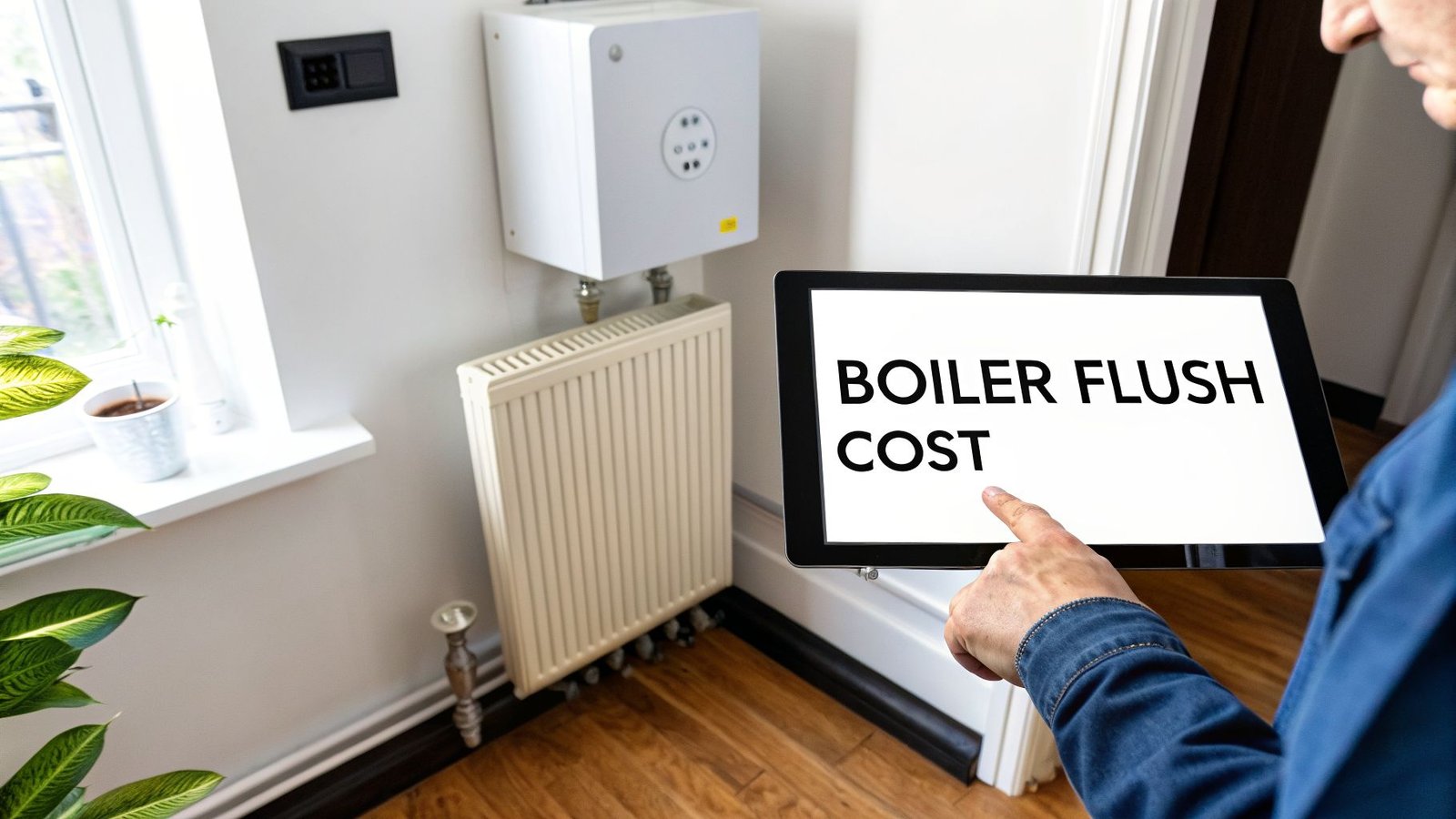
When an engineer mentions cleaning out your central heating system, you'll likely hear two terms: a chemical flush and a powerflush. It's important to know the difference, as they tackle the problem in very different ways. Knowing which one your system needs helps you understand what you're paying for.
A good way to think about it is to compare it to cleaning a car. A chemical flush is like a thorough hand wash, great for shifting everyday grime and keeping things looking good. A powerflush, on the other hand, is the full-on jet wash and detailing service – designed to blast away stubborn, caked-on mud that a simple wash just won't touch.
The Chemical Flush Explained
A chemical flush is the standard, less aggressive approach. It's essentially a deep clean for heating systems that are either fairly new or have been looked after over the years. This method is perfect for getting rid of moderate sludge build-up without resorting to heavy-duty machinery.
So, how does it work? An engineer will introduce a strong cleaning agent into your system. Once it's in, you'll turn the heating on, letting the chemicals circulate naturally through the boiler, pipes, and radiators. These chemicals get to work dissolving the sludge, rust, and limescale deposits that have built up.
After it's had time to work its magic, the engineer drains the entire system, flushing out all the dirty water and the gunk it has dissolved. The system is then refilled with clean water, and crucially, a chemical inhibitor is added. This final additive helps to protect the metal inside your system, slowing down any future corrosion.
A chemical flush is an excellent preventative measure. We often recommend it for newer systems or before installing a brand-new boiler. This ensures the appliance is connected to a clean network of pipes, which is often a non-negotiable part of the manufacturer's warranty.
The Powerflush: A Deeper Clean
Sometimes, a system is so clogged up that a chemical flush just won't cut it. For older systems or those suffering from severe blockages, you need more than just a chemical soak – you need force. This is where a powerflush comes in.
A powerflush is a much more intensive procedure. A specialist high-flow, low-pressure pumping machine is connected directly into your heating circuit. This machine then blasts water and cleaning agents through your pipes and radiators at a much higher speed than your boiler's own pump ever could. The engineer will isolate each radiator, one by one, directing the full force of the flow to dislodge even the most stubborn, hardened sludge.
This powerful flow scours the inside of your pipes and radiators, physically breaking apart the deposits that cause cold spots and kill your system's efficiency. Because it's so thorough, a powerflush is the go-to solution for bringing old, neglected heating systems back to life. Naturally, the specialist equipment and extra labour mean a higher boiler flushing cost is involved.
In London, you can expect powerflushing costs to be towards the higher end of the national average. For a home with around 6 radiators, the price might be about £400, while a larger property with 15 radiators could see costs closer to £665, as the job takes significantly longer. The specific type of boiler you have can also influence the process, as access points and system complexity vary.
What Goes Into a Boiler Flushing Quote?
While the number of radiators is a good starting point for your boiler flushing cost, a professional quote goes much deeper. Several key factors can explain why one price might be higher than another, and knowing what they are helps you spot real value and sidestep suspiciously cheap offers that often mean a job half-done.
No two heating systems are the same. A proper quote is tailored to the unique quirks of your home’s setup. It’s not just about counting radiators; it’s about an engineer assessing the time, equipment, and skill needed to flush your system safely and get it running like new again. Let’s pull back the curtain on what we look for when putting a quote together.
System Size and Type
First and foremost is the sheer size of your central heating system. It’s simple, really: a larger property with more radiators and a complex web of pipes just takes longer to clean properly. We have to isolate and flush every single radiator one by one to make sure all the sludge is dislodged and purged, so a 15-radiator house will naturally take more time and effort than a 6-radiator flat.
The kind of boiler you have also makes a difference.
- Combi Boilers: These are usually the most straightforward systems to work with.
- System and Conventional Boilers: Because these setups have separate hot water cylinders and feed tanks, they add a layer of complexity. The engineer has to account for these extra components, which can extend the time needed for the job.
The Age and Condition of Your System
An older heating system often needs a more delicate approach combined with a more intensive clean. After decades of use, the sludge inside can become hard and compacted, almost like concrete. This stubborn gunk requires stronger chemicals and a more persistent flush to break it all down.
Before we even connect the machine, a good engineer will carefully inspect your pipework and radiators.
A professional powerflush doesn't create leaks—it finds them. If a rusty old joint is only being held together by a bung of sludge, the high-velocity water will wash that weak patch away, revealing the problem that was already there. A reputable engineer knows this and comes prepared to fix any minor issues that pop up.
This is exactly why that initial inspection is so crucial. It lets us spot potential weak points and give you a clear, honest picture of the work that's really involved.
Pipework Complexity and Accessibility
The type of pipes you have can massively affect the time and effort required. Standard 15mm or 22mm copper pipes are what we see most often and are fairly easy to flush. But many homes, especially those built or renovated in the 70s and 80s, were fitted with microbore pipework.
These systems use much narrower pipes, typically 8mm or 10mm, which are a real headache to flush effectively. They are far more prone to getting completely blocked, and clearing them requires special techniques and a lot of patience. This extra time and technical skill will always be factored into the boiler flushing cost.
For instance, a powerflush on a 10-radiator system in a modern Greenwich flat with standard pipes might cost around £550. That same-sized system in an older Lewisham terrace with tricky microbore pipes could easily be closer to £700 because of the extra labour involved. Even something as simple as where your boiler is located matters – if it's crammed into a tight airing cupboard, the extra setup time adds to the job.
Warning Signs Your Heating System Needs a Flush
Your heating system will usually give you a few clues before it gives up the ghost entirely. Long before you’re left shivering, it sends out subtle hints that trouble is brewing inside the pipework. Learning to spot these signs is the key to catching a small issue before it snowballs into a major, costly breakdown.
Think of these symptoms as your system's way of crying for help. They almost always point to one culprit: sludge and debris building up and restricting the flow of hot water. Spotting them early means you can be proactive, start looking into the boiler flushing cost, and get a professional in before things get any worse.
Cold Spots on Radiators
This is the number one tell-tale sign of a system that’s getting clogged up. You run your hand across a radiator that should be piping hot, only to find it’s warm at the top but stone cold along the bottom.
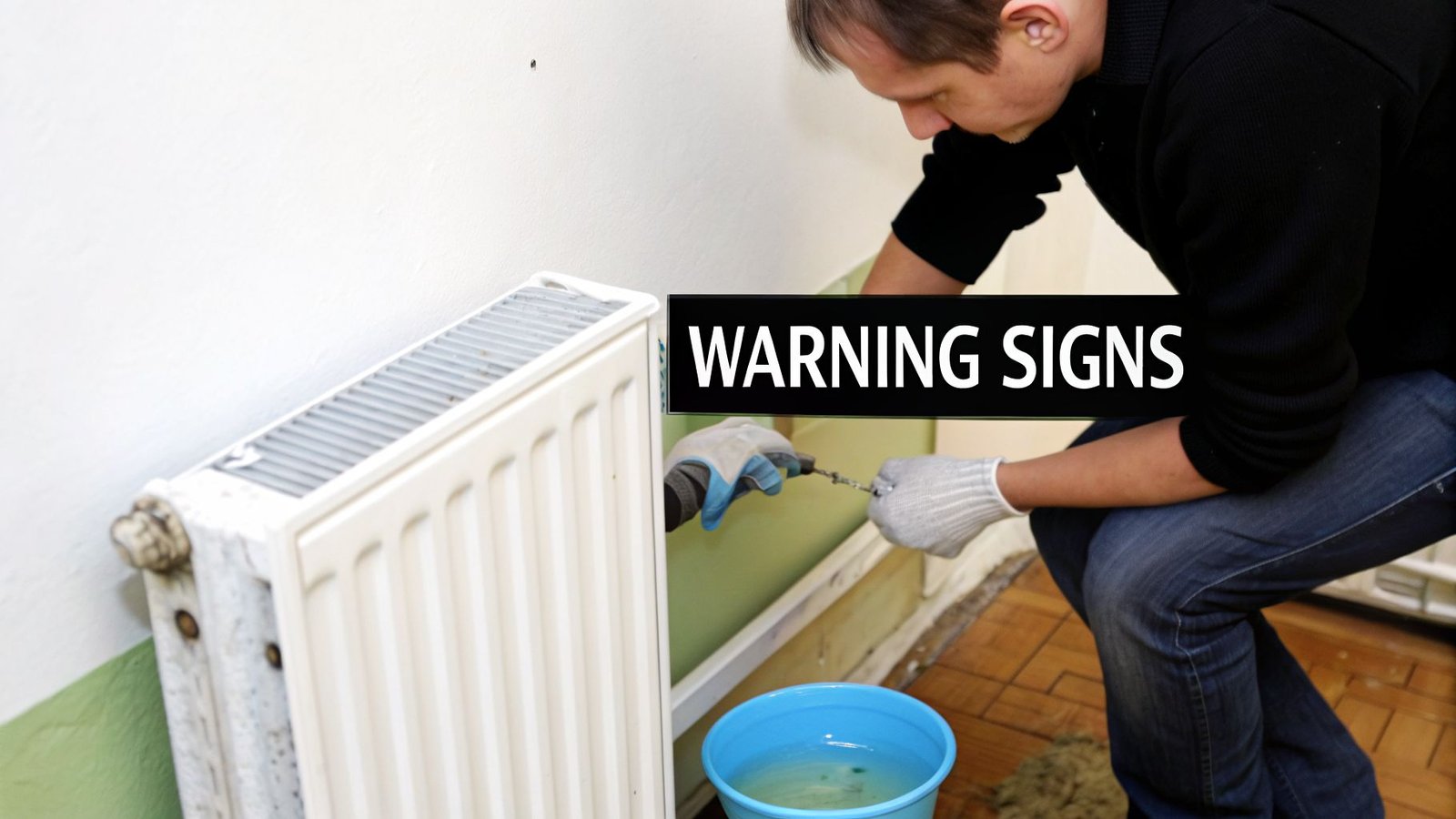
That isn't a random fault; it's a physical blockage. Think of it like silt building up in a river bend. Over years of operation, heavy metallic sludge settles at the bottom of your radiators. This thick layer of gunk then acts as an insulator, stopping the hot water from properly heating the radiator's metal shell. You can crank the thermostat as high as you like, but that cold patch isn't going anywhere until the sludge is physically flushed out.
A single radiator with a cold spot might just need bleeding to release trapped air. But if you have the same issue on several radiators throughout your home, it’s a sure sign of a system-wide sludge problem that a simple bleed won't solve. A chemical flush or a full powerflush is what’s needed.
Strange Noises from Your Boiler or Pipes
Is your boiler suddenly making a racket? A healthy, happy boiler should operate with little more than a gentle hum. When sludge and limescale start to accumulate, however, you can get a whole orchestra of strange and worrying sounds.
The most common noise we get called out for is 'kettling'—a deep rumbling or banging that sounds exactly like a kettle coming to a boil. This happens when sludge or scale coats the boiler’s heat exchanger, causing small pockets of water to flash-boil into steam. The tiny, violent implosions of these steam bubbles are what you're hearing.
Other sounds to listen out for include:
- Gurgling: This often means air is trapped somewhere in the system, which is a common side effect of the corrosion that creates sludge in the first place.
- Tapping or Clicking: This can be the sound of debris being whisked through the system and pinging against the inside of your pipes.
These noises are more than just an annoyance. They’re a clear warning that your boiler is working under strain, killing its efficiency and risking premature failure of expensive parts like the pump or heat exchanger.
Discoloured Water When Bleeding Radiators
One of the easiest ways to check the health of your system's insides is to bleed a radiator. When you open the bleed valve with a key, you should see clear water after the air has hissed out.
If the water that trickles out is dark, murky, or even black, you’ve found your proof. That dirty water is a liquid sample of the corrosion happening inside your pipes and radiators. The dark colour is from rust and other metallic particles that have broken away and are now circulating through your system. It’s the "sludge" in its liquid form. If you find your system is also losing pressure frequently, it could point to bigger problems; you can find out more about how to address a boiler that is losing pressure in our detailed guide.
Left untreated, this liquid sludge will eventually settle and solidify, causing the cold spots and blockages we’ve already talked about. Catching it at this stage gives you a great opportunity to book a flush before it becomes a much bigger headache.
How Often Should You Flush Your Heating System?
Unlike your annual boiler service, a full system flush isn’t a yearly task. It’s more of a deep-clean, a crucial piece of maintenance you should plan for every several years. Think of it as a long-term investment in the health of your home's heating, not just another recurring bill.
Knowing when to schedule a flush helps you budget for the eventual boiler flushing cost and avoid being caught off guard by a failing system. The goal is to find that sweet spot between proactive care and needless spending. So, how often is just right? For most homes, the answer is probably less frequent than you think.
The General Rule of Thumb
As a general rule, we recommend a full powerflush every five to six years. This is the industry standard for a good reason. It’s the ideal timeframe to clear out the slow, creeping build-up of sludge before it does any real harm to your boiler and radiators.
Sticking to this schedule is one of the best ways to keep your system running at its best and push back against those all-too-common heating problems. A proper powerflush on a typical three-bedroom house with around 10 radiators is a full day's work, which shows just how thorough the process is.
A common misconception is that a flush is only for fixing problems. In reality, it’s a vital preventative measure that extends your boiler's life, maintains efficiency, and ultimately keeps your energy bills lower.
When a Flush Becomes Mandatory
There is one time when a system flush is almost always non-negotiable: before installing a new boiler. It’s a point many homeowners miss, but nearly all boiler manufacturers make a full system flush a mandatory condition of their warranty.
Why? Because connecting a shiny, high-efficiency boiler to an old, dirty system is a recipe for disaster. All that existing sludge gets pulled straight into the new boiler’s delicate components, like the pump or heat exchanger. This can cause a catastrophic failure in just a few months. If the manufacturer finds the system wasn't cleaned beforehand, they’ll void the warranty, leaving you to foot the bill for what could be a very expensive repair.
How to Extend the Time Between Flushes
While the five-to-six-year rule is a solid guideline, modern technology can help you stretch that interval. The single most effective tool for this is a magnetic system filter.
These brilliant devices are fitted onto the pipework near your boiler and act like a 24/7 bodyguard for your heating system. As water circulates, a powerful magnet inside the filter catches virtually all the metallic rust and sludge particles before they have a chance to settle in your radiators or wreak havoc inside the boiler.
- Continuous Protection: A magnetic filter is always on duty, constantly cleaning the water circulating through your pipes and radiators.
- Easy Maintenance: The filter is designed to be quickly and easily cleaned out during your annual service. The captured gunk is removed from your system for good. You can see how this fits into a typical check-up by exploring our guide on professional boiler servicing in London.
- Longer Intervals: With a magnetic filter installed and cleaned annually, you could realistically extend the time between full powerflushes to 8-10 years, saving you a good deal of money over the life of your boiler.
Ultimately, the perfect schedule depends on your specific system—its age, the type of pipework, and whether you have a filter. A good, honest engineer can take a look during a routine service and give you expert advice on when it's time to plan for a flush.
Choosing a Qualified Engineer for Your Boiler Flush
Getting your central heating flushed is a smart move, but choosing the right person for the job is just as crucial. The difference between a skilled, reputable engineer and a cheap, corner-cutting operator can mean a warm, efficient home or a badly damaged heating system. This decision really does determine the value you get for the boiler flushing cost and the long-term health of one of your home’s most expensive appliances.
The first thing I always tell people is to check the engineer’s credentials. In the UK, anyone working on a gas boiler—even for a flush—must be Gas Safe registered. This isn't just a recommendation; it's the law. The Gas Safe Register is the official list of engineers who are qualified and competent to work safely on gas appliances. Don't be shy about asking to see their Gas Safe ID card, and always double-check their details online.
Vetting Your Heating Professional
Beyond that essential Gas Safe ticket, a few other things separate the true professionals from the rest. A good company will be transparent and easy to deal with right from the start.
Here's a quick checklist to help you vet any engineer or company before you hire them:
- Fixed-Price Quotes: Look for a company that offers a clear, itemised, fixed-price quote. This protects you from hidden charges and shows they've thought the job through properly.
- Proof of Insurance: Any professional outfit will have public liability insurance. This is your safety net, covering any accidental damage to your property while they work. It provides real peace of mind.
- Local Reviews and Reputation: What are other local homeowners saying? Check recent reviews on platforms like Google or Checkatrade for genuine feedback on their work and customer service.
Be very cautious of the "cheapest" quote you find. An unusually low price is often a red flag. It can mean they’re cutting corners by using cheap chemicals, rushing the job, or—worst of all—skipping the final dose of corrosion inhibitor. A half-done flush is a waste of money and can actually leave your system in a worse state than when you started.
The Dangers of a DIY Powerflush
It can be tempting to try and save a few quid on the boiler flushing cost by hiring a powerflush machine and giving it a go yourself. Honestly, this is one of those jobs that’s best left to the experts. A proper powerflush requires expensive, specialist gear and a solid understanding of how central heating systems are put together.
The risks of getting it wrong are huge. Pumping water through at the wrong pressure can easily spring leaks in older pipework or radiators. You’re also dealing with powerful, industrial-strength chemicals that are hazardous without the right training and safety equipment.
Worst of all, an amateur flush can dislodge a big chunk of sludge only to move it somewhere else, creating an even worse blockage or forcing it into the delicate, expensive components inside your boiler. For all these reasons, we strongly advise against it. The only way to guarantee the job is done safely and effectively is to hire a qualified, insured professional.
Frequently Asked Questions About Boiler Flushing
Boiler maintenance can feel a bit technical, and it's completely normal to have questions. To clear things up, we've answered some of the most common queries we get from homeowners across London.
Will a Powerflush Fix a Broken Boiler?
This is a great question, and the short answer is no. A powerflush is a deep-cleaning service for your radiators and pipework, not a repair for a broken part inside the boiler itself.
However, it's often the reason a boiler component failed in the first place. Think of it like this: if sludge from the system has clogged and burnt out your boiler's pump, you'll still need a new pump. But any good engineer will insist on powerflushing the system before fitting the new part. Otherwise, the same sludge will just ruin the new pump, and its warranty will be void.
A powerflush cleans the arteries of your heating system so the heart (your boiler) can work properly. It’s a necessary step to address sludge-related failures, but it won’t mend an already broken part.
Is a Powerflush Included with a New Boiler Installation?
Usually, a basic flush is part of a standard new boiler installation. This is a minimum requirement from manufacturers to validate the warranty and it helps clear out any debris left over from the fitting process.
A full powerflush, though, is a much more intensive job. It involves hooking up a special machine to dislodge years of built-up sludge and is typically needed for older systems. This is almost always considered an extra service with its own cost. Be sure to ask your installer exactly what kind of flush is in their quote so there are no surprises on the final bill.
Can a Powerflush Cause Leaks in My Heating System?
It's a common worry, but a professionally handled powerflush won't create leaks in a healthy system. The process uses a high volume of water but at a low, controlled pressure that sound pipework can easily handle.
What it can do is reveal a problem that was already there. Over time, rust and sludge can act like a temporary plug, sealing tiny pinhole leaks caused by corrosion. The powerflush simply washes away that plug. A good engineer will inspect your system beforehand and will be ready to fix any weak spots that the flush uncovers, leaving you with a secure and reliable heating system.
Ready to restore your home's heating efficiency and lower your energy bills? The Gas Safe registered engineers at Urbanic Services Ltd provide transparent, fixed-price quotes for professional boiler flushing across London. Book your expert assessment online today and enjoy a warmer, more reliable home.