You wake up in a Woolwich flat, put the kettle on, and realise the radiators are warm upstairs but barely doing anything in the living room. Or you’re a landlord getting the usual message from a tenant: low pressure, patchy hot water, strange boiler noise, again. In SE18, that doesn’t always mean the boiler itself is the problem.
Woolwich catches people out because the housing stock is mixed in a way generic London advice rarely accounts for. A Victorian terrace near the older town centre behaves very differently from a Royal Arsenal conversion, and both behave differently again from a newer riverside apartment with communal risers, hidden valves, and tightly boxed-in services.
A good heating and plumbing plan starts with the building, not just the appliance. That means looking at floor construction, wall type, water quality, insulation gaps, access to pipe runs, drainage routes, and whether the system was designed properly in the first place. If you’re weighing up replacement options, this guide to the best combi boiler for a 3 bedroom house is a useful starting point, but boiler size alone won’t solve a Woolwich property that loses heat or suffers from poor circulation.
Your Guide to a Warmer Woolwich Home
A lot of homes in Woolwich aren’t failing outright. They’re just underperforming.
That’s why owners often live with the same issues for months. The house feels cold despite the heating being on. One bathroom gets hot water quickly, the other takes too long. A modern flat looks efficient on paper, but the system pressure keeps dipping or the towel rail never properly heats.
Good heating should feel boring. If you’re constantly adjusting settings, topping up pressure, or chasing cold rooms, something in the system or the property layout isn’t right.
The fix depends on the type of home.
In older streets, the pattern is usually heat loss, older pipework, awkward boiler locations, and years of piecemeal changes. In conversions, the main issue is often access and coordination. Pipe routes have been adapted to suit the building, not the heating system. In newer apartment blocks, faults can be smaller but more technical. Sensors, balancing, condensate routing, and controls setup matter more than people expect.
What usually works
A sensible approach starts with diagnosis, not parts-swapping. In practical terms, that means checking:
- System pressure behaviour over time, not just at the moment of visit
- Radiator balance room by room
- Limescale and sludge risk, especially in hot water and narrow heat exchangers
- Controls setup, because many systems are installed well but configured badly
- Pipework condition and insulation, especially where runs pass through cold voids
Woolwich has plenty of homes with character. Character is fine. A heating system still needs to be reliable, serviceable, and efficient.
Understanding Woolwich's Unique Housing Stock
Woolwich didn’t grow as one neat housing era. It expanded in layers. Royal Greenwich’s local history record explains that Woolwich’s transformation from an Anglo-Saxon wool trading post to a military-industrial powerhouse began when King Henry VIII established the Royal Dockyard in 1512. This, along with the Royal Arsenal founded in 1716, drove a 900% population boom between 1801 and 1901, leading to the construction of the vast Victorian housing stock that characterises much of the area today.
That history still shows up in boiler cupboards, floor voids, drainage layouts, and heating performance.
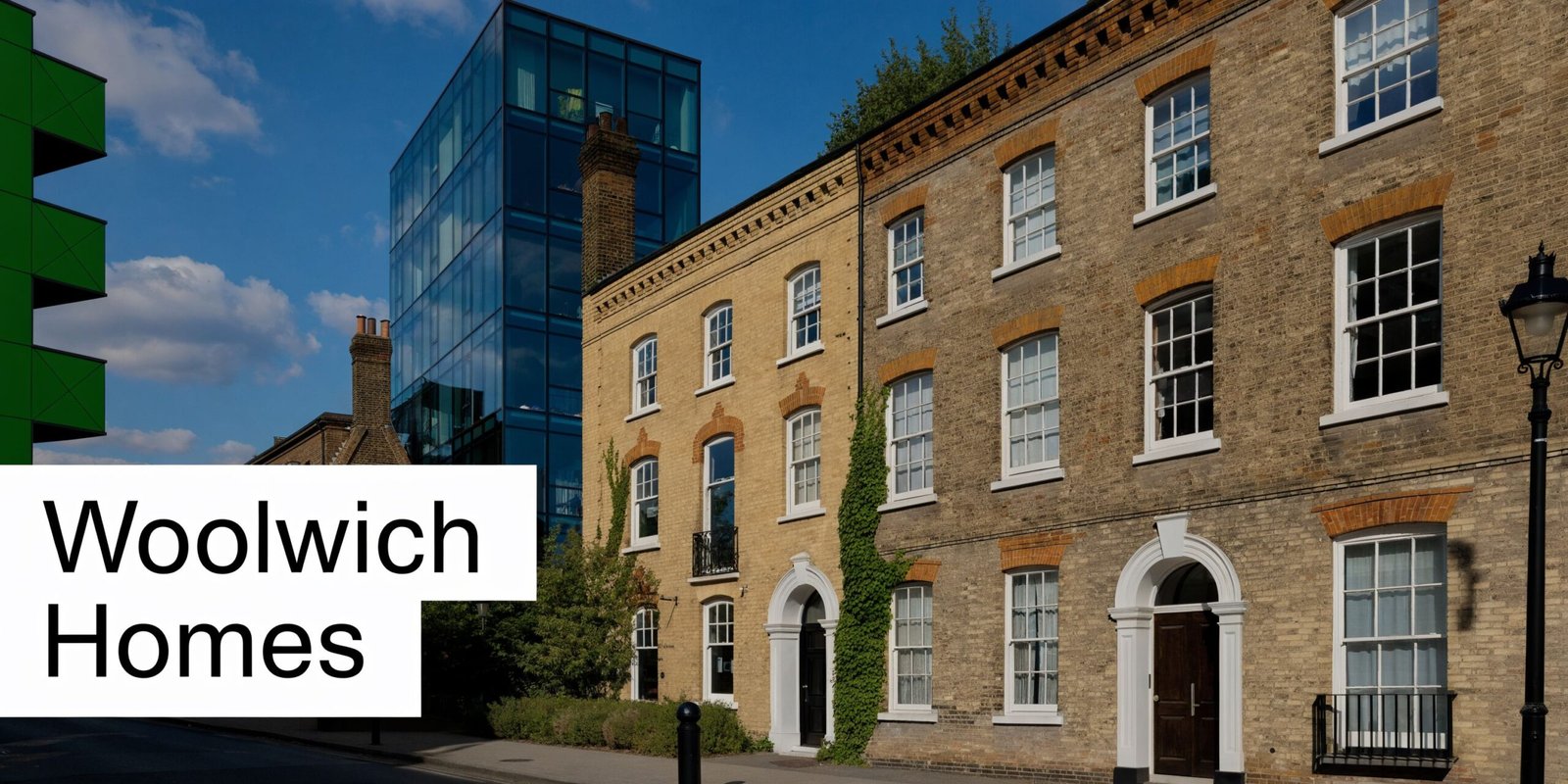
Victorian and Edwardian terraces
These homes usually have the most obvious character and the most hidden heat loss.
Solid brick walls, suspended timber floors, chimney breasts, and later extensions all affect how the heating behaves. A new boiler can improve matters, but if the pipework runs under draughty floorboards and the front room loses heat faster than the system can replace it, comfort still won’t feel right.
Typical issues include:
- Uneven room temperatures because original layouts weren’t designed for modern living patterns
- Old pipe runs hidden under timber floors or buried behind later refurbishments
- Slow warm-up times where radiators are undersized for the room’s actual heat loss
- Frozen or vulnerable condensate routes if a newer boiler was fitted with poor external routing
These homes respond well to careful upgrades. They respond badly to rushed ones.
Royal Arsenal conversions
Converted military and industrial buildings often look strong, and structurally they are. Plumbing and heating access presents a significant challenge.
A lot of these flats have thick walls, unusual service routes, long pipe runs, and limited space to alter existing layouts. You can’t assume a standard replacement is straightforward. Even simple jobs can involve tracing concealed isolation valves, checking drainage falls, and planning how to get equipment in and out without damaging finishes.
The common mistake is treating them like standard flats. They’re not. Heritage-style conversions often need more planning and better fault-finding.
In conversions, access is half the job. The repair itself can be simple. Reaching the failed part neatly and safely is what takes experience.
Modern riverside apartments
Newer blocks tend to have better insulation and neater services, but they come with their own quirks.
You’ll often see compact cupboards, tightly grouped valves, sealed systems, and manufacturer-specific controls. That can make routine servicing straightforward if everything was installed properly. It can also make small faults frustrating if commissioning was rushed or the system was never balanced well.
Some common patterns are:
- Pressure fluctuations caused by minor leaks or expansion vessel issues
- Poor hot water performance due to plate heat exchanger scaling
- Noise through pipework where clips, insulation, or support are poor
- Confusion over responsibility in blocks with shared services and private systems
In Woolwich, the property type tells you where to look first. That saves time and usually saves money.
Common Plumbing and Heating Problems in SE18
The same symptom can mean different things in different Woolwich homes. Low heat in a terrace may point to system design or heat loss. Low heat in a newer flat may be balancing, controls, or scale.
That’s why local diagnosis matters more than generic checklists.
High bills and cold rooms in older homes
Some parts of Woolwich have changed quickly, but a lot of homes still carry older efficiency problems. Reporting on a Trust for London study, Greenwich Wire notes that parts of Woolwich are highly gentrified, while southeast London homes have 15-20% higher rates of poor EPC ratings (D-G). The same piece says only 25% of private rentals in Greenwich borough have up-to-date gas safety certificates.
On the ground, that usually looks like this:
- Boilers running longer than they should because the property loses heat too fast
- Tenants turning the thermostat higher to compensate for poor comfort
- Rooms near windows or external walls never quite catching up
- Deferred servicing allowing small faults to become expensive ones
If you’re dealing with weak hot water or inconsistent heating, this guide on no hot water in house covers the first checks worth making before you assume the boiler has failed.
Hard water and limescale
Woolwich properties deal with London hard water, and that has a direct impact on heating and plumbing components.
Kettling noises, reduced hot water flow, sticky diverter valves, and tired plate heat exchangers all show up more often where scale builds steadily over time. Combi boilers are especially sensitive because they rely on clean heat exchange surfaces and stable flow rates.
Watch for these signs:
- Hot water running hot then cool
- Boiler noise during demand
- Reduced tap performance on the hot side
- Repeat part failures in otherwise decent boilers
A magnetic filter helps with system debris. It doesn’t stop domestic hot water scale inside a boiler. That distinction matters.
Converted flats and awkward pipework
In split houses and older conversions, pressure loss is often blamed on the boiler first. Sometimes that’s right. Often it isn’t.
What causes the repeat issue is hidden pipework, inaccessible joints, old radiator valves, or poorly altered layouts from earlier refurbishments. The more a property has been changed in stages, the more likely you are to find strange routing and avoidable weak points.
If pressure keeps dropping, don’t just top it up and move on. Repeated topping up feeds fresh oxygen into the system and can make corrosion worse.
New-build teething issues
Newer doesn’t always mean sorted.
I regularly see systems that have decent equipment but poor finishing detail. Radiators not balanced. Condensate not protected properly. Filling loops left awkwardly. Controls fitted without the occupier ever being shown how to use them. Those are small misses, but they affect comfort every day.
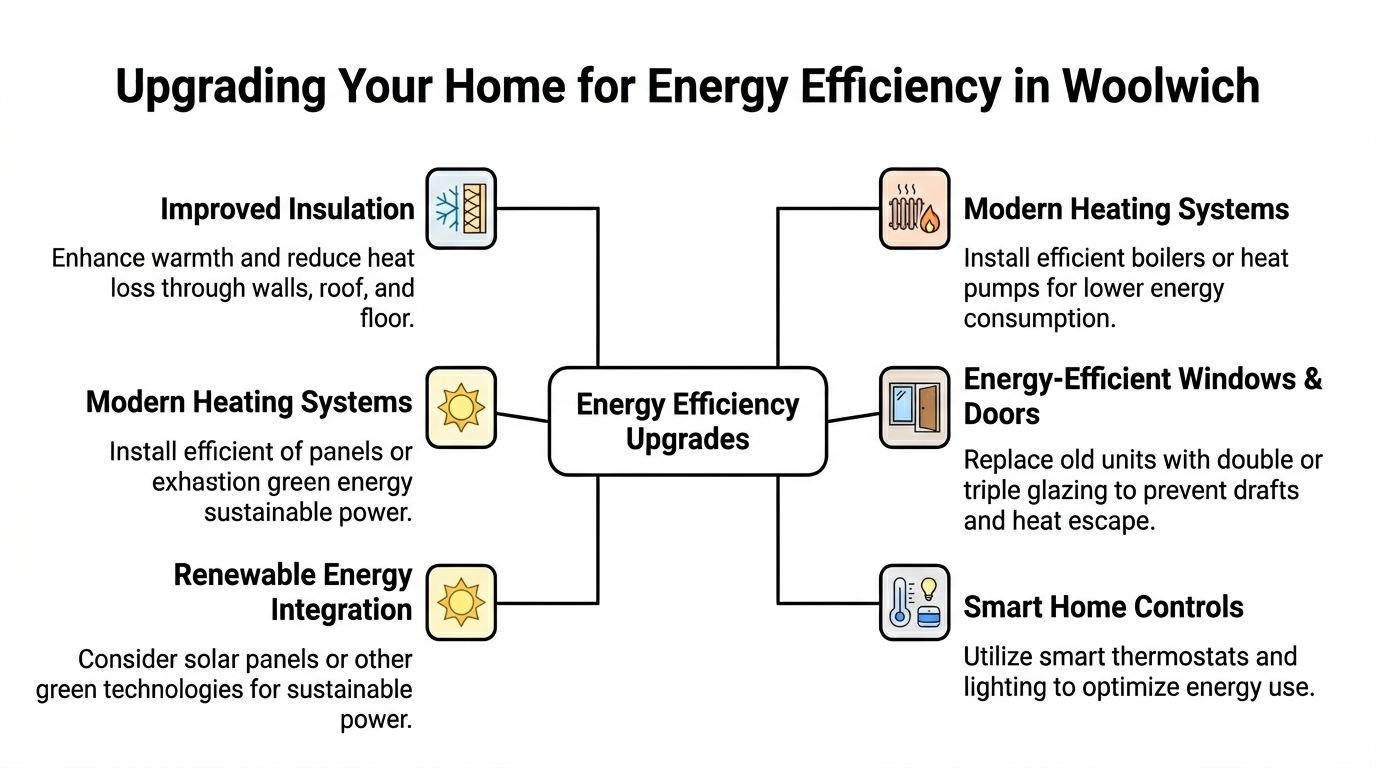
Upgrading Your Home for Energy Efficiency
The best upgrade isn’t always the most fashionable one. In Woolwich, the practical answer often depends on the property’s age, insulation level, and available space.
For many homes, especially older terraces and conversions, the strongest results come from getting the basics right first and then upgrading the heating system around those basics.
Start with heat loss, not gadgets
A smart thermostat won’t fix a cold property on its own.
Before spending heavily, check the simple things that affect comfort fastest:
- Draught-proofing around floors and doors in older homes
- Pipe insulation where heating runs pass through cold voids
- Radiator sizing and balancing so output matches the room
- TRVs working properly rather than stuck open or closed
These measures are often less glamorous than a new app-controlled thermostat, but they’re what make the controls worth having.
Why efficient boilers still make sense in Woolwich
There’s a lot of discussion around low-carbon heating, and rightly so. But practicality matters.
One verified data point is especially relevant here. The supplied reference notes that 2025 Ofgem reports show hybrid heat pumps can underperform in dense urban areas like Woolwich, with efficiency dropping by 18% compared to rural settings. It adds that high-efficiency A-rated boiler installations with smart controls can be a more practical path to achieving 20-30% bill savings for pre-1940s housing stock.
That lines up with real trade work. In many Woolwich homes, especially where insulation is incomplete or outside space is limited, a well-installed A-rated condensing boiler paired with smart zoning is the upgrade that gets used properly.
What tends to work well:
- A-rated combi boilers in flats and smaller houses where hot water demand suits them
- System boilers with unvented cylinders where multiple bathrooms need stronger simultaneous performance
- Smart controls such as Hive or Nest, especially when household schedules vary
- TRVs in key rooms so you’re not overheating spaces nobody uses
Smart controls only work if the setup is sensible
A common mistake is fitting expensive controls to a badly balanced system.
If the hallway stat is in the wrong place, or the first radiator off the circuit steals the flow, the software can only do so much. Proper commissioning still matters. So does user handover. People save energy when the controls make sense on day one.
A heating upgrade should reduce fiddling, not create more of it. If the occupier needs a tutorial every week, the setup is too complicated.
My practical order of upgrades
For most Woolwich homes, this order is sensible:
- Fix obvious faults first, including leaks, pressure problems, failed valves, and sludge issues.
- Reduce heat loss where you can, especially drafts and exposed pipe runs.
- Check emitter performance, meaning radiator size, balance, and TRV function.
- Upgrade the boiler if the existing one is tired, unreliable, or inefficient.
- Add smart controls once the system underneath them is working properly.
That sequence gives better comfort and fewer callbacks than jumping straight to the newest control kit.
What to Expect from Your Urbanic Installation
People are often more nervous about the process than the appliance. That’s fair. A boiler installation affects heating, hot water, electrics, flue position, condensate routing, and sometimes flooring or boxing.
A proper visit should feel organised from the start.
The survey and quote
The first step is a site survey, not guesswork from a photo alone.
An engineer should check the existing boiler location, gas route, flue options, condensate disposal, system condition, hot water demand, and access. In Woolwich homes, they should also pay attention to hidden complications such as conversion layouts, cupboard clearances, and whether pipework is likely to need alteration.
A fixed-price quote should make clear:
- What boiler or controls are being supplied
- Whether a filter is included
- What happens to old flues, pipework, and waste
- Whether system cleaning is part of the job
- What isn’t included, if extra remedial work is possible
Installation day
Good installation work is mostly about preparation.
The engineer should protect the work area, isolate safely, drain down correctly, and keep disruption controlled. If the system is being replaced in a flat or conversion, tidy pipework and careful movement through the property matter just as much as the final commissioning.
You should expect the installer to carry out the technical finish properly. That includes flue checks, gas safety checks, pressure testing where needed, controls setup, and commissioning in line with manufacturer requirements.
Handover and aftercare
The handover is where a lot of jobs fall short.
You should be shown how to top up pressure if your system requires it, how to use the programmer or app, what warning signs matter, and when to book servicing. If there’s a filter, someone should explain why it’s there. If there are thermostat zones, each one should be identified clearly.
A neat installation is good. A neat installation that the homeowner can operate confidently is much better.
Transparent Pricing and Boiler Care Plans
The biggest frustration in this trade isn’t always cost. It’s uncertainty.
People can usually plan for maintenance if they know what they’re paying for. What they hate is the vague quote, the missing exclusions, or the repair that keeps growing because basic servicing was skipped for years.
For landlords in Woolwich, predictability matters even more. The London Plan page for the Woolwich Opportunity Area says the area targets 5,000 new homes by 2041. The same verified data notes hard water at 250-300 mg/L CaCO3 and says unserviced systems cause 25% of heating failures, which is why annual servicing, magnetic filters, and leak repairs matter in pre-2004 stock.
That forms a strong case for cover. Not fear. Planning.
For a broader look at options, this guide to boiler cover in London is useful if you’re comparing what level of protection makes sense for your property type.
What fixed pricing should include
A proper fixed-price quote should remove ambiguity, not hide it.
Look for clarity on:
- Annual servicing
- Boiler breakdown attendance
- Heating controls checks
- Leak investigation and repair scope
- Whether drains or electrics are included
- Any excess, exclusions, or callout limits
Urbanic Services Boiler Care Plan Comparison
| Feature | Essential Care | Premium Care | Total Home Care |
|---|---|---|---|
| Annual boiler service | Included | Included | Included |
| Boiler breakdowns | Included | Included | Included |
| Heating controls checks | Basic cover | Wider heating system cover | Wider heating system cover |
| Radiators and valves | Limited | Included | Included |
| Plumbing leaks | Not typically included | Included | Included |
| Drains | Not included | Included in broader property support where stated | Included in broader property support where stated |
| Essential electrics | Not included | Not included | Included |
| Best suited to | Owner-occupiers wanting service and core boiler cover | Landlords and households wanting broader heating and plumbing support | Homes needing the widest predictable maintenance cover |
The right tier depends on the property.
Which plan suits which Woolwich home
- Small modern flat. Essential cover may be enough if the system is relatively new and access is straightforward.
- Older terrace. Premium cover is often the better fit because valves, leaks, and circulation issues are more likely over time.
- Rental property or larger family home. Total cover is usually the easiest to budget around, especially if you want fewer surprises during winter.
The more complex the property, the less useful bare-minimum cover becomes. Older stock and converted buildings usually need broader protection.
Your Local Woolwich Emergency Response Team
When a pipe bursts, the boiler locks out, or a tenant reports water coming through a ceiling, nobody wants a lecture. They want a clear plan and someone who knows the local housing types.
That’s where a local service matters. Woolwich jobs often involve one of three things: hard-to-access pipe runs, block-specific quirks, or older systems that have been modified several times. Fast response helps, but fast diagnosis is what really limits damage and repeat visits.

A good emergency engineer should do three things immediately:
- Make the property safe, whether that means isolating water, shutting down gas, or protecting electrics
- Find the actual failure point, not just the visible symptom
- Explain the next step in plain English, including what can be made temporary and what needs proper repair
For homeowners, that means less panic. For landlords and agents, it means quicker decisions and fewer vague updates.
The strongest reason to use a Woolwich-focused team isn’t marketing. It’s familiarity with the buildings. A newer riverside apartment, a terrace near the old centre, and a Royal Arsenal conversion each fail in different ways. Local experience cuts through that quickly.
Frequently Asked Questions for Woolwich Residents
Is a combi boiler always the best choice for a Woolwich home
No. It depends on the property and hot water demand.
A combi often suits smaller flats and houses with one main bathroom. If you’ve got multiple bathrooms or simultaneous hot water use, a system boiler with a cylinder may give a better real-world result.
Do older Woolwich terraces need full repiping before a boiler upgrade
Not always.
Some older systems can be retained with selective repairs, powerflushing where appropriate, filtration, and improved controls. But if pipework is badly corroded, poorly routed, or heavily altered from previous refurbishments, keeping it can limit the benefit of a new boiler.
How long should a new boiler last in a hard water area
There isn’t one fixed lifespan because maintenance standards vary. In hard water areas, longevity depends heavily on annual servicing, clean system water, good installation, and dealing with scale-related issues early.
If a boiler is fitted well but neglected, hard water will expose that neglect quickly.
Do flats in converted buildings need special approval for heating changes
Sometimes, yes.
Lease terms, freeholder rules, flue position restrictions, and shared service arrangements can all affect what’s allowed. In conversions, it’s worth checking permissions before choosing the appliance, not after.
Why do my radiators heat unevenly even though the boiler works
That usually points to distribution rather than generation.
Common causes include poor balancing, air, sludge, failing valves, incorrect pump settings, or radiators that are too small for the room. Replacing the boiler won’t automatically fix any of those.
Is smart heating worth it in a Woolwich property
Usually yes, if the underlying system is sound.
Smart controls are most effective when the boiler is reliable, radiators are balanced, and the property isn’t losing large amounts of heat through obvious gaps. Installed on top of an unhealthy system, they tend to disappoint.
If you want reliable advice, clear pricing, and support from a team that understands how Woolwich homes behave, Urbanic Services Ltd can help with boiler installs, servicing, repairs, smart heating upgrades, plumbing, and emergency response across London.