
That faint, unmistakable smell of gas near your boiler is one of those moments that rightly sets alarm bells ringing. That "rotten egg" odour is added to natural gas specifically to warn you of a leak, and it's a signal you must never ignore. A gas leak is a genuine emergency, so acting quickly and correctly is vital for your safety.
Your Immediate 60-Second Safety Plan
The second you smell gas, your mindset has to switch instantly to safety-first. Forget trying to figure out where the leak is coming from or what might have caused it. For the next minute, your only job is to prevent a spark and get everyone out. Don't hesitate.
First, get fresh air moving. Throw open all the doors and windows you can to ventilate the property. This helps to disperse the gas and lowers the immediate risk. Start with the ones nearest to you and work your way towards an exit, creating a path for the gas to escape outside.
These three steps are your absolute priority, in this exact order.
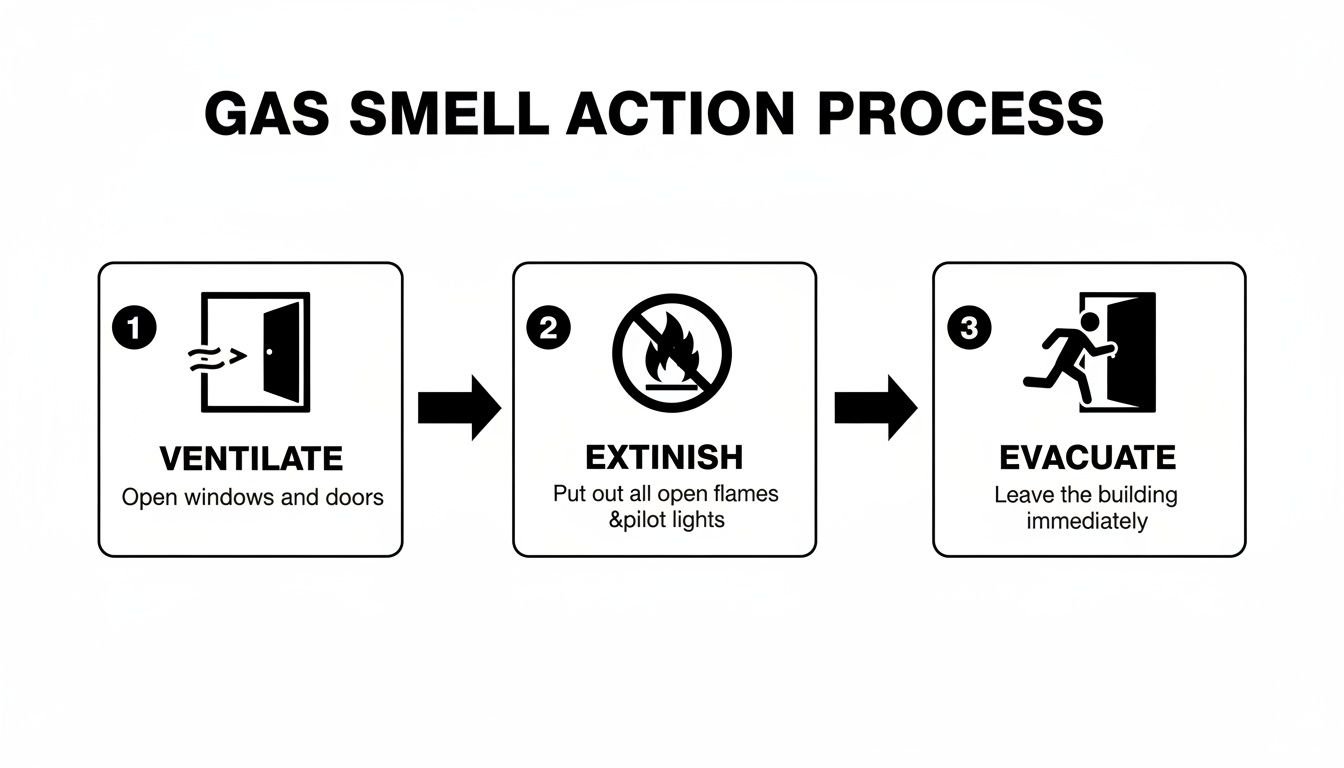
Think of it as a simple sequence: Air it out, kill the flames, and get out.
What to Do vs. What to Avoid
In a potential gas leak, what you don't do is just as critical as what you do. It’s frighteningly easy to create a tiny spark, which is all it takes to ignite the gas. Here’s a quick-reference table to guide your immediate actions.
Emergency Gas Smell Do's and Don'ts
| Action (DO THIS) | Avoid (DON'T DO THIS) |
|---|---|
| Open all windows and doors immediately. | Do not touch any light switches (on or off). |
| Extinguish any naked flames like candles or fires. | Do not use any electrical appliances (kettle, TV, etc.). |
| Turn off gas hobs at the knob if safe to do so. | Do not use a landline or mobile phone inside the house. |
| Evacuate everyone from the property, including pets. | Do not operate doorbells or any other electrical device. |
| Call the gas emergency number from a safe distance. | Do not re-enter the property until told it's safe. |
Resisting the urge to flip a switch or answer your phone is tough, but it's a life-saving precaution.
Key Takeaway: Any action that could create a spark is off-limits. This includes light switches, using your mobile phone, or even pressing the doorbell. Wait until you are well away from the building before making any calls.
Evacuate and Make the Right Call
Once the windows are open and any flames are out, get everyone out. Don't waste time gathering belongings—just leave.
When you're a safe distance away (think across the street or at a neighbour's), you need to call the National Gas Emergency Service on 0800 111 999. This is a 24-hour, free-to-call service. They will send a qualified engineer to your property immediately to locate the leak and make the situation safe.
Never try to fix the leak yourself. Don't even turn the gas off at the meter unless the emergency operator specifically tells you to. Your job is done once you've safely evacuated and reported it.
While a gas leak is a clear emergency, other situations can also require fast action. It's wise to understand your options for emergency plumbing support for issues that aren't gas-related but are still urgent.
Understanding the Real Risk of Boiler Gas Leaks
It feels like we’re hearing about gas-related incidents more and more, doesn’t it? Well, it’s not just a feeling. The risk of smelling gas from a boiler is a growing reality for households across the UK, and it’s important to understand what’s behind it. This isn’t about scaremongering; it's about being clear-eyed about the dangers so you can take sensible precautions.
The problem is especially sharp in densely populated areas like London. With so many of us living in terraced houses or blocks of flats, a single faulty boiler can put dozens of neighbours at risk. That shared wall means you’re also sharing the danger, turning what seems like a private issue into a community-wide safety concern.
The Numbers Don't Lie
This isn't just anecdotal. The data paints a clear picture of a rising tide of dangerous gas situations, with boilers often at the heart of the problem.
A recent study from 2025, which analysed thousands of gas engineer reports, is pretty sobering. It revealed that life-threatening gas leaks surged by a staggering 17.1% in just one year. Of all the dangerous gas fittings found (2,958 of them), a massive 67% were due to leaks.
And here’s the key takeaway for homeowners: 21.7% of those dangerous leaks—that's more than one in every five—were traced directly back to a faulty boiler. You can read the full breakdown of the Fair Fix study over at PHAM News.
These aren't just abstract figures. They confirm that if you smell gas from your boiler, you're facing a genuine and increasingly common emergency. Your next move is critical.
What This Means in the Real World
So, what does this all mean for you? It means that putting off your annual boiler service is no longer a small gamble on your heating failing. It’s a decision that knowingly increases your family's exposure to a risk that we can now see is statistically on the rise.
I’ve seen the consequences firsthand time and again.
- The Busy Family: A family in Hackney kept pushing back their boiler service because, well, life gets busy. Over time, a tiny internal seal degraded, starting a slow, faint leak. They only realised something was wrong when the smell became unmistakable on a quiet Sunday morning, causing a full-blown panic.
- The London Landlord: A landlord with a flat in Greenwich decided to skip the annual gas safety check to save a few quid. The tenant started getting constant headaches but put it down to work stress. It wasn't until a neighbour reported a strong gas smell in the hallway that the real culprit—a neglected boiler—was found.
These scenarios are frighteningly common, and they all point to the same truth.
A gas leak rarely just "happens." More often than not, it's the predictable outcome of skipping routine, professional maintenance. Preventing it is a responsibility that falls on both homeowners and landlords.
Turning Knowledge into Action
Knowing the stats and hearing the stories is the first step. The crucial next step is realising that you are in control of your own home's safety. The connection between regular maintenance and slashing your risk is undeniable.
This data isn't here to make you anxious; it's here to arm you with knowledge. When you understand just how often boilers are the source of dangerous leaks, it's easier to see why Gas Safe engineers are so insistent on annual servicing. It isn't an upsell—it's about stopping your home from becoming another statistic.
This awareness empowers you to make the right call: prioritise that simple, effective annual check-up. It's the best way to ensure your boiler runs safely and efficiently for years to come.
Common Causes of Boiler Gas Smells
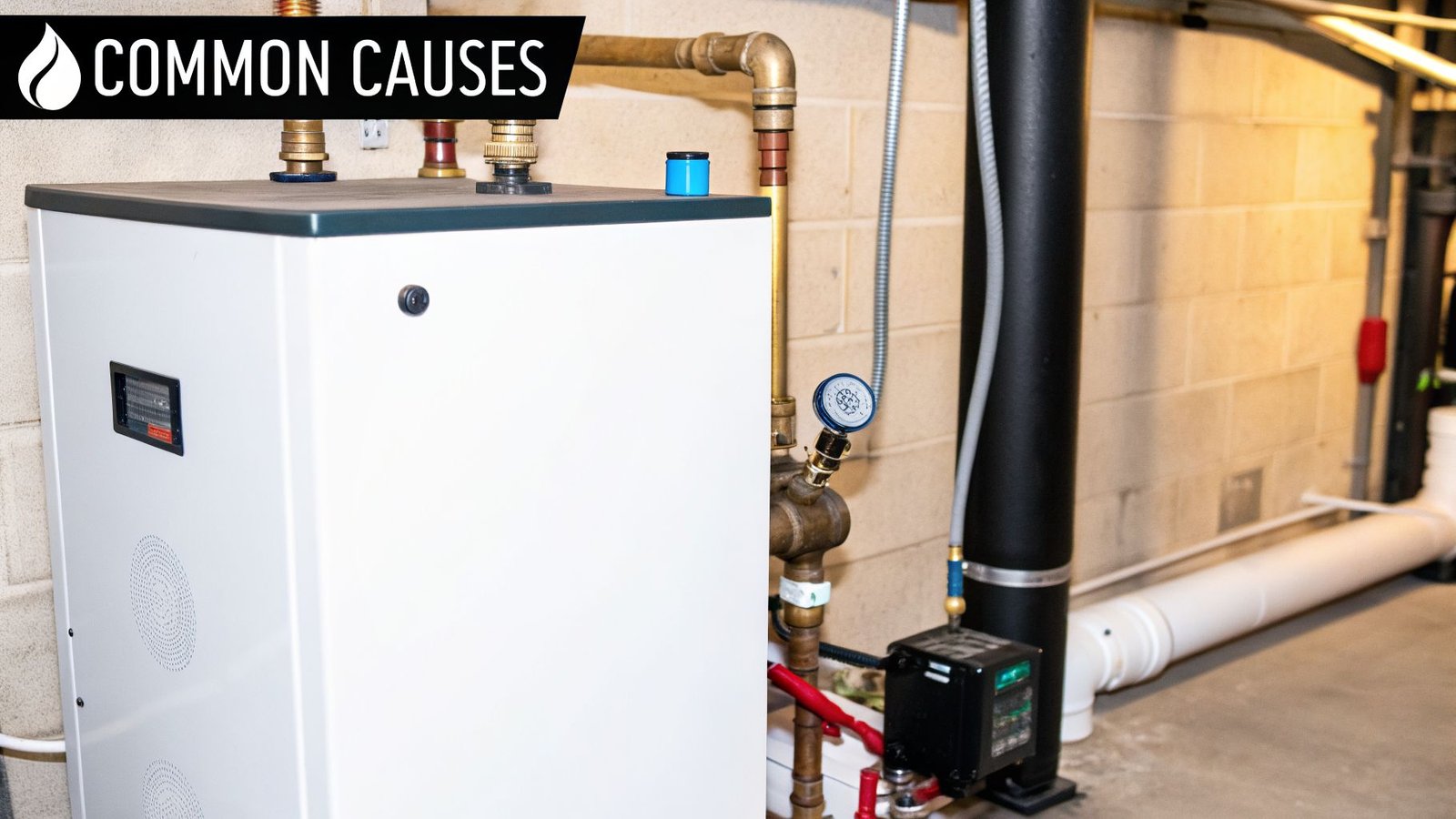
Once you’re safely outside and the National Gas Emergency Service is on its way, it’s only natural to wonder what on earth has gone wrong. Knowing the likely culprits helps you understand what the engineer is looking for and really drives home the importance of regular servicing.
A gas smell from your boiler is never random; it's a clear signal that a specific part of the system has failed. When a Gas Safe engineer arrives, they aren't just looking for a "gas leak" in a general sense—they're hunting for a precise point of failure. These issues often creep up over time, which is exactly why they’re so often caught during an annual boiler service.
Failing Seals and Gaskets
Think about the little rubber washer in a kitchen tap. After years of use, it can go hard and brittle, leading to that annoying drip, drip, drip. The seals and gaskets inside your boiler's pipe connections and gas valve are much the same, but a failure here has far more serious consequences.
These components are constantly under pressure, heating up and cooling down. Over time, they simply degrade, allowing tiny amounts of gas to seep out. What starts as a minuscule escape can eventually become significant enough for you to smell.
We once had a classic case in a Greenwich flat. The owner had been smelling a faint hint of gas on and off for weeks. Our engineer traced it back to a single perished gasket on the boiler's main gas valve. It’s an inexpensive part, but if it had been left any longer, it could have been a disaster.
Problems with the Pilot Light
If you have an older boiler, it probably uses a pilot light—that small, constant flame that ignites the main burner whenever you need heat. If that flame goes out, a safety device called a thermocouple is supposed to shut off the gas supply instantly.
But if that thermocouple fails, it can let unburnt gas continue to flow. This is a very direct and noticeable source of a gas smell, as the gas is literally just pouring into the appliance without being lit.
Thankfully, modern boilers have moved on. They use electronic ignition, which only creates a spark when you actually need heat, making them more efficient and eliminating this particular risk entirely.
Engineer's Insight: A healthy pilot light should be a crisp, blue flame. If you see a lazy, floppy yellow flame, that’s a major red flag. It points to incomplete combustion, which wastes gas and can be a sign of a developing fault or even carbon monoxide production.
Cracks in the Heat Exchanger
The heat exchanger is the absolute core of your boiler, responsible for transferring heat from the burning gas into the water for your radiators and taps. It lives a tough life, expanding and contracting thousands upon thousands of times.
After many years of this thermal stress, microscopic cracks can start to form in the metal. If a crack develops in the wrong place, it can allow gas from the combustion chamber to leak out before it's been properly burned.
This is a very serious fault and often means the boiler is nearing the end of its life. It's also a major cause of carbon monoxide leaks, which is exactly why a CO alarm is a non-negotiable piece of safety equipment for any home with a boiler.
Poorly Installed or Damaged Pipework
Sometimes the fault isn't in the boiler at all, but in the pipework leading to it. A gas supply pipe that wasn't fitted with properly tightened connections can create a slow, persistent leak. We see this most often with dodgy DIY jobs or work done by unqualified fitters.
I remember a call-out to a house in Lewisham where the owners had just had a beautiful new kitchen installed. The gas smell was eventually traced to a supply pipe behind the new cabinets that had been knocked and loosened during the refit.
Accidental damage or corrosion can also compromise the pipework. Even something as simple as drilling a hole for a shelf without checking what’s behind the wall can end badly if you hit a gas line. It’s for this exact reason that any work on gas pipework must only be carried out by a Gas Safe registered engineer.
Your Next Steps for Professional Help
Okay, you’ve done the hard part. You've got fresh air flowing, everyone is safely outside, and that initial wave of panic is starting to subside. But the problem—that unnerving smell of gas from your boiler—is still waiting to be dealt with. Now it’s time to hand over to the professionals.
Knowing exactly who to call, and when, is key to getting this sorted out quickly and safely.
Your first and most important call is to the National Gas Emergency Service. Their number is 0800 111 999. It's a free, 24/7 service dedicated to one thing: responding to gas emergencies. Their job isn't to fix your boiler, but to eliminate the immediate danger.
The Emergency Service vs. A Gas Safe Engineer
It's easy to get these two confused in a stressful moment, but they have very different roles. Calling the right one first saves precious time.
- National Gas Emergency Service: Think of them as the gas equivalent of the fire brigade. They are the first responders. Their goal is to find the leak, make the area safe (which usually means shutting off your gas at the meter), and prevent any harm.
- A Gas Safe Engineer: This is your repair expert. You call them after the emergency service has given the all-clear. They're the ones who will diagnose the fault with your boiler, source the right parts, and get your heating and hot water back up and running.
When you phone the emergency number, have your address and postcode handy. Just tell them plainly what's happened—"I can smell gas coming from my boiler, and we're all outside"—so they know what they’re walking into.
What to Expect: An emergency engineer will aim to be with you within an hour. They will always carry identification, so don't be afraid to ask to see their Gas Safe ID card before letting them in. They'll use specialist equipment to trace the source of the gas and will act immediately to isolate it.
Finding a Competent Gas Safe Engineer
Once the immediate threat is gone, you'll need a qualified engineer to carry out the actual repair. This part is non-negotiable: you must only ever hire a Gas Safe registered engineer to work on your boiler. The Gas Safe Register is the UK's official list of engineers legally allowed to work with gas.
Hiring an unregistered person is not just illegal; it's incredibly dangerous. You're risking shoddy work that could cause an even more serious incident down the line.
You can check an engineer’s credentials in seconds on the Gas Safe Register website. Just type in their name or business, and it’ll confirm they’re legitimate. Any reputable engineer will be happy to show you their registration details.
This system works. Just last year in the UK, a staggering 68,000 homes avoided a potential gas tragedy thanks to the quick thinking of homeowners and the expertise of Gas Safe engineers. Many of these call-outs started just like yours—with the telltale smell of gas from a faulty boiler.
Ultimately, getting the right professional involved turns a moment of fear into a manageable repair. If you want to get a better idea of what could be wrong with your appliance, our guide on boiler repair services breaks down common faults. Swift, expert action is what keeps homes safe.
Preventing Future Gas Leaks With a Boiler Maintenance Plan
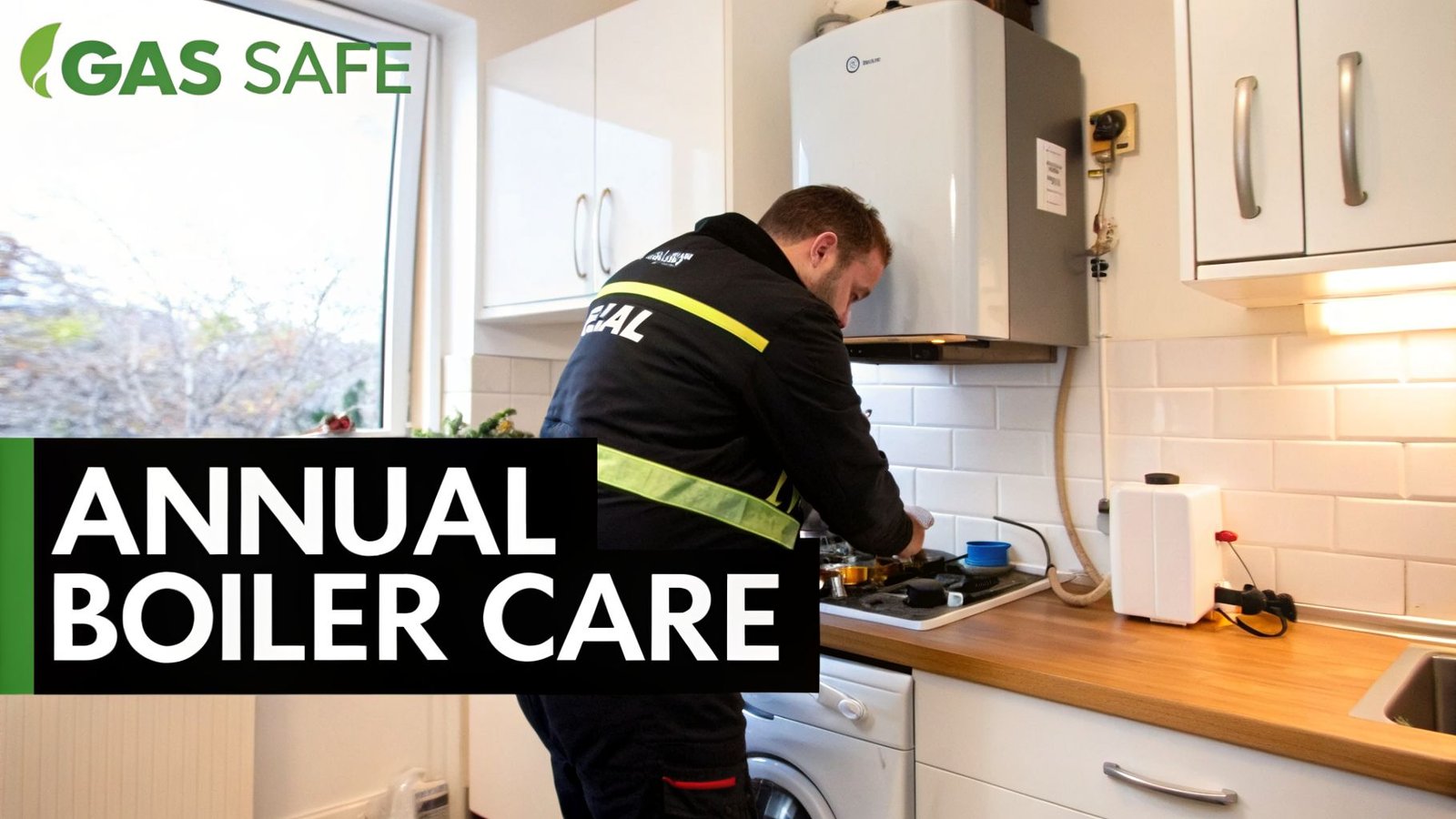
After the immediate danger has passed and you can finally breathe again, your first thought is probably, "I never want to go through that again." And you shouldn't have to. Once the emergency is resolved, it's time to shift your focus from reacting to a crisis to preventing one from ever happening.
The best way by far to keep your home safe and avoid another gas leak scare is through consistent, professional boiler maintenance. It’s the difference between a stressful, disruptive emergency and a straightforward, preventative routine. An annual boiler service isn't just a recommendation; it's a fundamental safety check that can stop a potential disaster in its tracks.
It’s easy to underestimate the risk, but the reality is sobering. Data from NHS Digital shows that in the last decade, UK hospitals saw 76 A&E admissions due to boiler explosions and ruptures. These aren't just statistics; they're a stark reminder that what starts as a faint smell can escalate dramatically.
What a Professional Annual Service Actually Involves
A proper annual service from a Gas Safe registered engineer is much more than a quick glance. It’s a deep-dive diagnostic designed to catch the small signs of wear and tear before they become dangerous faults.
Here’s what a thorough engineer will do:
- Look Under the Bonnet: They’ll take the boiler casing off to get a clear look at all the key components—the heat exchanger, burner, and main injector—checking for any corrosion, damage, or early signs of trouble.
- Check the Pressure: The engineer will test that your boiler is operating at the correct gas pressure. If it's too high or low, it can cause inefficient burning and strain parts, leading to failure.
- Analyse the Fumes: Using a flue gas analyser, they will test the exhaust fumes to ensure the gas is burning cleanly and efficiently. They’ll also check that the flue itself is clear and safely venting those fumes outside.
- Clean Critical Parts: Over time, components like the burner and heat exchanger can get clogged with debris. A good clean ensures everything runs smoothly and safely.
- Inspect Every Seal: This is crucial. The engineer will meticulously check every seal and gasket to make sure they are tight and intact. This is often where tiny, undetectable gas seeps begin.
This isn’t just about ticking boxes. It’s about spotting the slow, hidden degradation of parts that could eventually lead to a leak.
The Smart Solution: A Boiler Care Plan
While a one-off annual service is the bare minimum for safety, a boiler care plan gives you a far more robust and predictable way to manage your heating system for total peace of mind. Think of it as an all-encompassing safety net, not just a single appointment in your calendar.
These plans typically bundle the essential annual service with repair cover, spreading the cost over a predictable monthly payment. This means you avoid the shock of a sudden, hefty repair bill right when you’re already stressed about a potential gas leak.
A good boiler care plan changes your relationship with your heating system. You go from anxiously wondering when the next thing will go wrong to feeling confident that a proactive maintenance and repair strategy is already in place.
Our boiler care plans at Urbanic Services are designed to give you that reassurance. Depending on the plan you choose, you can get cover for the most common—and often most expensive—points of failure.
| Feature Covered | Why It Matters for Preventing Gas Leaks |
|---|---|
| Annual Boiler Service | Catches wear on internal seals, valves, and burners before they fail and leak gas. |
| Gas Pipework Repairs | Covers leaks in the pipes that supply gas to your boiler and other appliances. |
| Boiler & Controls Cover | Ensures faulty thermostats or valves that could cause gas supply issues are fixed promptly. |
| Central Heating System | Addresses related issues in radiators and pipework that put strain on the boiler. |
By signing up for a care plan, you're not just booking a service; you're investing in a system of continuous professional oversight that keeps your home safe. You can see how this proactive approach works by exploring the full details of our boiler servicing options.
Ultimately, it comes down to a simple choice. You can wait and worry about the next scare, or you can take control with a proper maintenance schedule. A well-serviced boiler is your best defence and your ticket to a safe, warm, and worry-free home.
lingering Questions After a Gas Scare
It's completely normal to have questions swirling around your head after dealing with something as stressful as a potential gas leak. Getting clear on the details is the best way to feel confident about your home's safety again. Here are some of the most common questions we get from homeowners.
What Does Natural Gas Actually Smell Like?
This is a great question because, on its own, natural gas is totally invisible and has no smell at all. That’s why gas suppliers add a chemical with a very powerful odour called mercaptan.
This is done purely for safety. It gives the gas that distinct, unmistakable "rotten egg" or sulphur smell. The scent is designed to be so potent that you can't miss it, even if the leak is tiny. If you ever catch a whiff of that smell, you have to treat it as a gas leak. No exceptions.
My Carbon Monoxide Alarm Didn’t Go Off, So It’s Not Serious, Right?
This is a critical and dangerously common mistake. Your nose and your carbon monoxide (CO) alarm are on the lookout for two completely separate dangers.
- The Smell of Gas: This points to a leak of raw, unburnt natural gas. This is a major fire and explosion risk.
- A CO Alarm: This device detects carbon monoxide, which is a silent, odourless poison created when fuel doesn't burn properly.
A gas leak won't set off a CO alarm, and a CO problem won't create that "rotten egg" smell. They are two distinct emergencies. Never, ever assume you're safe just because one alarm is silent while your senses are telling you something is wrong.
Key Takeaway: The "rotten egg" smell is your warning of an explosion risk. A CO alarm warns you about a poisoning risk. You need protection from both, which means having working CO alarms and trusting your sense of smell.
How Does a Boiler Care Plan Actually Help Prevent Gas Leaks?
Think of a good boiler care plan as your first line of defence. The most important part of any plan is the annual boiler service, where a Gas Safe engineer gets hands-on with your system and gives it a thorough inspection.
This is far more than a quick once-over. The engineer will check the condition of all the internal seals, test the gas valve for correct operation, clean out the burner, and use special equipment to analyse the flue gases. It’s a meticulous process designed to spot wear and tear long before it can become a dangerous gas leak. Many of our plans also cover the wider central heating system, giving you a full safety net and preventing that stressful emergency call-out in the first place.
Is It Safe to Go Back Home Right After an Engineer Fixes a Leak?
Absolutely. Once a certified Gas Safe engineer has repaired the fault and officially declared your home safe, you can be confident that the danger has passed. They follow an extremely strict procedure.
After fixing the leak itself, the engineer uses specialist gas detection equipment to double-check their work and sweep the area to ensure there are no other hidden leaks. They’ll also make sure your home is properly ventilated to clear out any lingering gas. Only when they are 100% certain that everything is secure will they give you the all-clear and turn your gas supply back on. You should receive a detailed report of the work they did, giving you complete peace of mind.
The smell of gas from your boiler is always a serious matter, but knowing what to do and having professional support makes all the difference. For routine maintenance or emergency repairs across London, you can trust the experts at Urbanic Services Ltd to keep your heating system running safely and efficiently. Book a Gas Safe engineer online or get a free quote today.