
A power flushing boiler service is essentially a deep-clean for your entire central heating system. It uses a high-velocity flow of water, at a safe, low pressure, to shift all the accumulated sludge, rust, and other debris that's been building up for years. It's the most effective way to sort out problems like cold patches on your radiators or a noisy boiler, getting everything flowing freely again.
Understanding What Power Flushing Does for Your Boiler
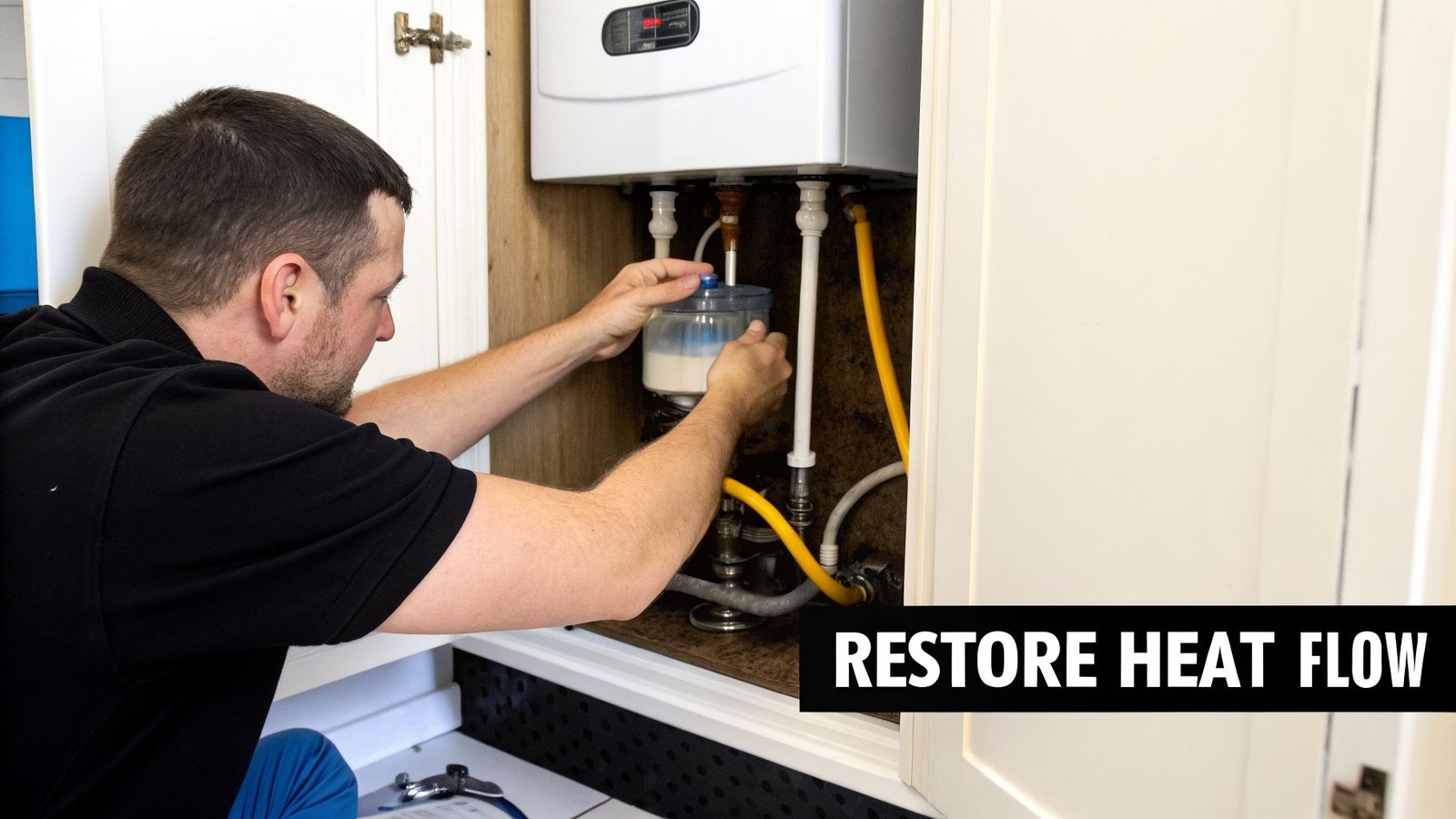
It helps to think of your central heating system a bit like your own body’s circulatory system. The boiler is the heart, pumping hot water through a network of pipes (the arteries) to your radiators (the limbs). But over time, just like arteries can get clogged, so can your heating system.
The Problem of Central Heating Sludge
Inside your pipes and radiators, the simple combination of water and metal eventually causes corrosion. This creates tiny particles of rust and other gunk that mix with limescale from the water, forming a thick, gritty substance we call "sludge."
This sludge doesn't just sit there. It gets pumped around your system, slowly settling in all the wrong places. You’ll often find it at the bottom of radiators, which is why they can be hot at the top but stubbornly cold at the bottom. Worse still, it can build up in the narrow pipes inside the boiler itself, especially the heat exchanger.
When this happens, your boiler—the heart of the system—has to work much harder to force water through the blockages. This extra strain is a classic cause of rising energy bills, strange banging or kettling noises, and can lead to expensive parts failing long before they should.
The Power Flushing Solution
A professional power flushing boiler service is the definitive answer to this sludge problem. This isn't just about draining and refilling the system; it’s a powerful, methodical process designed to clear out every last bit of that damaging sludge.
An engineer will connect a high-flow pumping machine to your heating circuit. This machine forces water through your pipes and radiators at high speed, but at a controlled, low pressure, so it's tough on the grime but gentle on your system's joints and components.
The whole process has several distinct stages:
- Initial Flush: We start by pumping water through the system to dislodge all the loose sludge and rust.
- Chemical Cleansing: Specialised cleaning chemicals are added to the water. These get to work breaking down the more stubborn, hardened deposits that have been there for years.
- Reversing the Flow: The engineer will rapidly reverse the direction of the water flow. This creates a powerful turbulence that lifts debris from tricky corners and the bottom of radiators.
- Final Rinse: Finally, the system is flushed through with fresh, clean water until we can see it’s running completely clear. Then, a chemical inhibitor is added to protect the system and help prevent corrosion from starting all over again.
This thorough clean brings your entire heating network back to life, making sure water can circulate properly and heat your home efficiently. To get a better handle on all the parts we're talking about, you can learn more about what a boiler system is in our detailed guide.
Key Signs Your Heating System Needs a Power Flush
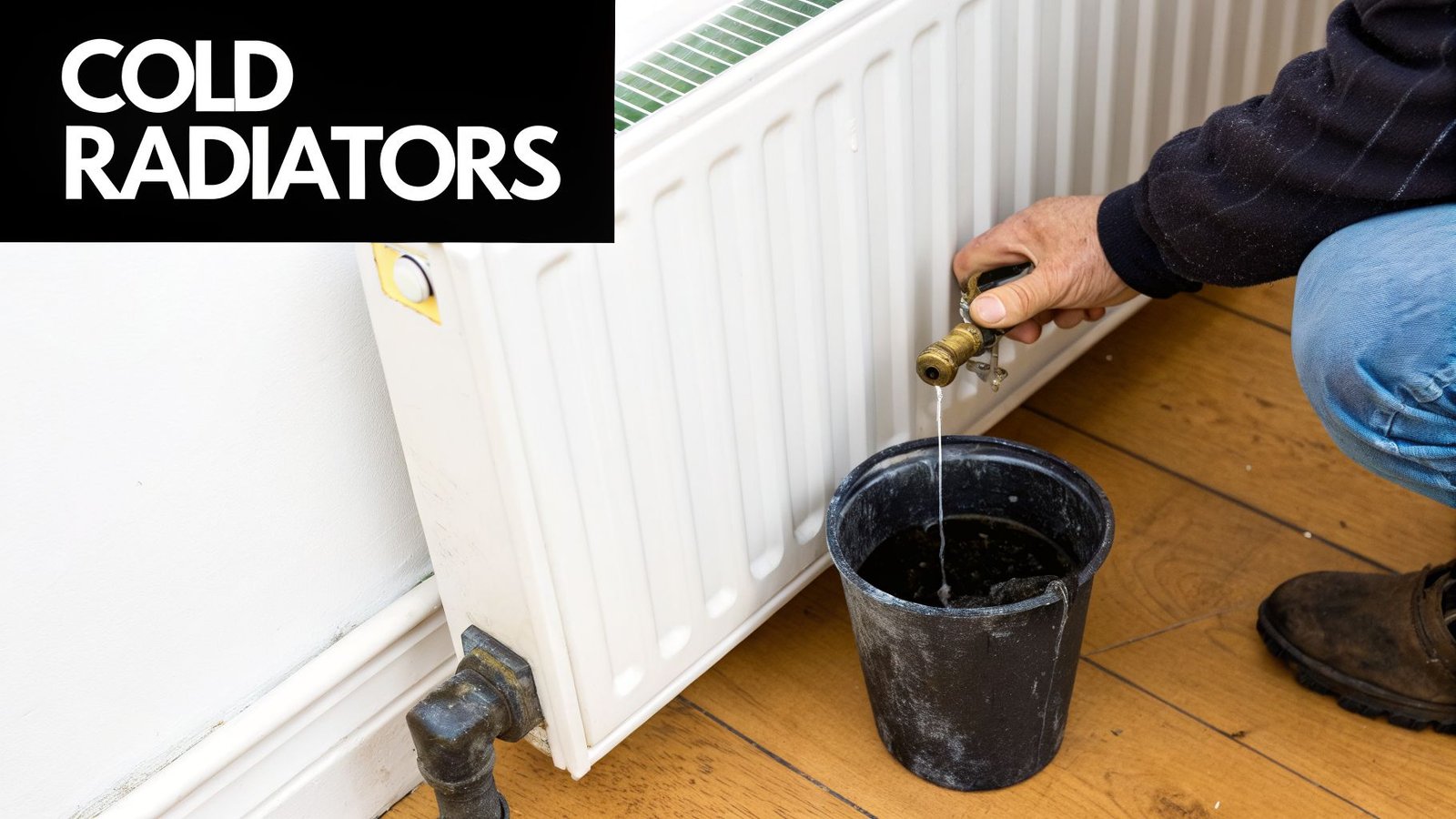
Your central heating system is usually pretty good at letting you know when something’s wrong. The trick is learning to spot the clues before they turn into bigger, more expensive problems.
These little warning signs—a noisy boiler here, a cold radiator there—almost always point back to one culprit: sludge. This nasty mix of rust, limescale, and general grime builds up over the years, clogging the arteries of your heating system. Getting a power flushing boiler service is the deep clean it needs to get back on track.
Common Radiator and Room Temperature Problems
The most obvious signs often show up right on your radiators. If you’ve noticed the house just doesn't feel as cosy as it used to, or you're constantly nudging the thermostat up a degree or two, it’s time for a closer look.
Cold spots are the classic giveaway. You'll find that a radiator is lovely and hot at the top but stays stubbornly cold along the bottom half. That’s because the heavy sludge has settled at the base, stopping the hot water from getting through.
Another big clue is how long it takes for your home to warm up. A healthy system should get your radiators toasty fairly quickly. If it feels like an eternity for the heat to kick in, that’s your boiler working overtime to force water through blocked pipes and radiators.
- Cold Bottom, Hot Top: A dead ringer for a thick layer of sludge settled at the bottom of your radiator.
- Slow to Heat Up: The boiler is fighting against blockages, slowing everything down.
- Uneven Room Heating: Some rooms get warm while others stay chilly because water isn't circulating properly.
Strange Noises and Discoloured Water
A well-behaved heating system should be seen and not heard. When it starts making a racket, it's telling you something is wrong inside.
Loud banging, clanking, or a sound like a kettle boiling (we call this 'kettling') is a common cry for help from your boiler. It’s often caused by limescale or sludge creating hotspots on the heat exchanger. We go into more detail on this in our guide to a boiler making loud banging noises.
The other dead giveaway is what comes out when you bleed a radiator. The water should be clear, or at least close to it. If you get a jet of black, mucky water, you’re looking at proof of the corrosion and gunk that's circulating through your system.
When your heating system is healthy, it runs quietly and the water inside is clean. The moment you start hearing strange noises or see black sludge, you’ve got clear evidence of internal buildup that only a proper power flush can fix.
Frequent Breakdowns and Bleeding
Finally, how reliable has your system been lately? If you're having to bleed your radiators every few weeks just to get them working, that’s not normal. Constant air in the system is often a side effect of the corrosion process that creates sludge in the first place.
Think about any recent repair bills, too. If your boiler pump has failed or other parts have needed replacing, sludge is a likely suspect. This gritty debris puts a huge strain on moving parts like pumps and valves, causing them to wear out and fail much sooner than they should. A power flushing boiler service doesn't just clear the blockage; it protects the expensive components inside your boiler from future damage.
Symptom Checker Is It Time for a Boiler Power Flush
Not sure if your system's quirks are serious? Use this quick table to see if the signs point towards needing a power flush.
| Common Symptom | What It Typically Means | Action Priority |
|---|---|---|
| Radiators cold at the bottom | Heavy sludge has settled, blocking water flow. | High |
| Loud banging or 'kettling' boiler | Limescale or sludge on the heat exchanger. | High |
| Takes a long time to heat up | Blockages are restricting circulation. | Medium |
| Black or dirty water when bleeding | Significant internal corrosion and debris. | High |
| Some radiators don't get hot | Flow is blocked to certain parts of the system. | Medium |
| Needing to bleed radiators often | Gas is being produced by the corrosion process. | Medium |
| Recent pump or valve failure | Sludge is causing premature wear and tear. | High |
If you're ticking off a few boxes in the 'High' priority column, it's definitely time to call in a professional to assess your system.
How a Power Flush Boosts Efficiency and Lowers Your Bills
When your central heating system is choked with sludge and debris, your boiler has to work incredibly hard just to keep up. Think of it like trying to pump water through a hosepipe that’s half-full of mud – it takes a lot more force to get a decent flow. That’s exactly what’s happening inside your pipes, and all that extra effort means your boiler is burning more fuel, driving up your energy bills.
A professional power flush hits the reset button on this whole problem. By clearing out every radiator and pipe, we remove all that internal gunk that was making your boiler overwork itself. Suddenly, hot water can circulate freely and quickly again.
The result? Your rooms heat up faster, your boiler hits its target temperature without a struggle, and it can finally switch off or power down. This immediate reduction in strain is the first and most direct way a power flushing boiler service starts putting money back in your pocket.
Restoring Peak Boiler Performance
Modern condensing boilers are marvels of engineering, often capable of converting over 90% of the fuel they use into actual heat for your home. But they can only hit those impressive numbers if the system they're connected to is clean.
When sludge builds up, especially on the boiler's main heat exchanger, it acts like a layer of insulation. This nasty barrier stops heat from transferring properly to the water. To compensate, your boiler has to fire for longer and burn more gas, causing its efficiency to nosedive.
A clean system isn’t just a nice-to-have; it's essential for efficiency. A power flush lets your boiler perform as it was designed to, ensuring you're not paying for wasted energy and that your home gets the full benefit of every pound spent on heating.
This is a huge deal for London homeowners wrestling with high energy prices. A power flush can directly boost your boiler's efficiency, with modern models reaching up to 94% after a proper clean. Compare that to older, sludge-filled systems, which can plummet to as low as 60-70% efficiency. It’s a common problem in the capital's many pre-1980s homes, leading to wasted fuel and constant breakdowns. You can learn more about how a modern, efficient boiler can save you money on energy bills.
Extending the Lifespan of Your Boiler
Aside from the immediate savings on your bills, a power flush provides a critical long-term benefit: it protects your heating system’s most expensive parts from an early grave. That gritty, abrasive sludge is constantly circulating, causing serious wear and tear.
Imagine running your car engine with sandy oil – it’s only a matter of time before something breaks. In a heating system, the components most at risk are:
- The Circulator Pump: This is the heart of your system, pushing hot water everywhere. Sludge puts a huge strain on it, often causing it to burn out or seize up completely.
- The Heat Exchanger: Debris can create intense "hot spots" on the heat exchanger, leading to cracks, leaks, and that tell-tale "kettling" noise. This is one of the priciest parts of a boiler to replace.
- Valves and Controls: Tiny particles of grit are brilliant at blocking motorised valves, stopping them from opening or closing properly and leading to all sorts of system errors.
By flushing out all this harmful muck, a power flushing boiler service dramatically reduces the daily stress on these vital components. It’s preventative maintenance that helps you sidestep the cost and chaos of an emergency breakdown, ultimately extending the reliable working life of your boiler and entire heating system.
The Professional Power Flushing Process Explained
So, what actually happens when an engineer arrives to power flush your boiler and heating system? It’s far more than just draining and refilling the water. A proper power flush is a detailed, methodical deep-clean, carried out by a Gas Safe engineer to get your system running like new again.
Think of it as a journey from a clogged, sluggish system to one that’s clean, efficient, and saves you money on your energy bills.
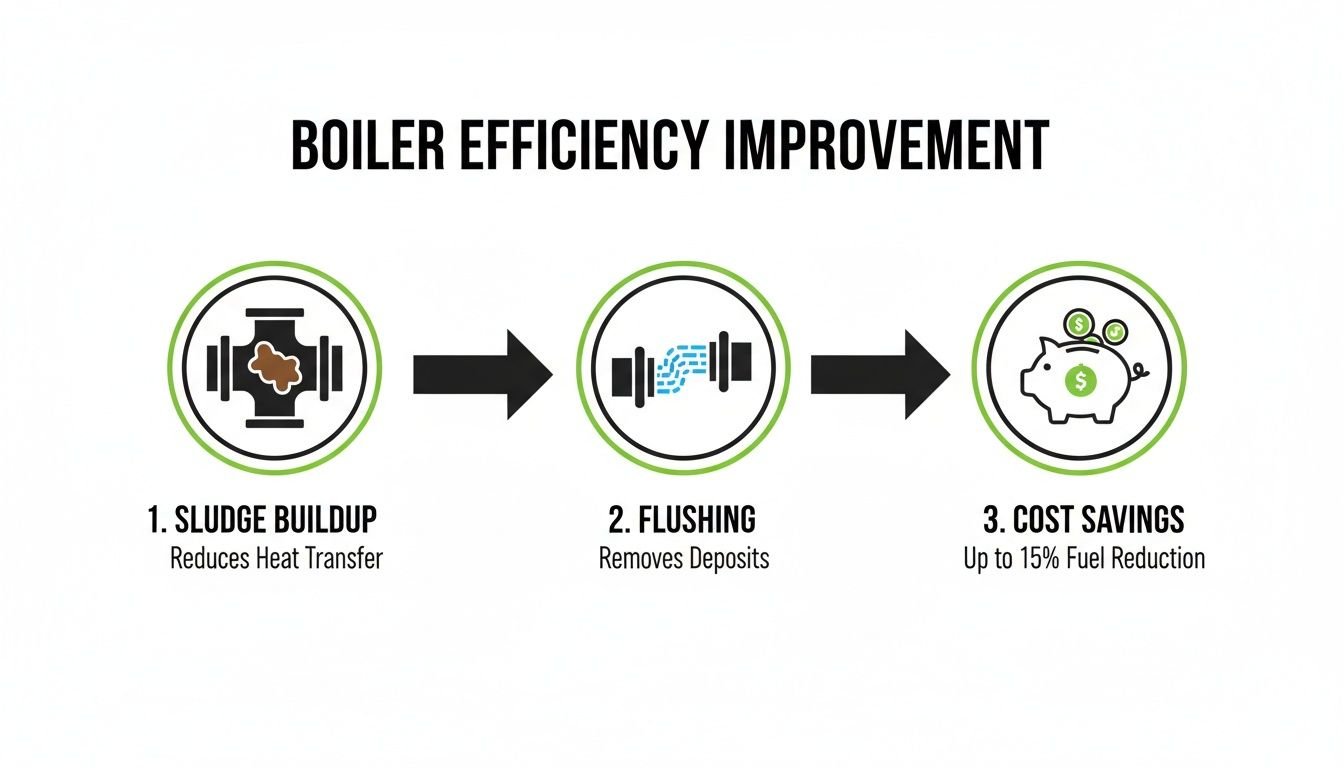
This diagram shows exactly how we tackle that sludge buildup to unlock real savings and improve your boiler's performance.
Initial Assessment and Machine Setup
The first thing a good engineer will do is have a proper look around. They’ll inspect your boiler, radiators, and pipework to make sure your system is a good candidate for the process. For very old or fragile systems, this initial check is vital to ensure the flush will help, not harm.
Once they've got the all-clear, they’ll put down dust sheets and protective coverings. Then, they’ll connect their powerful flushing machine directly into your heating circuit. This usually involves removing a radiator or connecting at the pump, effectively making the machine the new heart of your system for the duration of the clean.
The Deep Cleaning Phase
This is where the magic happens. Instead of just pushing water around aimlessly, the engineer works on one radiator at a time. By closing the valves on all the others, they can direct the full force of the high-velocity water from the machine through a single radiator, blasting out even the most stubborn, caked-on sludge.
The flushing machine itself has a powerful magnetic filter to catch all the metallic rust and debris that gets dislodged, stopping it from circulating back into the system. During this process, the engineer has a few tricks up their sleeve:
- Reverse the Flow: The machine can instantly switch the direction of the water, creating a powerful turbulence that shakes loose deposits from every nook and cranny that a simple one-way flow would miss.
- Agitate the Sludge: If a radiator has a really bad cold spot, the engineer might gently tap it with a rubber mallet or use a special vibrating tool. This helps break up the heavy, compacted sludge at the bottom.
- Chemical Cleanse: Specialised cleaning chemicals are added to the water. These aren't just soap; they're formulated to dissolve tough limescale and break down the sludge that water alone can't shift.
You can literally see the process working. The engineer constantly checks the waste water coming out of the machine. At first, it will be thick, black, and gritty. They'll keep flushing each radiator until that water runs crystal clear—that’s how you know the job is done right.
Finalising and Protecting Your System
With every radiator and pipe now spotless, the final stage is all about protecting your system for the future. First, all the cleaning chemicals are thoroughly flushed out with fresh water. You don't want any of that left behind.
Next, the engineer refills the heating system. But as they do, they add a crucial final ingredient: a chemical inhibitor. This is a protective liquid that circulates with the water, coating the inside of your pipes and radiators. It acts like a shield, dramatically slowing down the corrosion process that creates sludge in the first place.
Finally, everything is put back together, the radiators are balanced to ensure heat is distributed evenly, and your boiler is fired up and tested. This last step ensures your newly cleaned system is working perfectly, protecting your investment and keeping it efficient for years to come.
Right, let's get down to the practicalities. When you're thinking about a power flush, two questions always come up first: "How much is this going to set me back?" and "How long will my heating be out of action?"
Knowing the likely investment in both time and money helps you plan properly and really see the value in giving your central heating system this kind of deep clean.
The price isn't just a number plucked from thin air. It really comes down to the size of your heating system, and the biggest factor there is simply how many radiators you have. Flushing a small, two-bedroom flat is a different job entirely from tackling a large, three-storey house with a radiator in every room.
A Look at the Costs in 2026
To give you a realistic idea, prices across London are fairly standard. For a typical home, you can expect the cost of power flushing a central heating system to be around £400 for a setup with about six radiators. That figure, based on 2026 data, reflects the work needed to shift the stubborn sludge we often find in the older pipework of London's beautiful Victorian and Edwardian homes, especially around areas like Greenwich and Lewisham. You can get more details on UK power flush pricing from MyJobQuote.
Here’s a rough guide to what you might pay based on the number of radiators:
- Small System (up to 8 radiators): You're likely looking at a range of £350 to £500.
- Medium System (9-12 radiators): This usually falls somewhere between £500 and £650.
- Large System (13+ radiators): Costs can start at £650 and go up from there, depending on the system's layout.
A quick word of advice: always ask for a fixed-price quotation from a reputable company. This is so important. It means the price you're quoted is the price you pay, with no nasty surprises or hourly charges that creep up if the job turns out to be a bit tougher than first thought.
Here at Urbanic Services, we’re big believers in being upfront about costs. You can find a complete breakdown on our pricing page—feel free to check out our rates for heating and plumbing services. That way, you know exactly where you stand before we even start.
How Long Does a Power Flush Take?
Just as the cost varies, so does the time it takes to do the job properly. A power flush isn't a rush job; it's a methodical process where every part of the system is cleared out. The good news is that for most homes, we can get it all done within a single working day, keeping the disruption to a minimum.
You should plan for the process to take anywhere between four and eight hours. An engineer will need at least a half-day, but it's often a full day's work to do it right.
A few things can affect that timeline:
- The Size of Your System: It's simple, really—more radiators mean more time to isolate and flush each one.
- Its Age and Condition: An older system with years of compacted, baked-on sludge might need a bit more persuasion with cleaning chemicals to break everything down.
- Access: If your boiler, pump, and radiators are all easy to get to, things tend to go a bit quicker.
When our engineer arrives, they'll be able to give you a much more accurate time estimate after having a look. This helps you plan your day, whether you're working from home or need to be out. And at the end of it, you’re left with a heating system that works like new, ready to keep your home cosy and your energy bills in check.
Protecting Your System After a Power Flush
Getting a professional power flush is like hitting the reset button on your central heating. It clears out all the gunk and gets things running like new again. But the job isn't quite finished when our engineer packs up their tools. To make sure all that sludge doesn't just start building up again, you need a plan.
Think of it this way: you wouldn't get your car’s engine professionally cleaned and then expect to drive another 50,000 miles without changing the oil. A power flush is the deep clean; proactive maintenance is what keeps the great results from fading away and ensures your boiler stays in top form.
The Role of Ongoing Boiler Maintenance
When we finish a power flush, we add a chemical inhibitor to the system water. This is your first line of defence against rust and corrosion. The thing is, this inhibitor doesn't last forever. Over time, it gets used up, leaving your system vulnerable once more.
That’s why regular checks are so important for keeping a power flushing boiler system healthy. A dedicated care plan shifts the focus from waiting for problems—like cold spots on radiators or kettling noises—to preventing them from ever coming back. It’s not just about dodging repair bills; it’s about getting the best possible performance and lifespan out of your system.
A power flush gives your heating a clean slate. A proper care plan is what keeps it that way, ensuring your system stays reliable and efficient for the long haul.
How Boiler Care Plans Provide Long-Term Protection
We developed our Boiler Care Plans at Urbanic Services to be the perfect follow-up to a power flush. They’re designed to be much more than a quick annual check-up; they're the structured, long-term solution to keeping your heating system healthy after its deep clean.
Our plans are built on a few key pillars that lock in the benefits of your power flush:
- Annual Servicing: One of our Gas Safe engineers will give your boiler a full inspection, checking its safety and efficiency. Critically, they'll also test and top up the system's inhibitor levels to keep corrosion at bay.
- System Health Checks: We look beyond the boiler itself. We’ll check your radiators, thermostats, and pipework to spot any little issues before they have a chance to turn into big, expensive headaches.
- Priority Repairs: If something does go wrong, our plan members go straight to the front of the queue. That means you spend less time in the cold waiting for an engineer to arrive.
Signing up for a care plan changes how you look at a power flushing boiler service. It stops being a one-off fix and becomes the first step in a smarter, more predictable way of looking after your home's heating. It's the simplest way to get consistent comfort and avoid nasty surprises.
Common Questions About Power Flushing
Even after getting the rundown on power flushing, you probably still have a few questions. That’s completely normal. It’s a big job, and you want to be certain it’s the right call for your home’s heating.
We get asked these questions all the time by homeowners across London. So, we've put together some straight-talking answers to help you make a smart, informed decision about your central heating.
Is Power Flushing Safe for an Older Heating System?
This is a great question, and one we hear often, especially from people living in London's wonderful older properties. The short answer is yes, a power flush is safe for most older systems, but only when it's done by a genuinely experienced professional.
The whole process is designed to be tough on sludge but gentle on your pipes. The key is that it uses a high velocity of water, not high pressure. It’s less like a harsh jet wash blasting your pipework and more like a fast-flowing river, powerful enough to shift debris without stressing the system’s joints and seals.
Before we even think about connecting the machine, a qualified engineer will give your boiler, radiators, and pipework a thorough check-over. If they spot any serious weak spots or existing leaks, they’ll tell you straight away that a power flush isn’t the right move and suggest another course of action. Your system's safety is always the first priority.
Do I Need a Power Flush Before a New Boiler Installation?
Yes, absolutely. In fact, it’s not really a choice anymore—most boiler manufacturers make it a condition of their warranty. Skipping it could mean your warranty is void from day one.
Think about it this way: you wouldn't put a brand-new, high-performance engine in a car and leave the old, sludgy oil in there to circulate. It would clog up and damage the new engine in no time. It’s the exact same principle for a boiler. Sludge from your old system can quickly wreck the delicate components of a new unit, especially the heat exchanger.
A power flushing boiler service gives your new investment a completely clean slate, ensuring it runs at peak performance right from the start.
How Often Should a Heating System Be Power Flushed?
A power flush isn't like your annual boiler service; it's not something you need to do every year. It’s a targeted deep clean, done either to fix an existing problem or as a crucial preparatory step before a major upgrade, like getting that new boiler.
For a well-maintained system, you’ll likely only need a power flush once every 5 to 10 years. Once the clean is finished and a chemical inhibitor is added to the water, your system is protected from the rapid build-up of future sludge and rust.
The best way to keep an eye on things is with your annual service. The engineer can check the inhibitor levels and look for any early warning signs, giving you a heads-up if another flush might be needed many years down the road.
A power flush is the most effective first step towards a healthier, cheaper-to-run heating system. To keep it that way, consider the long-term protection offered by Urbanic Services Ltd. Our Boiler Care Plans include the annual maintenance needed to keep your system clean, efficient, and reliable for years to come. Learn more about our services.