
That sinking feeling when you hear dripping—and you know all the taps are off—is something no homeowner wants to experience. An emergency leak isn't just a minor annoyance; it's a race against time to prevent serious, costly damage. The first few minutes are absolutely critical, and what you do before a plumber even arrives can make all the difference.
What To Do Immediately When You Find a Leak
Discovering a leak can send anyone into a panic, but taking a deep breath and acting methodically will save you a world of trouble and expense. Think of this as your first-response plan—your way of taking back control.
Find and Shut Off the Main Stopcock
First things first: you need to kill the water supply. This is the single most effective thing you can do to stop the situation from getting worse. Don't wait for an emergency to figure out where your stopcock is. It’s usually under the kitchen sink, in a downstairs loo, or in a utility cupboard near where the water pipe enters your home.
In most properties, you'll be looking for a tap-style handle or a simple lever. To shut it off, turn the handle clockwise until it won't go any further. If it's a lever, a quarter-turn (90 degrees) so it sits across the pipe will do the trick. If it’s stiff—and they often are if they haven’t been touched in years—use a dry cloth for better grip. Whatever you do, don't try to force it with a wrench, as you risk breaking it completely.
My Pro Tip: Every six months, give your stopcock a quick test. Turn it off and on again. This simple action stops it from seizing up and ensures it'll work when you're staring down a torrent of water. A seized stopcock during a major leak is a nightmare you can easily avoid.
Deal With the Electrics
Water and electricity are a lethal mix. If water is anywhere near sockets, light fittings, or your fuse box (consumer unit), your next job is to make things safe. Stay well away from any wet switches or appliances.
If you can get to your consumer unit without walking through water, switch off the power for the affected area. If you're not sure which switch controls which room, just hit the main power switch for the whole house. It’s a small inconvenience that could genuinely save a life or prevent a fire.
Contain the Water and Record the Damage
Now that the immediate threats are handled, it’s time for damage control. Grab buckets, pots, pans, old towels—anything that can catch drips and mop up standing water.
If you see a ceiling starting to bulge under the weight of water, don't let it collapse. Place a bucket directly underneath, take a screwdriver, and carefully poke a small hole right in the centre of the bulge. It sounds counterintuitive, but this allows the water to drain in a controlled way, preventing a huge section of your ceiling from crashing down.
This simple process is your key to managing the chaos.
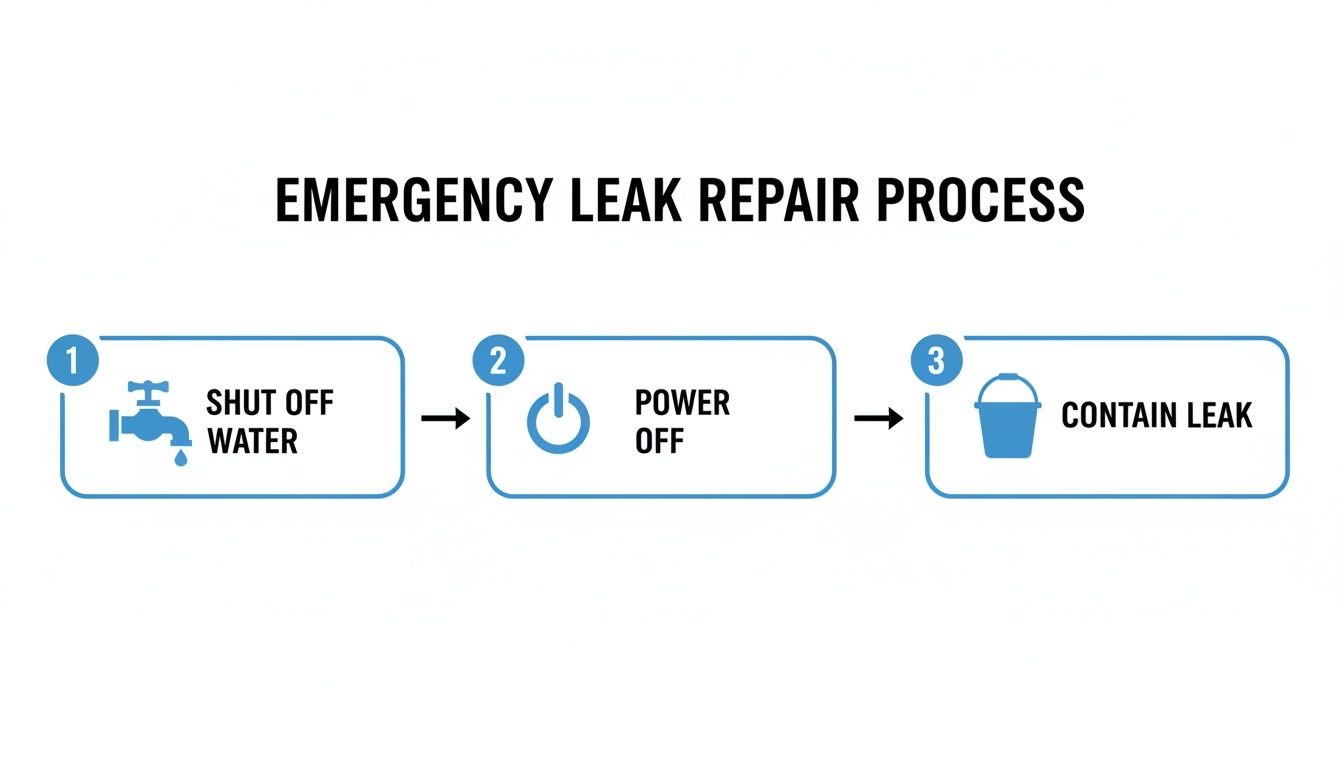
Following these three steps—water off, power off, and then containment—is the professional approach to minimising risk and damage before help arrives.
Here's a quick checklist you can use to stay focused in the moment.
Your First Response Checklist for a Water Leak
| Action Step | Why It's Critical | Pro Tip |
|---|---|---|
| Shut Off the Main Stopcock | Immediately stops more water from entering your system, preventing further flooding and damage. | Turn it clockwise to close. If it's stiff, use a cloth for grip, not a tool. |
| Switch Off the Electricity | Prevents the risk of electric shock or fire if water has reached sockets or wiring. | If in doubt, turn off the main power switch for the entire house at the consumer unit. |
| Contain the Water | Reduces the spread of water, protecting floors, furniture, and structural elements. | For bulging ceilings, pierce the centre with a screwdriver to release water into a bucket. |
| Document Everything | Photos and videos provide crucial evidence for your insurance claim. | Take wide shots of the area and close-ups of the damage before you start cleaning up. |
| Call an Emergency Plumber | A professional can find the source of the leak and perform a safe, lasting repair. | Have the number of a trusted 24/7 plumber saved in your phone. |
This checklist covers your immediate priorities. Once you've completed these steps, you've successfully stabilised the situation and can move on to getting a professional in.
Burst pipes are a massive problem, especially in a city like London with its mix of old and new housing stock. The Association of British Insurers (ABI) reported that escape of water claims cost a staggering £1.7 billion in 2022. The numbers speak for themselves: acting fast is everything.
Taking these initial steps buys you precious time and puts you in the best possible position for when you call in a professional. For more in-depth advice on dealing with specific pipe failures, our guide on burst pipe repair procedures is a great next read.
Finding a Trusted London Emergency Plumber Fast
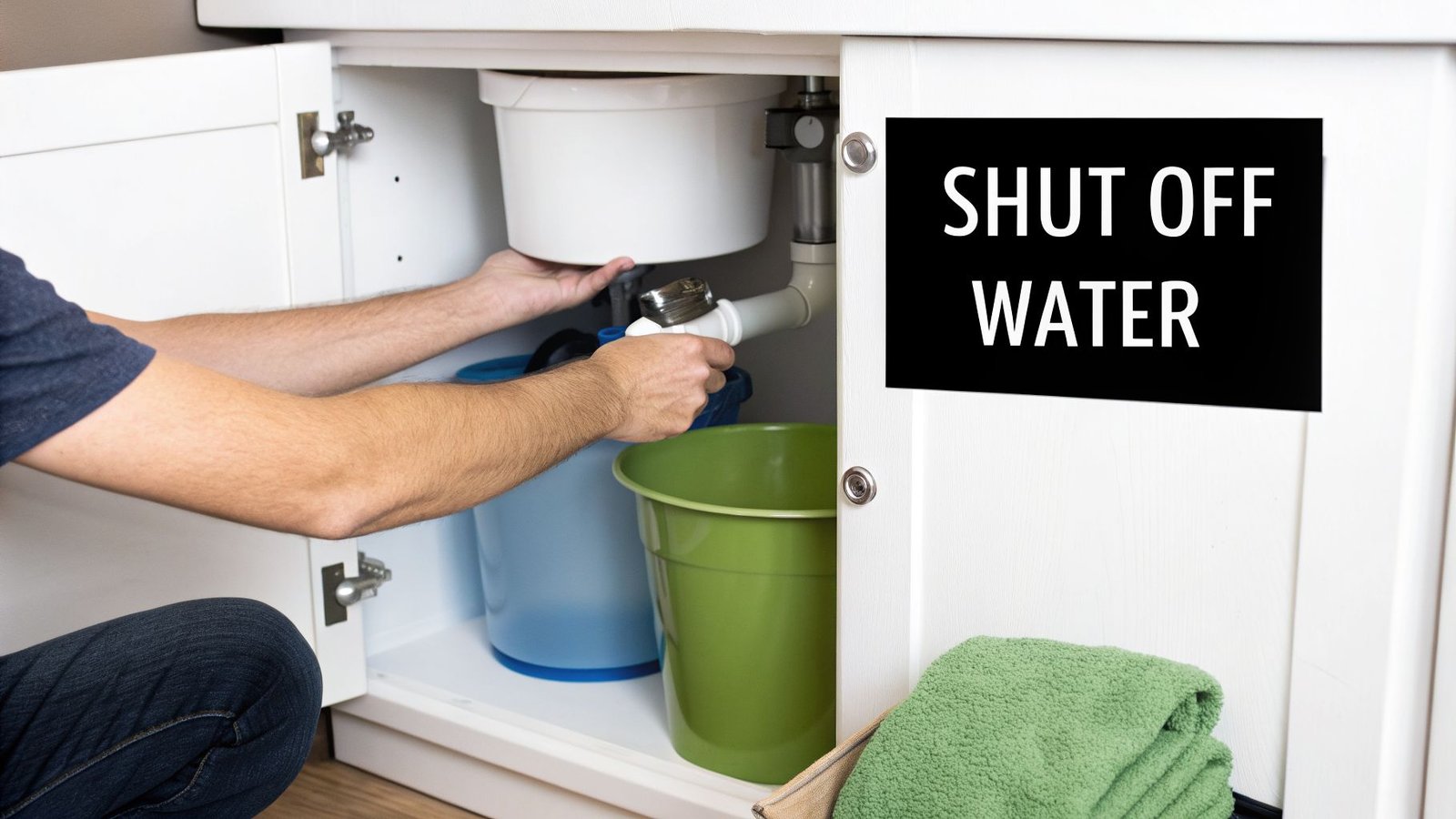
Okay, you’ve managed to contain the worst of the chaos. Now comes the crucial next step: finding a professional who can sort the problem out properly, and quickly. In a city the size of London, this can feel like searching for a needle in a haystack. You need someone reliable for your emergency leak repair, not a rogue trader looking to take advantage of your stressful situation.
Your first check should be a simple, non-negotiable benchmark for safety: Gas Safe registration. Even if your leak has nothing to do with gas, this is a clear sign that an engineer is a serious professional committed to high safety standards. You can check anyone’s credentials on the official Gas Safe Register website in seconds. Don’t skip this.
How Fast Is 'Fast' in London?
In a sprawling metropolis like London, response time is everything. Be wary of any company that promises to be at your door in 15 minutes—it’s just not realistic. A reputable emergency service, however, should be able to give you a clear arrival window, usually aiming for a 60 to 90-minute response within their main service areas.
Many good firms now use vehicle tracking and smart dispatching to send the closest engineer your way, which really helps to cut down on that anxious waiting time. When you call, one of the first things you should ask is, "What’s your genuine estimated arrival time to my postcode?"
A true emergency plumbing service runs 24/7, 365 days a year. If you ring a number and get an answering machine or a vague promise to call back "during business hours," hang up. They’re not a real emergency service.
The cost of water damage makes a swift response vital. According to the Association of British Insurers (ABI), a staggering £1.98 billion was paid out for water damage claims in 2023 alone. With over a third of London homes built before 1919, old, corroded pipework is a common cause. Emergency callouts, especially in the early hours, can climb to £150-£400 per hour. To avoid this, some firms offer fixed pricing; Urbanic, for instance, caps the fee for the initial visit and diagnosis.
Understanding Pricing: Fixed Quotes vs. Hourly Rates
This is where many homeowners get stung in a crisis. You’ll generally come across two pricing models, and knowing the difference is your best defence against a shocking bill.
- Call-Out Fee + Hourly Rate: The traditional way of doing things. You pay a fee just for them to show up, plus a rate for every hour they're on-site. This can get very expensive if the job is tricky or they need to go and source specific parts.
- Fixed-Price Quote: This is the modern, more transparent approach. The plumber assesses the leak and gives you one single, all-in price for the repair. You know exactly what you’re paying before they even pick up a tool.
Whenever you can, opt for a company offering a fixed-price quote. It completely removes the guesswork and protects you from a bill that spirals out of control. An experienced plumber can usually diagnose a common leak and give you a fixed price within minutes of arriving.
Key Questions to Ask Before You Hire
Before giving anyone the go-ahead, have a few essential questions ready. A true professional will have no issue answering them.
- Are you fully insured? You need to hear that they have public liability insurance. It’s what protects you and your home if something goes wrong during the repair.
- Do you guarantee your work? A good firm will always stand by their repairs, usually offering at least a 12-month guarantee on both parts and their labour.
- How do you charge? Get it crystal clear. Is it a fixed price for the job or an hourly rate? If it's hourly, is there a minimum charge you need to be aware of?
- How will you find the leak? This question separates the pros from the amateurs. A good plumber will talk about methodical isolation tests and inspection, not just vague plans to "start knocking through a wall".
Asking these simple questions puts you back in control, helping you make a calm, informed choice even when you’re feeling the pressure. By focusing on these details, you can be confident you’re getting the right help. You can learn more about how we handle these situations by exploring the specifics of our emergency plumbing services.
What to Expect During the Professional Repair
So, you’ve made the call, and an emergency plumber is racing over. It’s natural to wonder what exactly they’re going to do. It’s not just a case of hitting a pipe with a wrench; a proper repair is a careful, methodical process. A genuine professional isn't just there to stop the leak for a day—they're there to solve the problem for good.
First things first, they'll check the scene. Before they get their tools out, a good plumber will want to see for themselves that the water is off at the stopcock and that any electrics in the vicinity have been safely isolated. Your safety, and theirs, is paramount. Only then does the real detective work begin.
Advanced Leak Detection
Gone are the days when finding a leak meant randomly knocking holes in your walls. Today, we arrive with some seriously clever kit designed to pinpoint the source of the water without causing unnecessary damage to your home.
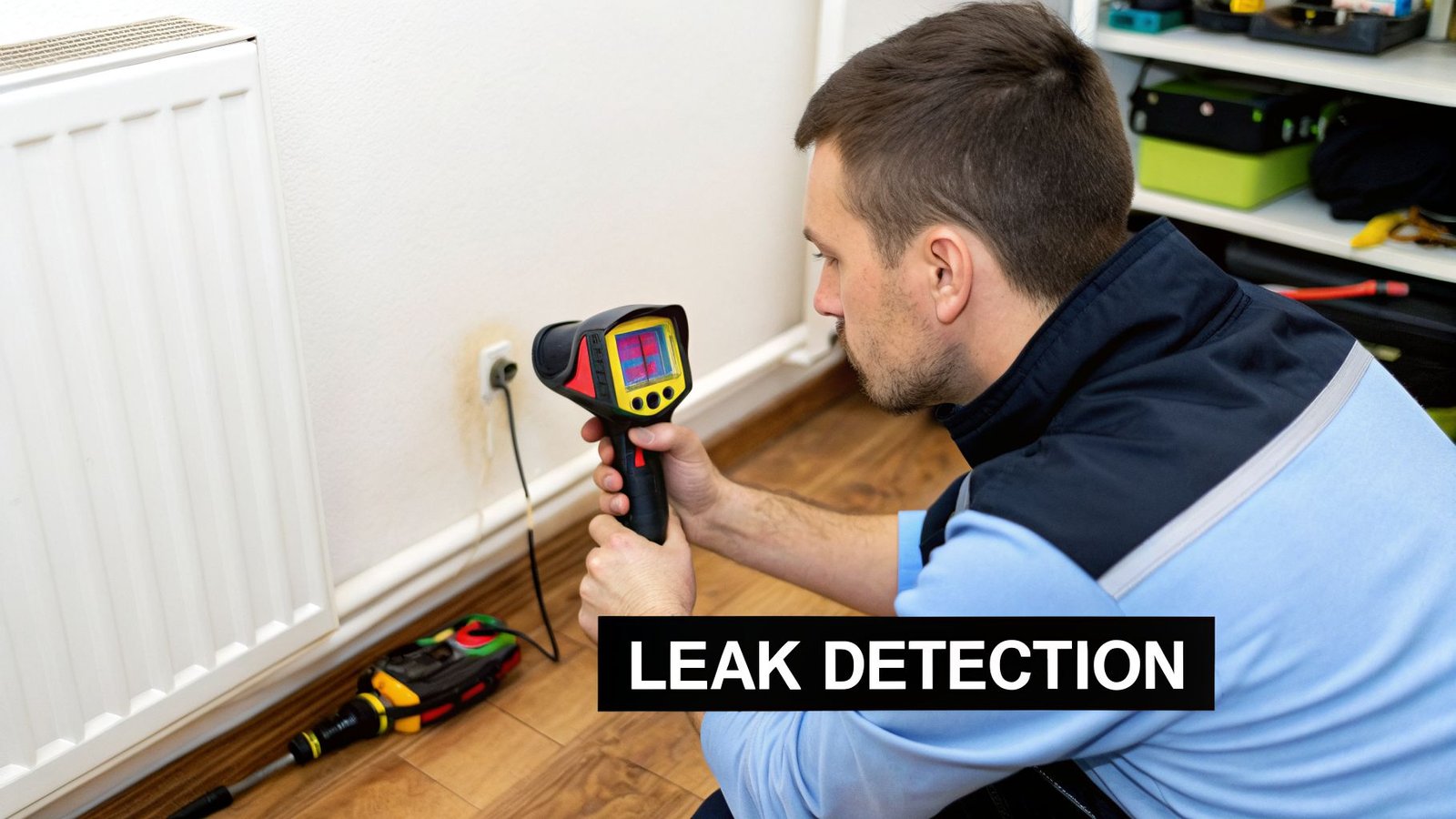
- Thermal Imaging Cameras: These are fantastic for spotting leaks hidden behind plasterboard or under floors. They show temperature differences, so a tell-tale cold patch on a wall instantly flags where water is escaping, often tracking it right back to the source.
- Acoustic Listening Devices: Think of these as a stethoscope for your plumbing. For pressurised pipes, these ultra-sensitive microphones can actually "hear" the distinct hiss of escaping water, even if it's buried deep inside a wall. It allows an engineer to zero in on the problem with incredible accuracy.
- Moisture Meters: A simple but essential tool. By pressing its prongs against a wall or floor, we get an instant moisture reading. This helps us confirm which areas are wet and trace the path of the water back to its origin.
Using this technology, a plumber can turn a vague problem like "a leak in the upstairs bathroom" into a precise diagnosis: "a pinhole leak on the hot feed to the basin, about 30cm inside this wall." That level of precision saves a huge amount of mess, time, and ultimately, money.
Once the exact spot is confirmed, it's time to get access.
Getting to the Pipe and Making the Fix
This is where some careful, surgical cutting might be needed. Whether it’s lifting a single floorboard or cutting a neat access hatch in a wall, a professional’s aim is always to keep the opening as small and tidy as possible.
Imagine a common scenario: a burst copper pipe hidden under the floor.
- Isolate and Drain: After double-checking the mains are off, the engineer will drain that specific run of pipe. You can't repair a pipe that's still full of water.
- Cut Out the Damage: Using a specialised pipe slice, they'll remove the split or corroded section, ensuring the cuts are clean and square to get a perfect seal on the new joint.
- Fit the New Section: Depending on the pipe material, the repair will be made using trusted methods. For traditional copper pipes, this could be soldering new fittings. More often these days, we use modern 'press-fit' or 'push-fit' connectors that create a rock-solid, watertight seal in seconds without needing a naked flame.
- Test, Test, and Test Again: This is the most critical step. A repair isn't finished until it's proven to be sound. The plumber will slowly re-pressurise the system by turning the stopcock back on, meticulously checking their work for any drips. They'll then leave the system under full pressure for a while to ensure the new fitting is 100% secure.
What About "Making Good"?
After the leak is fixed and tested, you'll be left with the access hole. This is where you need to be clear on what's included in the service.
Most emergency plumbers will make the area safe—for example, by securely screwing a floorboard back down. However, the cosmetic work of re-plastering, painting, or laying new tiles falls under the remit of a different trade, like a decorator or a handyman. A plumber's job is to make the plumbing safe and functional. They'll always leave the site clean, but the finishing touches are usually up to you.
Always ask what their fixed-price quote covers. That way, you know exactly where their job ends and where the decorator's begins.
Safe Temporary Fixes You Can Actually Use
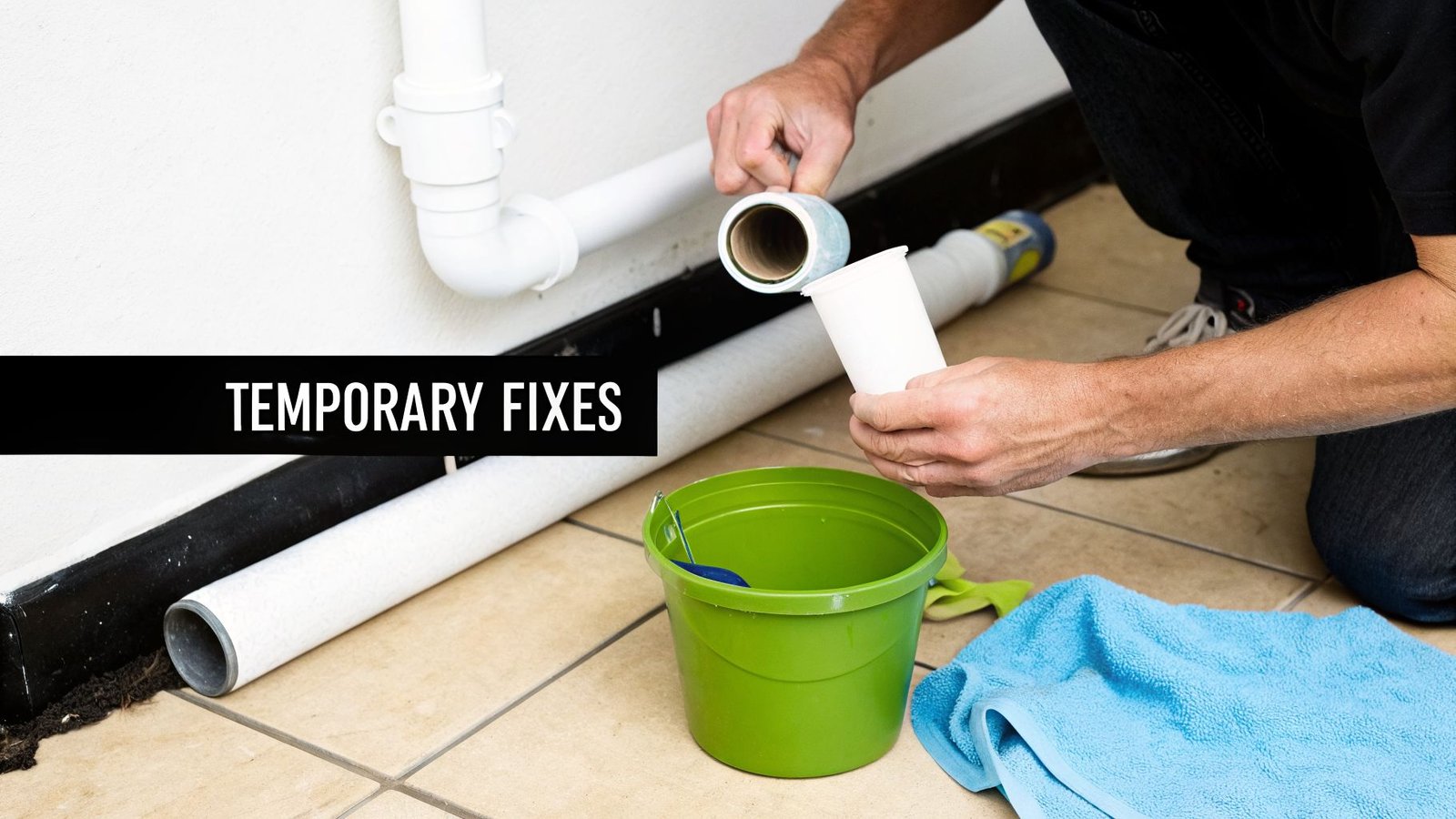
When you're waiting for the plumber, that feeling of helplessness as water drips (or gushes) can be overwhelming. The good news is you don't have to just stand there. A smart, temporary fix can make a world of difference, slowing the flow and preventing thousands in damage.
Let's be clear, though. These are purely damage control measures. Think of them as first aid for your plumbing—they’ll keep things stable for a few hours, but they won't cure the underlying problem. A proper emergency leak repair from a professional is still essential.
Your Temporary Repair Toolkit
If you're dealing with a slow drip from an accessible pipe—say, a waste pipe under the kitchen sink—you have a few good options. But before you even think about applying anything, you have to prep the area. The pipe must be as clean and dry as possible. Seriously, this is the most critical step.
Here are a few bits of kit I recommend every homeowner keeps in a drawer for a rainy day (or a leaky pipe day):
- Pipe Repair Tape: This isn't your standard gaffer tape. It’s a self-fusing silicone tape that you stretch and wrap tightly over itself. It creates a surprisingly strong, water-resistant seal perfect for tiny pinhole leaks or small cracks.
- Epoxy Putty: This stuff is brilliant. It’s a two-part compound you knead together, which starts a chemical reaction. You then just mould the activated putty firmly over the leak, and it hardens into a rock-solid, waterproof patch within minutes.
- Pipe Clamps: For something a bit more mechanical, a clamp is a great choice. It's essentially a rubber jacket with a metal housing that you screw tight around the pipe. The pressure seals the leak, giving you a very robust, albeit still temporary, solution.
Again, I can't stress this enough: get an old towel and dry that pipe thoroughly. If you try to stick putty or tape onto a wet, greasy surface, you're just wasting your time. It simply won't hold.
Safety First: What You Should Never Attempt
Knowing what you can do is great, but knowing what you can't is even more important. Some jobs are simply too dangerous for a DIY fix and are best left to a qualified engineer.
Crucial Safety Warning: Never, ever try to patch a leak on a high-pressure mains water pipe, any part of your boiler or central heating system, or a gas pipe. These systems operate under immense pressure or carry combustible fuel. A failed repair could cause a catastrophic flood, a serious burn, or even a life-threatening explosion.
If you smell gas, your job is simple. Don't touch any electrical switches, open the windows, shut off the gas at the meter, and get outside. Then call the National Gas Emergency Service on 0800 111 999 immediately.
To put it all into perspective, let's look at how a quick patch-up compares to a professional job.
Comparing Temporary Fixes to Professional Repairs
A temporary fix is a useful emergency tool, but it's vital to understand its limitations compared to a professional, permanent repair.
| Feature | Temporary DIY Fix (e.g., Repair Tape) | Professional Repair (e.g., Pipe Replacement) |
|---|---|---|
| Purpose | To minimise water damage in the short term while waiting for a plumber. | To permanently resolve the leak and restore the integrity of the plumbing system. |
| Effectiveness | Highly variable. May slow or stop a small, low-pressure leak for a few hours. | Creates a long-lasting, reliable seal that is tested to withstand system pressure. |
| Longevity | Not durable. Prone to failure as pressure and temperature change. For emergency use only. | Designed to last for many years, often guaranteed by the plumbing company. |
| Risks | Can fail suddenly, causing a larger flood. May mask the true extent of the problem. | Low risk when performed by a qualified, insured professional. |
In the end, recognising when you're out of your depth is the smartest move you can make. If the water is gushing, scalding hot, or anywhere near electrics, your only job is to stay safe and wait for the experts.
Managing Costs, Insurance, and Preventing Future Leaks
When an emergency leak strikes, you’re not just dealing with water damage; you’re facing a financial headache too. Getting a handle on the potential costs of an emergency leak repair and knowing how to approach your insurer can take a huge amount of weight off your shoulders.
The final bill for a professional call-out in London is never one-size-fits-all. It really depends on the time of day, how tricky the job is, and how hard it is to get to the leak. But here’s the bottom line: acting fast always works out cheaper. Putting off that call doesn't just mean more dripping—it’s an open invitation for expensive secondary damage like mould, ruined flooring, and even structural problems.
Navigating Your Home Insurance Claim
Tackling an insurance claim can feel like a mountain to climb, but if you’re organised, it’s a much smoother process. Your insurer needs solid, clear proof of what happened and the damage it caused. From the moment you spot the leak, start thinking like a detective.
Your goal is to build a watertight case. Here’s what you need to focus on:
- Become a Photographer: Before you touch anything, get your phone out. Take loads of photos and videos. You need wide shots of the rooms and close-ups of every bit of water damage on walls, ceilings, floors, and your possessions.
- Keep a Detailed Log: Write down a timeline. When did you find the leak? When did you turn the water off? When did you call the plumber? Jot down notes from every conversation you have with your insurer and the plumbing company.
- Hold Onto All Paperwork: That invoice from the emergency plumber is gold. It’s an official record of the cause, location, and the work done to fix it, which is vital evidence for your claim.
A crucial thing to grasp is what your policy actually covers. Most home insurance policies will pay for the "escape of water" damage – so, the cost of re-plastering and re-decorating. What they often don't cover is the cost of fixing the faulty pipe itself. They tend to see that as a maintenance issue. It's well worth digging out your policy documents and reading the fine print.
A well-documented claim gets processed faster and has a much better chance of success. And a final tip: don't throw anything away until the claim is fully signed, sealed, and settled.
Shifting from Reaction to Prevention
Once the dust has settled and the repairs are done, it's time for a different conversation. The absolute best way to manage the cost of an emergency leak is to stop it from happening in the first place. Being proactive with maintenance is your strongest defence against another plumbing nightmare.
Thinking ahead doesn't just save you a fortune; it saves a staggering amount of water. For burst pipes, a quick response can prevent 90% of escalations into full-blown floods. While the average emergency leak repair might set you back between £300 and £1,200, delaying that call can easily add another £4,000 in water damage costs. You can see how Premier Plumbing and Leak Detection have detailed the financial impact of leaks.
A simple annual plumbing health check can be worth its weight in gold. A good engineer will spot early warning signs like corroded pipes, tired-looking fittings, or weird pressure drops. They can also give your stopcock a quick test to make sure it hasn't seized.
To really future-proof your home's plumbing, consider these simple measures:
- Annual Boiler and Plumbing Service: Think of it as an MOT for your home. It’s the best way to catch weak spots before they fail.
- Pipe Insulation: Lagging pipes in unheated areas like lofts, basements, or garages is a cheap and incredibly effective way to stop them from freezing and bursting in winter.
- Regular Drain Checks: If your sink or bath is draining slowly, it’s often a sign of a blockage building up. This puts extra stress on your pipework, so getting it cleared is a smart move. For a really thorough investigation, you could even get a professional CCTV drain survey to spot hidden issues.
- Plumbing & Heating Care Plans: For total peace of mind, a care plan is a great option. These monthly plans usually cover your annual service and include emergency call-outs, taking the sting out of unexpected bills. This can slash out-of-pocket costs by up to 70% for subscribers.
By making a small investment in looking after your plumbing, you’re protecting your home from the chaos and cost of another water emergency down the line.
Your Top Questions About London Leak Emergencies
When you're staring at a growing water stain on the ceiling, your mind races. It's a horrible feeling. Once the initial shock subsides, a hundred questions pop into your head. We've heard them all over the years, so let's get you some straight answers from the front line.
How Do I Know If a Leak Is a Real Emergency?
Your gut will often tell you, but there are a few non-negotiable red flags. It’s an emergency if you can't contain the water, it's getting close to electrics, or you see something structural giving way, like a sagging ceiling.
The biggest tell-tale sign is an unstoppable flow. If shutting off the valve under the sink does nothing and you have to wrestle with the main stopcock to get it to stop, you've got a serious problem on your hands. Another one to watch for is rusty, brown-coloured water – that often means a pipe is failing from the inside and could be moments away from a full-on burst.
My rule of thumb is simple: if you feel you've lost control of the situation, treat it as an emergency. It's always, always better to call us out and be told it’s a minor fix than to wait and face a catastrophe.
Will My Home Insurance Cover the Emergency Repair?
This is the big money question, and it's where things can get a bit tricky. Most home insurance policies will cover the "escape of water" damage. That’s the cost of putting things right after the leak – replastering, new flooring, that sort of thing.
What many policies don't cover is the actual repair of the pipe that caused the problem. Insurers tend to see the leaky pipe itself as a maintenance issue you were responsible for. You absolutely must dig out your policy documents and check the fine print.
No matter what your policy says, you need to:
- Call your insurer as soon as you can safely do so.
- Take photos and videos of absolutely everything before you start cleaning up.
- Keep every receipt and invoice from the plumber. Their report is a crucial piece of evidence for your claim.
How Can I Stop My Pipes from Bursting in Winter?
An ounce of prevention is worth a tonne of cure, especially in London with our mix of old and new properties. The main enemy in winter is the freeze-thaw cycle, which puts immense pressure on pipes.
The best defence is also the simplest. Get some foam pipe lagging from a DIY shop – it's cheap and easy to fit yourself. Wrap any exposed pipes in colder parts of the house like lofts, basements, or garages.
When a real cold snap hits, don’t turn the heating off completely if you go out. Just keeping it on a low, constant setting (around 13°C is a good target) is usually enough to stop the water inside your pipes from freezing solid. And finally, find your stopcock now. Give it a gentle turn every six months so you know it works and won't be seized up when you need it most.
Is It Faster to Book an Emergency Plumber Online?
These days, almost certainly yes. The moment we get a proper cold spell in London, our phone lines light up like a Christmas tree. If you're stuck on hold, someone else might be getting that appointment slot.
A good, modern plumbing firm will have an online booking system. It lets you log your emergency, pop in your details, and get your job confirmed right away. There's no waiting, no "please hold," and you get a digital paper trail of your request.
It’s a clear sign that a company is organised and built for speed – precisely what you need in a crisis. If you have the choice, booking online will nearly always get you a faster response.
When facing a plumbing emergency, you need a team you can count on to respond quickly and work transparently. At Urbanic Services Ltd, our Gas Safe registered engineers are equipped to handle any leak with fixed-price quotes and a commitment to quality. Protect your home by visiting https://urbanicservice.co.uk to book an expert or learn about our preventative care plans.