
When your boiler suddenly conks out on a cold London morning, the first question that flashes through your mind is probably, "How much is this going to cost me?" Let's get straight to it. An emergency call-out will likely set you back £150 to £250 just to get an engineer through the door. From there, the total emergency boiler repair cost typically lands somewhere between £150 and £600, depending on what’s actually gone wrong.
Let’s unpack what those numbers really mean for your wallet.
The Real Cost of an Emergency Boiler Repair in London
A sudden boiler failure is more than just a chilly inconvenience; it can feel like a financial ambush. Knowing the potential costs upfront gives you a realistic budget and helps you make a clear-headed decision, even when you're stressed and shivering. Think of it as a financial first-aid kit for your heating crisis.
The first figure you'll always face is the emergency call-out fee. This isn't just petrol money. It covers the engineer's immediate availability—often at night, on a weekend, or a bank holiday—and the crucial initial diagnostic work to pinpoint the fault. Essentially, it’s the premium for getting an expert to your home when you desperately need one.
Typical London Repair Costs for 2026
Once the engineer has diagnosed the problem, the real work—and the real cost—begins. The final bill can swing wildly based on the complexity of the fix and the price of any replacement parts. A simple job, like bleeding a radiator or resetting a stubborn pilot light, will be at the lower end of the scale. But if you’re looking at a failed pump or a faulty gas valve, the cost will naturally climb.
To give you a better sense of what to expect, we've put together a table of common boiler faults and their estimated repair costs in London for 2026.
Estimated Emergency Boiler Repair Costs in London (2026)
This table gives you a snapshot of the potential costs for some of the most frequent emergency boiler issues we see, including both labour and parts.
| Common Boiler Fault | Estimated Repair Cost Range (including call-out) |
|---|---|
| Pilot Light & Thermocouple Issues | £150 – £280 |
| Frozen Condensate Pipe | £160 – £300 |
| Faulty Pump Replacement | £250 – £450 |
| Gas Valve or Fan Replacement | £300 – £550 |
| Printed Circuit Board (PCB) Failure | £350 – £600+ |
| Heat Exchanger Failure | £800+ (Often not economical to repair) |
These figures are a guide, but they show how quickly the cost can add up once a specific part needs replacing. A major failure like a heat exchanger often pushes the repair into territory where a full boiler replacement becomes the more sensible long-term option.
Understanding the Numbers
The reality for London homeowners is that an emergency boiler repair can pack a punch, especially during the biting winter months. Looking at industry data from Gas Safe registered engineers, the average cost for an out-of-hours emergency call-out in London during 2026 is between £150 and £250 for the first hour alone. From there, the bill for a full repair can escalate quickly.
This chart helps to visualise how a repair bill is constructed, from the initial call-out fee to a more involved fix.
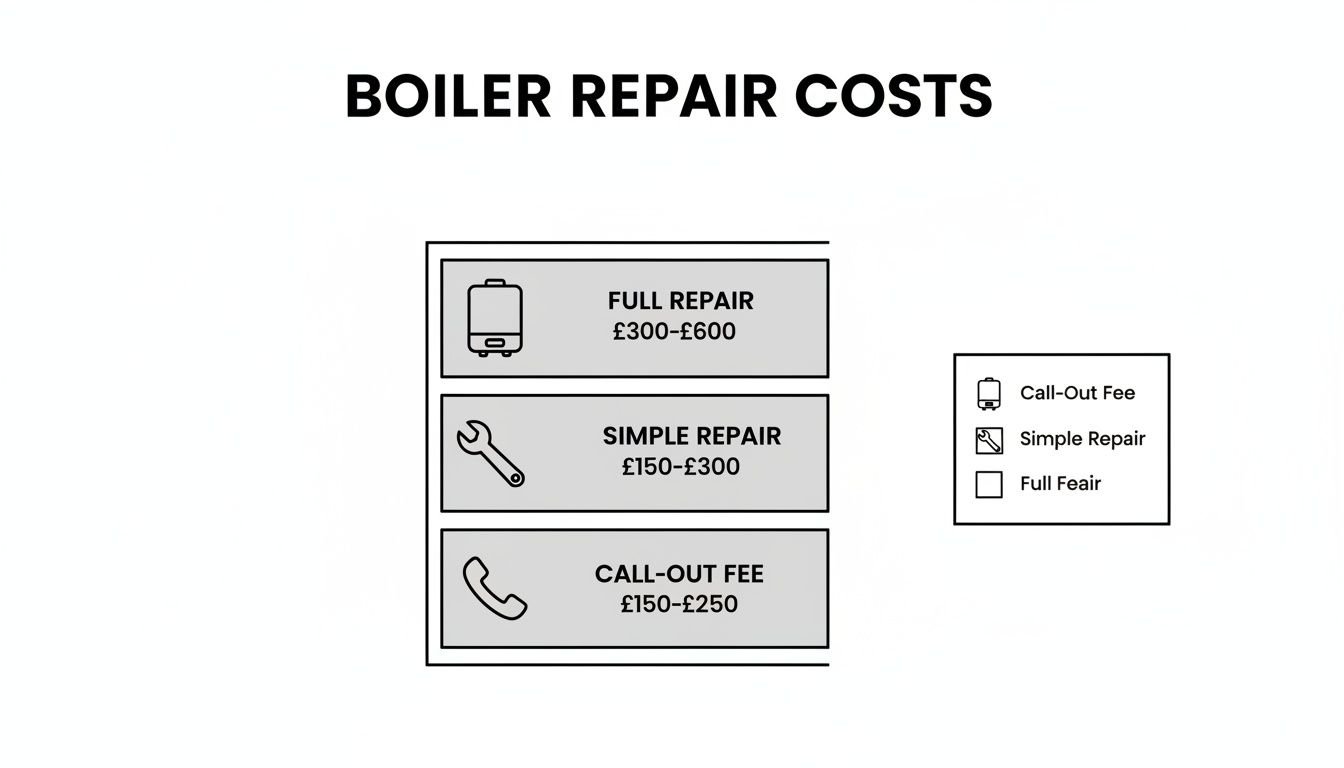
As you can see, even a "simple" repair can easily approach the £300 mark once you factor in the call-out fee. For more substantial problems requiring new parts and more labour, that figure can easily double and exceed £600.
What Am I Actually Paying For? A Breakdown of Your Boiler Repair Bill
When an emergency boiler repair bill lands in your hands, the list of charges can feel a bit overwhelming. It’s easy to see the final number and feel a jolt, but knowing what each line item means gives you clarity and confidence that you’re getting fair value.
Let's pull back the curtain on that invoice. Think of it less like a mysterious bill and more like a receipt from a trip to A&E. There's a cost for the ambulance showing up, the consultant's time, any medicine required, and the tests they run to figure out what's wrong. Your boiler repair bill is built on the same principles, usually split into four main parts.
Once you understand these components, you'll be able to talk through quotes with an engineer and know exactly where every pound is going.
The Emergency Call-Out Fee
First up, you’ll almost always see a call-out fee. It’s easy to think this is just for petrol money, but it’s much more than that. This is the premium you pay for immediate, priority service. It’s the cost of pulling a skilled professional away from their routine jobs—or their family on a Sunday night—to solve your crisis.
This fee essentially books their time and guarantees they arrive at your door. It typically covers their travel and the first hour on-site, which is almost always dedicated to diagnosing the problem. It’s like paying for the ambulance; it ensures a specialist with the right tools gets to you quickly when you need it most.
Labour Rates By the Hour
After that first hour, the clock starts on labour, which is billed at an hourly rate. This is the charge for the engineer’s hands-on expertise and time spent physically fixing your boiler. It’s vital to understand that not all hours are created equal.
An engineer’s time at 2 PM on a Tuesday is going to be cheaper than their time at 2 AM on Christmas morning. Unsurprisingly, out-of-hours, weekend, and bank holiday work all command higher rates. We believe in being upfront about this, which is why you can see a full breakdown of how our rates work here.
The Cost of Replacement Parts
If a part has failed, its replacement will appear as a separate cost on your bill. This is where the price can really swing, depending on a few things:
- The Part Itself: A small component like a washer or seal might only be a few quid. But a major part like the printed circuit board (PCB)—the boiler’s ‘brain’—or a gas valve can run into hundreds of pounds.
- Boiler Age and Brand: Getting parts for an old or obscure boiler model is often like hunting for a needle in a haystack. They can be difficult to source and more expensive when you do find them.
- Original vs. Third-Party: An engineer might give you a choice between an Original Equipment Manufacturer (OEM) part, which comes directly from your boiler’s maker and guarantees a perfect fit, or a cheaper generic part. The OEM part costs more but usually offers better long-term reliability.
Any good engineer will walk you through the options, explaining the pros and cons of each part and its cost before they go ahead and fit it.
Diagnostic Charges
Sometimes diagnostics are rolled into the initial call-out fee, but other times you might see it as its own line item. A diagnostic charge covers the methodical investigation needed to find the true source of the problem.
This isn't just a quick look-see. It involves systematically testing components, checking system pressures, and interpreting fault codes. You’re paying for an engineer's years of experience to pinpoint the exact failure, so you aren't just paying for guesswork. This ensures the right problem gets fixed the first time around.
What to Do When Your Boiler Dies
It’s a sound every Londoner dreads: silence. That sudden, cold quiet when the boiler gives up is enough to send a shiver down your spine, and not just from the dropping temperature.
Before you start imagining catastrophic bills, take a moment. Don't panic. What you do in the next ten minutes is crucial, not just for your safety, but for keeping the eventual emergency repair cost in check.
This isn't a DIY guide—messing with a gas boiler is illegal and incredibly dangerous unless you're a Gas Safe registered engineer. Think of this as your first-aid manual: how to safely assess the situation, fix a simple hiccup, and arm yourself with the right information before calling in the professionals.
First Steps and Safety Checks
Before you even think about picking up the phone, a bit of quick triage can save you a lot of time and money. Sometimes, the problem is surprisingly minor. Plus, the clues you gather now will help an engineer get to the root of the issue much faster once they arrive.
Work through these simple checks:
- Is it just the boiler? First, see if your gas hob or any other gas appliances are working. If they’re also dead, you likely have a gas supply issue, not a broken boiler. That’s a different phone call to make.
- What's the boiler trying to tell you? Modern boilers are pretty good at self-diagnosing. Look at the digital display for a fault or error code. Jot it down. This code is the single most valuable piece of information you can give the engineer.
- Check the pressure. Find the pressure gauge on the front of your boiler. If the needle has dropped into the red, usually below 1 bar, the system has probably locked out for safety. Low pressure is a very common culprit.
- Has the power gone? It sounds simple, but you’d be surprised. Check that the boiler’s power switch hasn't been knocked off or that a fuse hasn't tripped at your main consumer unit.
A boiler with low pressure is a world away from one with a failed heat exchanger. Figuring this out now could save you an unnecessary call-out fee.
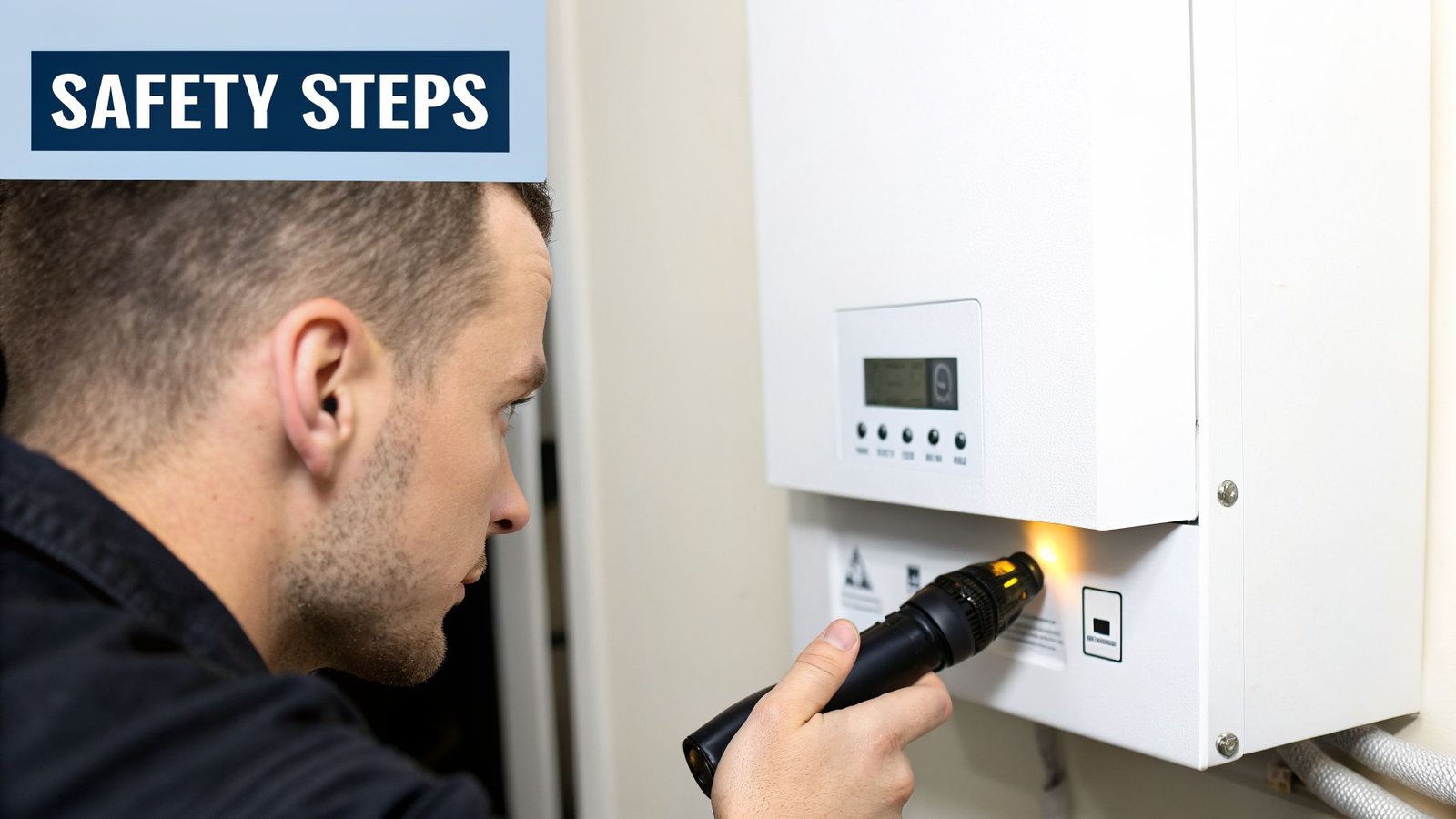
A Critical Safety Warning: If you smell gas, stop what you're doing. Do not flick any switches on or off. Open your windows, get everyone out of the property, and if you can do so safely, turn off the gas at the meter. Call the National Gas Emergency Service from outside or from a neighbour's house immediately.
What to Do and What to Avoid
Once you've run your initial checks and you're sure there’s no gas leak, it's time to decide the next step. There are a couple of things you can safely try, but a few hard-and-fast rules you must follow.
Your 'Do' and 'Don't' List
DO:
- Check Your Thermostat: Is it actually asking for heat? Dead batteries or an accidental knock can sometimes be the root cause. Make sure it’s set correctly and has power.
- Try One Reset: If you have a fault code, your user manual might suggest a reset. Follow the instructions carefully. If it clears the fault, great. If not, don't force it.
- Top Up the Pressure: If the gauge is low, topping up the pressure is a standard homeowner task. Your boiler manual will have a clear guide on how to use the filling loop (a small silver hose) to let a little water back into the system.
DON'T:
- Never, Ever Open the Boiler Casing: This is strictly for a Gas Safe engineer. Behind that cover are live electrical components and the gas valve. It’s not worth the risk.
- Don't Keep Hitting Reset: If the boiler fails to start after one or two attempts, stop. Constantly resetting a boiler with an underlying fault can cause more damage or mask a serious safety problem.
- Don't Ignore Drips or Leaks: Water and electrics are a dangerous mix. If you see water coming from the unit, turn off the water stopcock for the boiler and call an engineer straight away. A small drip can quickly become a big problem.
Following these steps puts you in control. You'll either solve the problem yourself or be able to give an engineer a clear, concise summary of the issue. That preparation helps them work faster, which is the surest way to manage that final emergency boiler repair cost.
What Can Push Your Repair Bill Higher Than Expected?
Ever been left wondering why your boiler repair quote came in at double what your neighbour paid last year? The truth is, not all boiler emergencies are the same. A few key variables can send your final bill soaring, and knowing what they are is the first step to avoiding a nasty surprise.
It’s a bit like getting your car fixed. A simple tyre change on a Ford Fiesta is quick and affordable. But tracking down a new gearbox for a vintage motor? That’s a whole different ball game, and the same logic applies to your boiler. This is exactly why getting a fixed-price quote upfront can be a financial lifesaver.
Your Boiler's Age And Brand
Often, the biggest single factor driving up the cost is the boiler itself. The make, model, and especially the age will determine how easy—and cheap—it is to find the right replacement parts. If you have a modern boiler from a big-name brand like Worcester Bosch or Vaillant, an engineer can usually get hold of parts without a fuss.
But if your boiler is over 15 years old or was made by a company that’s no longer in business, things get tricky. Sourcing the right part can turn into a genuine treasure hunt for the engineer. That search takes time, and when the part is eventually found, its rarity often means it comes with a premium price tag. You're not just paying for the component; you're paying for the difficulty of the search.
An older, poorly maintained boiler isn't just less efficient; it's a financial liability waiting to happen. Skipping annual services accelerates wear, meaning a minor fault can easily cascade into a major component failure, turning a £300 repair into a £1,500+ replacement scenario.
The Accessibility Of Your Boiler
It might sound strange, but where your boiler is installed can have a big impact on your bill. If it’s sitting in a utility room with plenty of space to work, the engineer can get straight to it. This means their time is spent diagnosing and fixing the problem, which keeps labour costs down.
Unfortunately, in a lot of space-savvy London properties, boilers end up tucked away in some pretty awkward places:
- Squeezed inside a tight kitchen cupboard
- Boxed-in at the back of an airing cupboard
- Hidden away in a cramped loft or basement
If an engineer has to spend the first 30-45 minutes carefully dismantling cabinetry or clearing out a cupboard just to lay a hand on the boiler, that’s time on the clock you're paying for. That extra labour gets added to your bill before any real work has even begun.
The Timing Of Your Call
The final, and most obvious, cost inflator is when you pick up the phone. A boiler doesn’t care about a 9-to-5 schedule, and while emergency engineers are on call 24/7, that after-hours availability comes at a cost.
Here’s a quick rundown of how the clock and calendar affect the price:
- Weekday, Normal Hours: This is your cheapest window for a repair.
- Evenings and Weekends: Expect to pay a higher hourly rate for any "out-of-hours" service.
- Bank Holidays and Christmas: Calling an engineer on Christmas Day is going to command the highest premium. It’s the ultimate unsociable hour.
These factors can easily stack up. An obsolete boiler, tucked away in a loft, that gives up the ghost on a bank holiday weekend is the perfect storm for a hefty bill. This is precisely why getting a transparent, fixed-price quote from a provider like Urbanic Services can give you crucial peace of mind and protect you from those spiralling costs.
How a Boiler Care Plan Protects Your Wallet
So far, we’ve been talking about the sharp end of boiler trouble—the sudden breakdown, the frantic call to an engineer, and the hefty bill that follows. But what if you could sidestep all that drama? After all, the cheapest emergency repair is the one you never have to pay for.
This is where a good boiler care plan comes in. It’s about shifting your mindset from reactive panic to proactive peace of mind. Think of it less like an extra cost and more like health insurance for your home’s heating system.
Instead of getting hit with a potential four-figure bill from out of nowhere, you pay a small, predictable monthly fee. It’s a simple switch that turns a potential financial headache into a manageable, stress-free part of your budget, especially during a bitter London winter.
The Power of Prevention
Your boiler is a finely tuned machine, packed with pumps, valves, and sensors working in concert. But like any complex piece of kit, daily wear and tear can introduce tiny problems that you’d never notice… until they cause a complete failure. An annual service, the cornerstone of any decent care plan, is designed to spot these issues before they escalate.
Did you know that a poorly maintained boiler can lose 10–20% of its efficiency? That’s money you’re literally burning, paying more on your gas bills month after month for the same amount of heat. A proper service ensures your boiler is clean, correctly calibrated, and running at its best, often saving you enough on energy to cover the cost of the plan itself.
This proactive check-up also dramatically cuts the risk of a sudden breakdown. For instance, a tiny, weeping leak that an engineer would spot and fix in minutes during a service can, if ignored, cause serious internal corrosion. That's how a minor fault spirals into a catastrophic failure of a major part like the heat exchanger—a repair so costly it can sometimes mean you’re better off replacing the entire boiler.
A huge percentage of emergency call-outs could have been completely avoided with regular maintenance. Skipping your annual service is a bit like ignoring the check-engine light on your car; you might get away with it for a while, but eventually, that small problem is going to become a very big, very expensive one.
What Does a Boiler Care Plan Typically Include?
A boiler care plan is much more than a simple annual service. It's a full-package safety net, designed to shield you from the financial shock of unexpected repairs. Plans do vary, but a quality one, like the options from Urbanic Services, will bundle the most important protections into one manageable monthly payment.
For both homeowners and landlords, this is a brilliant way to budget for heating costs. You can check out the specifics of our plans and find out more about how boiler cover in London works, but here’s what you should generally expect:
- Annual Boiler Service: A Gas Safe engineer conducts a thorough inspection, cleaning key parts and testing safety mechanisms to keep your boiler running safely and efficiently.
- Parts and Labour Included: If a part covered by your plan fails, the cost of the new component and the engineer’s time to install it are both covered. This alone can easily save you hundreds of pounds on a single repair.
- Priority Emergency Call-Outs: When the worst does happen, care plan customers are put at the front of the queue. This means you get a fast response precisely when you need it most.
- No Unexpected Bills: This is the whole point. With a care plan, you won’t be faced with a large, daunting bill for covered repairs, no matter how complex the job turns out to be.
Is a Care Plan Right for You?
If you’re a homeowner, a care plan gives you a predictable way to manage one of your home's most critical systems. The peace of mind that comes from knowing you’re protected from a sudden, unaffordable repair bill is genuinely priceless. You're shielded from the ever-increasing emergency boiler repair cost and the stress that comes with it.
For landlords, the logic is even more compelling. You have a legal duty to keep the heating and hot water systems in your properties safe and in good working order. A care plan not only helps you meet these obligations with an annual Gas Safety check but also protects your bottom line and keeps your tenants happy and warm—all without any nasty financial surprises.
How to Find a Trustworthy Gas Safe Engineer
When your boiler gives up the ghost in the dead of winter, panic can set in fast. The first instinct for many is to grab their phone, search for "emergency boiler repair," and dial the first number that pops up. But I can tell you from experience, that's a risky move.
Taking just a few extra minutes to choose the right engineer is crucial—not just for your bank balance, but for the safety of your home and family. A rushed decision can lead to shoddy work, ever-increasing costs, and genuinely dangerous situations. This is your definitive guide to spotting a real pro and avoiding the cowboys.
The Gas Safe Register is Non-Negotiable
Let's get one thing straight from the outset: anyone who works on your gas boiler must be on the Gas Safe Register. This isn't just a recommendation or a "nice-to-have" badge; it's the law. This registration proves an engineer is qualified and competent to work safely with gas appliances.
Always ask to see their Gas Safe ID card the moment they arrive at your door. Don't be shy about it; a professional will expect you to ask. You can then check their credentials in seconds by visiting the Gas Safe Register website and entering their unique 7-digit licence number. It's the only way to be certain they are who they claim to be. And if you've ever had a scare with a strange odour, our guide on what to do if you smell gas from your boiler covers the critical first steps.
Key Traits of a Reliable Company
Beyond that all-important Gas Safe registration, a few tell-tale signs separate a professional company from a fly-by-night operation. Keep an eye out for these hallmarks of quality before you agree to any work.
What to Look For
- Transparent, Fixed-Price Quotes: A reputable firm like Urbanic Services will give you a clear, fixed price for the repair before they pick up a single tool. This means the price you’re quoted is the price you pay, protecting you from nasty surprises when the bill arrives.
- Clear Communication: They should be able to explain the fault and the repair plan in simple terms you can actually understand. You should never feel confused or pressured by technical jargon.
- A Strong Local Reputation: Look for recent, genuine reviews on sites like Google or Checkatrade. A string of five-star feedback from people in your area is one of the best indicators of consistent, high-quality service.
- Guarantees on Workmanship: A true professional stands behind their work. Ask if they guarantee their repairs and the parts they fit. This shows confidence in their own skills and the quality of their suppliers.
Pro Tip: Don't wait for a crisis to find a good engineer. The best time to do your research is when your heating is working perfectly. Find a local company you trust, check their credentials, and save their number. When disaster strikes, you’ll be one calm phone call away from a solution.
Following these simple steps is the best way to control your emergency boiler repair cost. It ensures that when your boiler does let you down, you’re calling someone you can rely on to get the job done safely, properly, and for a fair price.
Your Emergency Boiler Questions Answered
When your boiler packs in, the questions and worries can start piling up just as fast as the cold. We get it. Here are some straight answers to the most common concerns we hear from London homeowners, helping you get a handle on the situation.
Can an Annual Service Prevent Emergencies?
Absolutely. It’s the single best thing you can do to protect your boiler. I can tell you from experience that a huge number of the emergency call-outs we attend could have been completely avoided with a simple, regular service.
Think of it like the MOT for your car. Skipping it feels fine for a while, but you’re just letting small, hidden problems fester. An engineer can spot a weeping seal or a bit of limescale build-up during a service and sort it there and then. Left alone, that same minor issue can lead to major corrosion, a knackered pump, and a much, much higher emergency boiler repair bill down the line.
Is It Worth Repairing an Old Boiler?
This is the big question we often help customers grapple with. As a rule of thumb, if your boiler is over 10-12 years old and you're looking at a repair bill that’s more than 40% of what a new one would cost, replacement is usually the smarter long-term investment.
Here’s a quick way to think about it:
- The Cost of the Repair: A small fix for under £300 on an otherwise reliable boiler? That usually makes sense. But if you’re quoted closer to £800 for a major part on an old unit, that money is often better put towards a brand-new, reliable system.
- Future Reliability: Patching up an old boiler doesn't guarantee another part won't fail next month. A new A-rated boiler, on the other hand, comes with peace of mind and a manufacturer's warranty, often up to 10 years.
- Energy Efficiency: Don't forget the running costs. Swapping an old, G-rated boiler for a modern A-rated one can slash your gas bills by as much as 30%. Those savings really add up and help pay back the cost of the installation over time.
How Quickly Can an Engineer Get to Me?
In a real emergency – we’re talking no heating in the dead of winter or water pouring through the ceiling – any good company will prioritise getting an engineer to you within a few hours. Firms with a decent number of engineers spread across London will naturally have a better shot at getting to you quickly.
It's important to know that priority is always given to households with vulnerable people, like the elderly, young children, or anyone with a medical condition. When you call for help, always mention if this applies to you. It helps the dispatch team prioritise jobs to get help where it's needed most urgently.
Facing a boiler emergency is stressful, but you don’t have to handle it alone. Urbanic Services Ltd offers transparent, fixed-price quotes and a rapid-response emergency service across London. Book an engineer online or get your free quote today.