
That sudden, loud bang from your boiler is enough to make anyone jump. When a sound that aggressive comes from the heart of your heating system, it’s natural to worry if something is about to explode. Thankfully, that's almost never the case.
While you should never ignore it, that alarming noise is usually your boiler's way of telling you it's struggling with a common, fixable problem.
The Main Culprit: Kettling
More often than not, the culprit behind a loud banging boiler is an issue known as kettling. The name gives you a pretty good clue—it’s very similar to the sound a kettle makes when it's boiling, just much louder and more violent.
This happens when mineral deposits, mostly limescale from hard water, build up on the boiler’s heat exchanger. This chalky layer acts as an insulator, causing small areas to overheat. Water trapped under the scale boils into steam, and the pressure builds until it escapes with a sudden, noisy collapse. That's the bang you're hearing.
London's Hard Water Problem
If you live in London, you're in a prime area for kettling. The capital's notoriously hard water affects over 60% of households, making limescale buildup a constant battle for our boilers.
From my experience working across London, this isn't just a minor issue. In areas like West Kensington and Hammersmith, local engineers reported that kettling was responsible for as many as 70% of noise-related call-outs in 2023. Those pressure pops can be surprisingly loud, sometimes hitting 80-90 dB—about the same as a hammer striking a nail.
Left unchecked, this isn't just a noisy nuisance. UK-wide stats from 2024 showed that over 25,000 boiler breakdowns in London were directly linked to limescale damage, with homeowners facing an average bill of £450 just for a power flush to clear it out. You can find more data on boiler noise causes from London-based engineers.
Key Takeaway: That banging sound is a clear symptom of inefficiency. The scale forces your boiler to work much harder and burn more gas to heat your home, which you'll quickly notice on your energy bills.
To help you get a better idea of what might be going on, I've put together a quick reference table. Just listen to the type of noise you're hearing and when it happens, and you can start to narrow down the possibilities.
Quick Guide to Boiler Banging Noises and Their Causes
| Sound Description | Most Likely Cause | Common in… |
|---|---|---|
| Loud, violent bang or rumbling | Kettling (limescale/sludge) | Systems in hard water areas like London; older boilers. |
| Sharp, single bang when taps turn off | Water Hammer | Systems with high water pressure or fast-closing valves. |
| Gurgling or intermittent tapping | Trapped Air | Radiators (especially at the top) and high points in pipework. |
| Creaking, ticking, or light banging | Pipework Expansion | Pipes fitted too tightly against walls, floors, or joists. |
This table is a great starting point, but remember that sometimes one issue can lead to another. While kettling is the usual suspect for loud bangs, a few other things can also cause a racket in your central heating system.
Other Common Causes for Banging Noises
It's useful to know what else could be going on, as the sound itself can give you clues.
Water Hammer: This is a very distinct, sharp bang. It typically happens when a tap or valve (like on a washing machine) closes abruptly, sending a shockwave rattling through your pipes. It sounds less like a boiler problem and more like the pipes themselves are being struck.
Trapped Air: If you're hearing more of a gurgling, bubbling, or whooshing sound that builds into a bang, you could have air trapped somewhere. This creates airlocks that stop water from circulating properly, and the pump can make a racket trying to force water past them.
Pipework Expansion: As hot water rushes through your central heating pipes, the metal expands. If the pipes are clipped too tightly against floorboards or run through tight holes in joists, this expansion can cause loud creaks, groans, and even banging noises.
System Sludge: Over many years, the inside of your pipes and radiators can corrode, creating a thick, black, magnetic sludge. Much like limescale, this sludge can settle in the heat exchanger and cause kettling, or it can clog up the system and lead to pressure issues.
A Practical Troubleshooting Checklist for Homeowners
A loud banging noise from your boiler is definitely unsettling, but it doesn't always mean a huge repair bill is on the way. Before you call an engineer, there are a few safe and straightforward checks you can do yourself. Think of it as a process of elimination, starting with the most likely culprits.
This flowchart can help you visualise the diagnostic process and see how different noises point to specific problems.
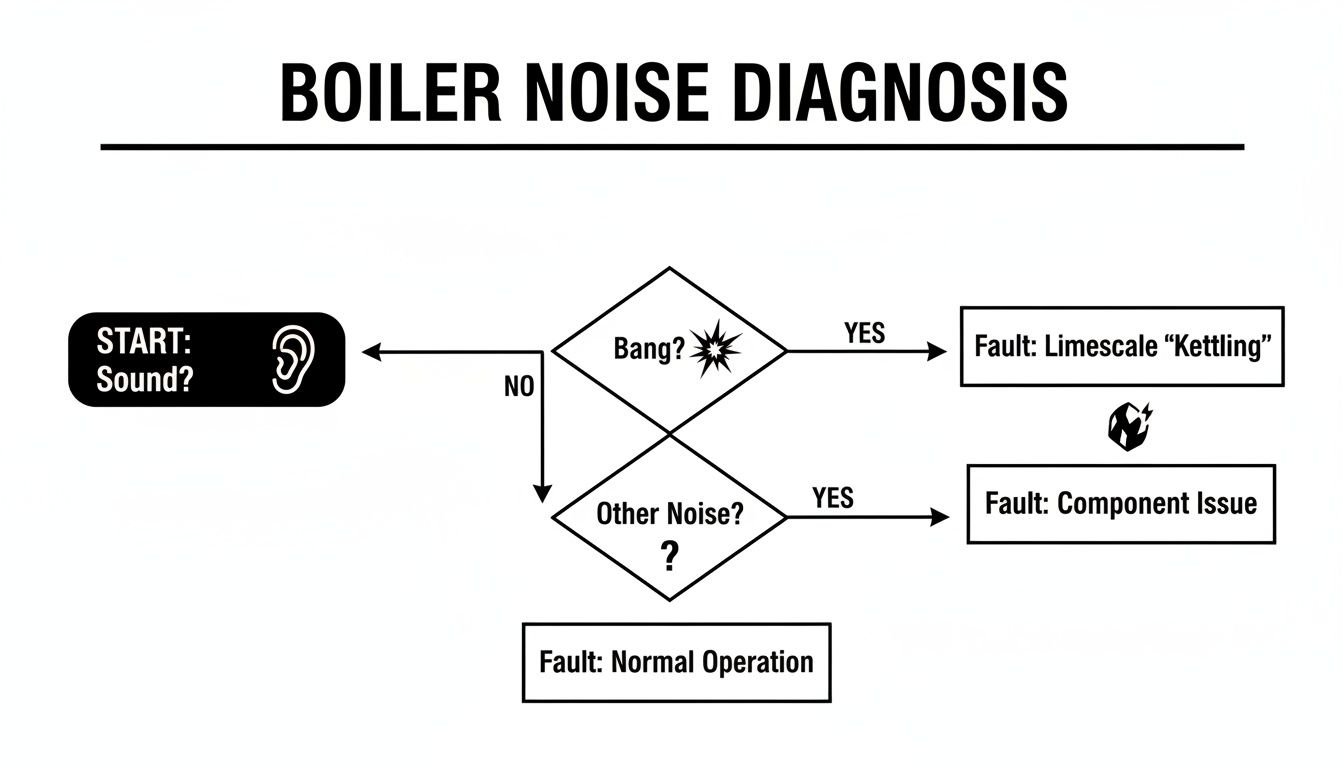
As you can see, a banging sound often leads back to kettling, which is caused by limescale build-up—a problem we see all the time across London's hard water areas.
Check Your Boiler Pressure
Let's start with the basics: your boiler's pressure gauge. This little dial is the window into your system's health. For most modern combi and system boilers, you want to see the needle sitting comfortably in the green zone, which is usually between 1 and 1.5 bar when the heating is off.
If the pressure has dropped below 1 bar, the system might not have enough water to circulate properly, causing all sorts of strange noises. On the other hand, if it’s creeping up into the red zone (often over 2.5 bar), that indicates a different problem that could also be causing the banging.
Bleed Your Radiators
Trapped air is one of the most common reasons for a noisy central heating system. Over time, air can get into the pipework, creating pockets that stop water from flowing smoothly. The result? Gurgling, rattling, and sometimes loud banging.
Bleeding your radiators is a simple fix. Grab a radiator key and, one by one, slowly open the bleed valve at the top of each radiator. You should hear a hissing sound as the air escapes. As soon as a steady trickle of water appears, close the valve up tight.
Pro Tip: Always tackle this job with the heating switched off and the radiators cool. I always recommend starting with the radiator furthest from your boiler and working your way back towards it. Bleeding releases pressure, so you'll need to check the boiler's pressure gauge afterwards and top it up if needed.
Examine Your Pipework
Sometimes the answer is surprisingly simple. Your copper pipes expand when hot water rushes through them and contract as they cool. If a pipe is fitted too snugly against a floorboard, joist, or wall, this movement can create a very loud and abrupt banging noise.
Have a good look at the visible pipework, especially near your boiler and radiators. See if you can spot any pipes that are vibrating or knocking against another surface. Often, just wedging a small piece of foam or pipe lagging into the gap is enough to silence it.
Check the Central Heating Pump Speed
If you feel comfortable digging a little deeper, the central heating pump could be the issue. If the pump is set to run too fast, it can push water through the system with too much force, creating turbulence and noise that can sound like banging or a loud drone.
You'll need to consult your boiler's manual to find the pump. It usually has a small dial or switch with a few speed settings, typically numbered 1, 2, and 3. If it's on the highest setting, try knocking it down a notch. It’s a simple adjustment that can sometimes make all the difference.
Beyond the Basics: The Internal Gunk Causing Your Boiler to Bang
So, you've bled the radiators and checked the pressure, but that alarming banging noise just won't quit. When the simple fixes don't work, it's time to look at a more deep-seated problem: the gunk building up inside your central heating system.
Nine times out of ten, this comes down to one of two things, and both can make your boiler sound like it's about to explode.
The first, and most common culprit I see on call-outs, is central heating sludge. This isn't just a bit of dirt. It's a thick, black, metallic paste that forms over years as the water inside your system slowly corrodes the steel of your radiators. This muck then gets pumped around your entire home.
I remember a job in Lewisham where the homeowner had been hearing faint gurgles for months but didn't think much of it. By the time they called us, the sludge had created a solid blockage. The boiler was fighting so hard to push water past it that the pressure was spiking, causing violent bangs before the whole system finally gave up. It turned into a costly emergency repair that could have been avoided.
Sludge vs. Limescale: What's the Difference?
Although they can sound similar, it's useful to know what you might be dealing with.
Limescale is the hard, chalky stuff you see in your kettle. In a boiler, it sticks to the hottest component—the heat exchanger—causing the water that touches it to flash-boil into steam. This creates little pockets of steam that then violently collapse, which is the classic "kettling" noise.
Sludge is different. It’s a mobile, gritty substance made of rust particles and other debris. While it can settle anywhere and cause cold spots in radiators, when it coats the heat exchanger, it acts like an insulator, leading to the same kind of localised boiling and banging that limescale causes.
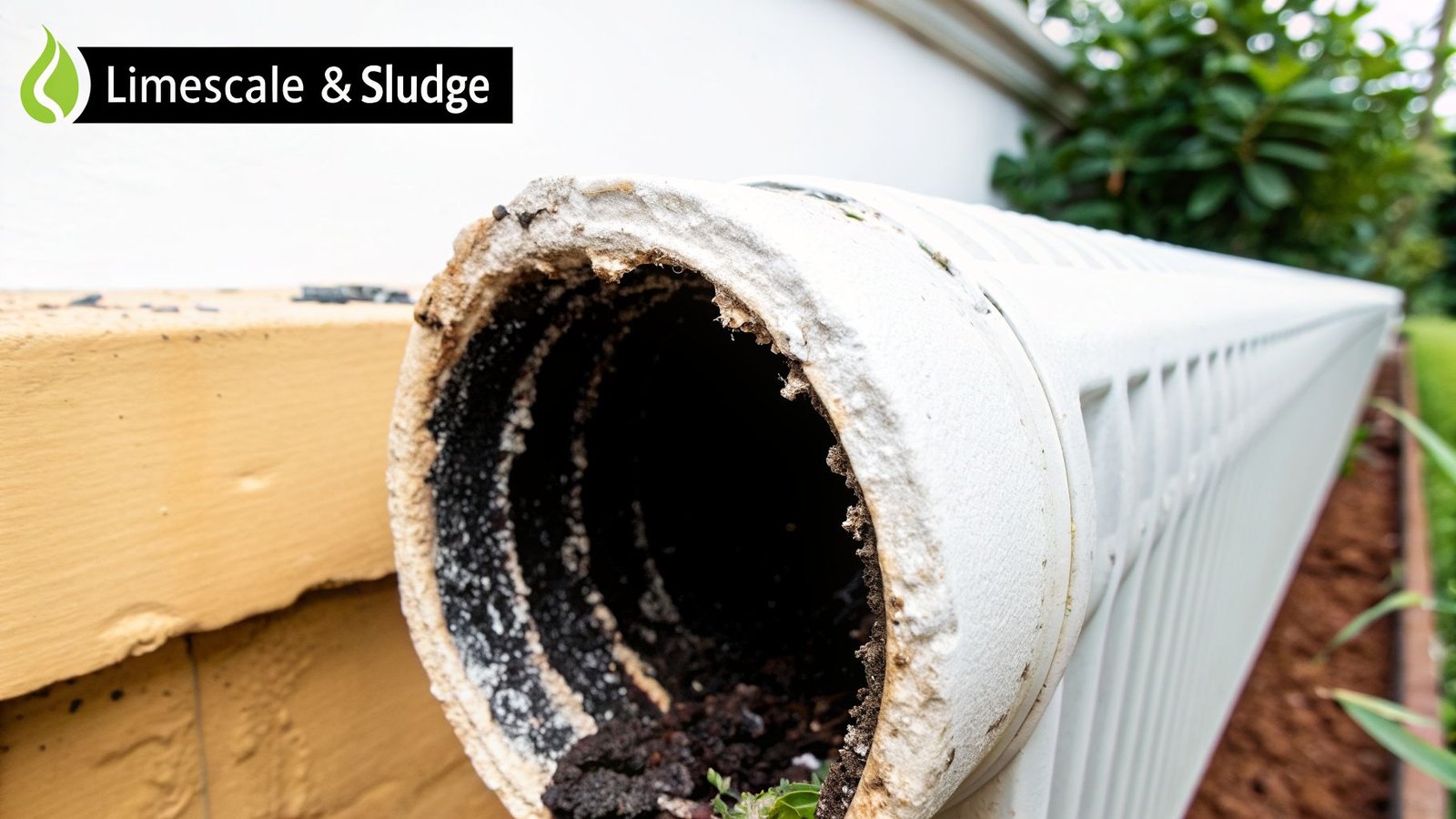
No matter which one it is, the end result is the same: restricted water flow. This forces your boiler to work overtime, hiking up your energy bills and putting immense strain on its components.
Don't just take my word for it. Research from 2023 in London and the South East found that sludge buildup is behind a massive 40% of all banging boiler cases. Those noises can reach 85 dB—about as loud as a passing diesel truck—which is a clear sign of serious internal stress. If you want to dive into the data, you can read the full research about boiler noise findings.
Key Takeaway: Early warning signs like cold patches on your radiators or finding black, dirty water when you bleed them are your system's way of asking for help. A faint gurgle today can easily become a loud bang and a total breakdown tomorrow.
Why This Isn't a DIY Job
Once sludge or heavy limescale has taken hold, you've passed the point of a quick fix. This is where you need a professional engineer to give your system a proper internal clean-out.
Depending on the severity, we’ll usually recommend one of two treatments. A chemical flush uses powerful cleaning agents circulated through the pipes and radiators to dissolve the deposits. For more stubborn cases, we bring out the heavy equipment for a power flush. This uses a high-flow pumping machine to physically force the sludge and scale out of the system, leaving it clear and efficient.
These professional treatments are the only reliable way to get rid of the deep-seated gunk that’s causing the banging.
Critical Signs: When to Call an Engineer Immediately
Most of the time, a banging boiler is more of an irritation than a real danger. But some noises are your system’s way of screaming for help. Knowing the difference between a simple fix and a genuine emergency is one of the most important things you can learn as a homeowner.
There are a few situations that are absolute, non-negotiable emergencies. If you can smell gas, don't touch anything electrical. Open windows, get everyone out, and call the National Gas Emergency Service straight away.
Likewise, if you see water actively leaking from the boiler unit itself (not just a pipe or radiator), or if the boiler has completely shut down and is showing a fault code, it’s time to call a Gas Safe registered engineer. These aren't jobs for a weekend DIY project.
When That Banging Sound Becomes a Serious Safety Risk
A loud bang, especially when combined with other symptoms, can signal a serious mechanical or pressure-related problem that needs immediate attention. A failing central heating pump, for example, can make all sorts of strange noises, but it's the intense stress it puts on the entire system that poses the real threat.
High system pressure is another major culprit. Based on analysis from the Gas Safe Register covering over 45,000 UK incidents, faulty pumps and dangerously high pressure are behind the banging in 25% of London boiler complaints. When a pump starts to fail or runs too fast, it forces water through the system in violent surges. This can easily push your system's pressure well above the safe 1.5–2.0 bar range, risking a catastrophic failure of a key component. You can find more insights about pressure faults online, but the bottom line is it’s a serious issue.
A loud bang right as the boiler fires up is a classic red flag. In 2023, this single symptom was responsible for 30% of the emergency call-outs our engineers at Urbanic Services Ltd attended, and it was almost always linked to a dangerous pressure fault.
Unmistakable Signs You Need Professional Help
Beyond the immediate emergencies like a gas smell or major leak, there are specific combinations of symptoms that should have you reaching for the phone. Ignoring them doesn’t just risk your boiler breaking down completely—it can put your home and family at risk.
Keep a close eye out for these clear warning signs:
- Loud Banging with High Pressure: If your pressure gauge is climbing into the red zone (usually anything above 2.5 bar) and you’re hearing loud bangs, your boiler is under extreme strain. Turn it off at the wall and call for help.
- Visible Soot or Black Marks: Any scorch marks or sooty deposits on or around the boiler casing are a dead giveaway of a serious combustion problem. This is not normal and needs to be inspected immediately.
- A Temperamental Pilot Light: On older boilers, a pilot light that keeps going out or burns with a weak, floppy yellow flame instead of a crisp blue one indicates a potential gas or ventilation issue.
- Constant Boiler Lockouts: If you find yourself constantly resetting the boiler after it shuts down and displays a fault code, you’re just masking a deeper problem. It’s telling you something is wrong internally, and it needs an expert to diagnose it properly.
These problems go far beyond bleeding a radiator. They involve the heart of your system—the gas, pressure, and combustion components that only a certified expert is legally allowed and qualified to work on. For these complex issues, you can learn more about our professional boiler repair services and see how we can get your system running safely again.
Professional Repair Costs and What to Expect in London
So, you’ve decided it's time to call in the professionals. Good call. When you bring in a Gas Safe registered engineer, you’re not just paying for a quick fix; you’re paying for peace of mind and expertise. A good engineer won’t just slap a patch on the problem – they’ll get to the root of it.
When one of our Urbanic Services engineers arrives at your door, the first thing they'll do is listen. That boiler making a loud banging noise is telling a story, and they're trained to interpret it. They'll start with the basics: checking the pressure gauge, listening to the pump, and inspecting the key valves. It's a methodical process of elimination to pinpoint exactly what's causing the racket.
What an Engineer Will Look For
We often find the culprit is a build-up of limescale or sludge within the system, especially in London’s hard water areas. The engineer might take a small water sample from a radiator to see what’s really going on inside your pipework. This diagnostic step is crucial because it ensures we fix the underlying cause, not just the noisy symptom.
A reputable engineer will always walk you through their findings and give you a clear, fixed-price quote before picking up a single tool. There should be no nasty surprises when the bill arrives.
A Look at Common Repair Costs
Boiler repair costs in London can vary quite a bit, depending on your boiler's age, make, and the exact part that’s failed. To give you a clearer picture, we've broken down the typical costs for the most common fixes for a banging boiler.
If the diagnosis points to a system clogged with years of black, gritty sludge, the best solution is often a power flush. This isn't a quick job. It involves connecting a high-velocity pump to your heating system to blast water and powerful cleaning agents through every pipe and radiator, forcing out all the accumulated gunk.
It’s an intensive process that can take a good chunk of the day to do properly. That's why in London, you can expect a power flush to start from around £380. It’s a significant investment, but it's a restorative fix that brings a noisy, inefficient system back to life.
Another frequent offender is a failing central heating pump. When a pump starts to seize up, it can create some seriously loud vibrations and knocking sounds.
Expert Insight: Replacing a standard heating pump is a common job for us. It involves draining the system down, fitting the new part, and then refilling and balancing everything. For this, London homeowners should budget between £250 and £400. The final price often depends on the specific pump your boiler model requires.
To give you a better sense of what to expect, here’s a table of estimated costs for common repairs you might face.
Estimated Costs for Common Boiler Bang Repairs in London (2026)
This table outlines typical costs for professional services aimed at resolving loud banging noises from your boiler, based on current London rates.
| Repair Service | Typical Job Description | Estimated Cost Range |
|---|---|---|
| Power Flush | Intensive deep clean of the entire heating system using a high-flow machine and chemicals to remove sludge and debris. | £380 – £750+ |
| Heating Pump Replacement | Draining the system to replace a faulty or seized central heating pump. Includes the cost of the new part. | £250 – £400 |
| Diverter Valve Replacement | Replacing the component that directs hot water to taps or radiators. A common fault on combi boilers. | £200 – £350 |
| System Chemical Flush | A less intensive clean where chemicals are added to the system to break down sludge over time. | £150 – £250 |
| Pressure Relief Valve (PRV) | Replacing a small but critical safety valve that is leaking or has failed due to high system pressure. | £90 – £180 |
These figures include both the cost of the part and the expert labour needed to fit it correctly and test the system.
Ultimately, there comes a point where sinking more money into an old, unreliable boiler just doesn't make sense. If you're facing a costly repair on top of other existing issues, it might be more economical in the long run to put that money towards a new, efficient model. We give honest advice on this all the time, and you can read more in our guide on boiler replacement options. We’re here to help you find the most sensible solution for your home and your budget.
How to Prevent Boiler Noises with Proactive Maintenance
Let's be honest, the best way to fix a loud, banging boiler is to stop it from happening in the first place. While knowing how to troubleshoot is handy, smart, proactive care is the real secret to a quiet and efficient heating system. It’s about getting ahead of the problem, not just reacting to it.
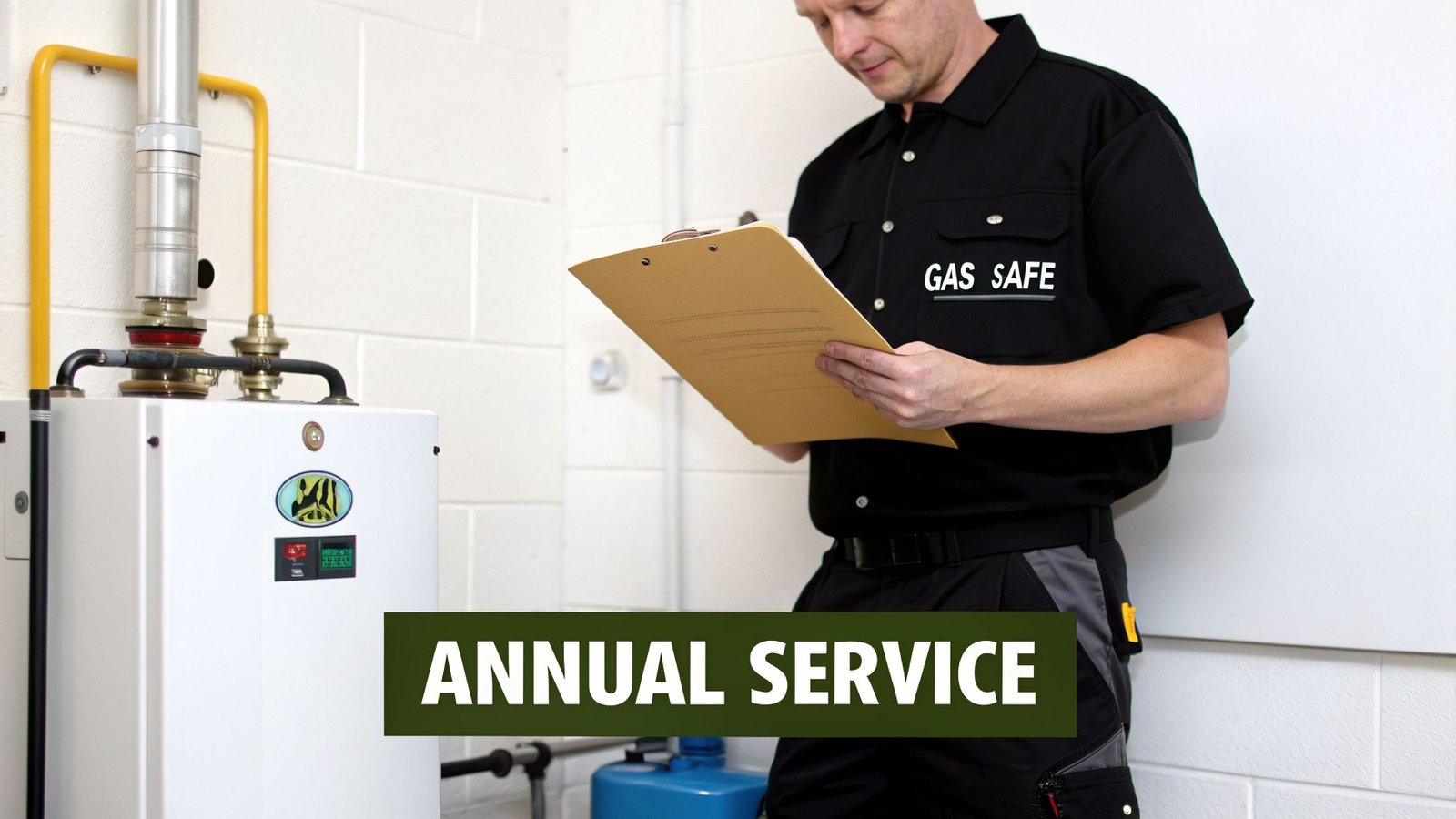
This is where an annual boiler service proves its worth. It’s much more than a simple tick-box exercise; this yearly check-up from a Gas Safe registered engineer is your boiler's best defence against the very issues that cause those disruptive noises.
The Power of an Annual Service
During a professional service, an engineer doesn't just give your boiler a quick look. They run a whole series of diagnostic checks designed to catch small issues before they snowball into major, costly headaches.
Here’s a glimpse of what's happening behind the scenes:
- Spotting Sludge Early: An experienced engineer can detect the first signs of internal corrosion and sludge, long before it causes a full-blown kettling crisis.
- Correcting System Pressure: They’ll check and adjust the pressure to the optimal level, preventing the unnecessary strain that can lead to component failure and leaks.
- Cleaning Key Components: Parts like the burners and injectors get a thorough clean. This ensures clean, efficient combustion and stops those alarming 'whoomph' sounds from delayed ignition.
- Testing Safety Devices: All the critical safety features, like the pressure relief valve, are tested to make sure they're working perfectly to protect your home.
Think of an annual service as an MOT for your central heating. Skipping it is a gamble that often results in a system that’s not just noisy, but also less efficient and potentially unsafe when you need it most.
For many homeowners in London, the stress of remembering to book a service and the fear of a sudden, large repair bill is very real. This is exactly why a boiler care plan can be such a lifeline, offering both peace of mind and financial control. You can learn more about the benefits of an annual boiler service and how it protects your heating system.
Smart Protection with a Boiler Care Plan
Imagine a winter without the worry of finding an available engineer or facing an unexpected bill if your heating starts making strange noises. That’s the security a boiler care plan provides. It’s a simple, affordable monthly subscription that bundles your essential maintenance with a safety net for future repairs.
With a good plan, your annual service is covered automatically. But more importantly, it often includes the cost of repairing or replacing the very components that cause boiler noises, like a failing pump or diverter valve. You’re not just preventing problems—you're budgeting for potential fixes in a smart, manageable way.
It completely changes the game. Boiler maintenance stops being a reactive, stressful chore and becomes a seamless, worry-free process. You get the assurance of expert care and protection from surprise costs, all for a predictable monthly fee. The result? The quiet, reliable warmth your home deserves.
Your Top Questions About Noisy Boilers Answered
When your boiler starts making strange noises, it’s completely understandable to feel a bit worried. We get calls about this all the time. Here are our straightforward answers to the most common questions London homeowners ask us.
Is a Boiler Making a Loud Banging Noise Dangerous?
A banging noise is your boiler’s way of telling you something is wrong. While it's not usually an immediate, life-threatening danger in itself, you absolutely shouldn't ignore it.
That sound is a clear symptom of an underlying issue, whether it's kettling caused by limescale, a thick build-up of sludge, or even a problem with pressure. Left unchecked, the problem will only get worse, leading to component failure and, in some cases, a genuine safety risk. Think of it as a serious warning light – it's time to get it checked by a Gas Safe registered engineer.
Can I Still Use My Heating if the Boiler Is Banging?
Honestly, it’s a bad idea. Continuing to run a boiler that's banging and clattering puts a huge amount of stress on its internal parts. You risk turning a relatively straightforward repair into a much more expensive one, or even causing a complete breakdown right when you need the heating most.
For your own peace of mind and to prevent further damage, the best course of action is to switch the boiler off and call in a professional, especially if the noise is loud or happens frequently.
A Critical Safety Warning: If you notice a smell of gas, see water leaking from the boiler itself, or it keeps cutting out and showing a fault code, switch it off immediately. Do not try to use it again. This situation requires an emergency call-out.
How Long Does It Take to Fix a Banging Boiler?
This really depends on what we find when we investigate. Some fixes are surprisingly quick. If it's just a case of trapped air, bleeding your radiators might solve it in under an hour.
On the other hand, if the problem is years of accumulated sludge, a full system power flush is needed. That’s a more involved job that typically takes our engineers between 4 to 8 hours to do properly. For a specific part failure, like a faulty pump or diverter valve, you can usually expect the replacement to take a qualified professional 1 to 3 hours.
Don't let a noisy boiler disrupt your home or spiral into a costly breakdown. The experts at Urbanic Services Ltd have seen it all and can quickly diagnose and fix the problem. Get a fast, fixed-price quote online today and let us bring peace, quiet, and reliable warmth back to your London home.
Produced via Outrank tool